Chemist’s lifelong research comes full circle in his own treatment
Garry Buettner, a scientist who spent decades researching the cancer-fighting potential of intravenous vitamin C, became a patient himself, and benefited from the very treatment he helped pioneer—demonstrating both the personal and scientific impact of his work.
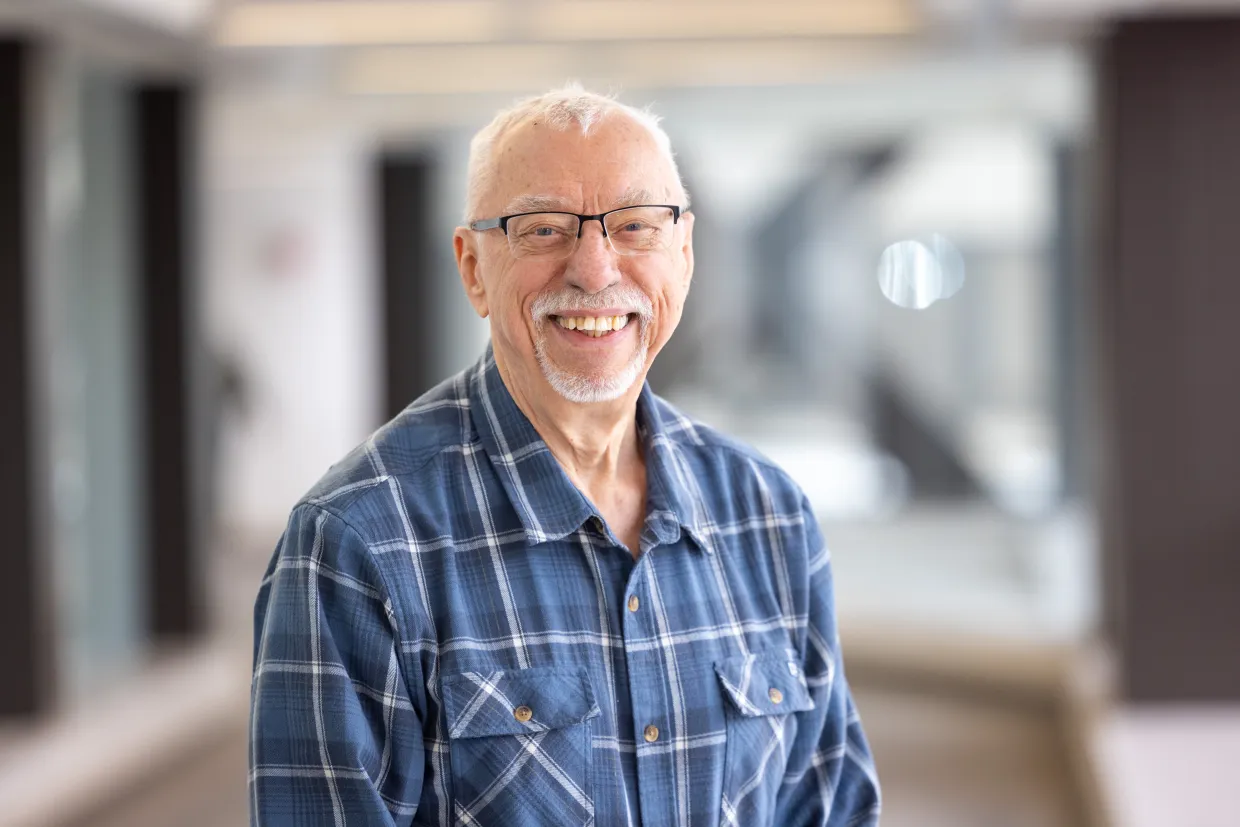
It’s a rare thing to contribute to research that helps people live longer, healthier lives. It’s even rarer to be one of the people your own research ends up helping. Garry Buettner is one of those people.
Long before vitamin C became part of Buettner’s treatment plan, it was a molecule that fascinated him — one he believed had untapped potential.
Turning curiosity into discovery
His interest in vitamin C began during his postdoctoral training at the University of Iowa in the late 1970s. He was drawn to the molecule’s reactive nature and its ability to produce hydrogen peroxide when oxidized — a property that would later become central to his cancer research.
“I got interested in vitamin C because there was popular press about what it does, essentially as a vitamin,” Buettner says. “My research was expanding on those discoveries — what causes vitamin C to oxidize, how fast it oxidizes, that is why it is so fickle — I was thinking about the chemistry of how that could occur and how that could be taken advantage of.”
Other studies on vitamin C’s cancer-fighting potential had been met with skepticism, especially after oral doses of vitamin C failed to show benefit in clinical trials at the Mayo Clinic. However, Buettner, along with National Institutes of Health scientist Mark Levine, hypothesized that intravenous (IV) delivery — not oral delivery as was used in the Mayo Clinic clinical trials — could produce the pro-oxidization effect needed to kill cancer cells. This insight laid the foundation for a series of clinical trials at Iowa, beginning with adding it to the standard of care for pancreatic and brain cancer.
“We provided the basic science that underpinned the logic of moving it to humans,” Buettner says. “Over the years I have investigated its chemistry; we applied that chemistry to cell culture and showed mechanisms for how it could be helpful. With that data we could go and convince the Iowa Research Board that it is worthy of approval to begin clinical trials.”
Buettner’s colleagues at UI Health Care — Joseph Cullen, MD, John Buatti, MD, and Bryan Allen, MD, PhD, MBA — led the way for those clinical trials, and they were able to show that when vitamin C was added to the standard of care, patients were generally living longer, feeling better, and more than expected entered remission with no adverse effects.
“Patients feel better during the clinical trial, and they’re able to carry on joining normal activities like birthday parties or weddings or having fun on the weekends, which is unique for their circumstances,” Buettner says.
From researcher to patient (and back)
In 2023, Buettner was diagnosed with myelodysplastic syndrome (MDS), a type of cancer that affects the blood. He then learned that his particular form of the disease was affecting all three types of his blood cells, meaning his platelet, red cell, and white cell counts were all low.
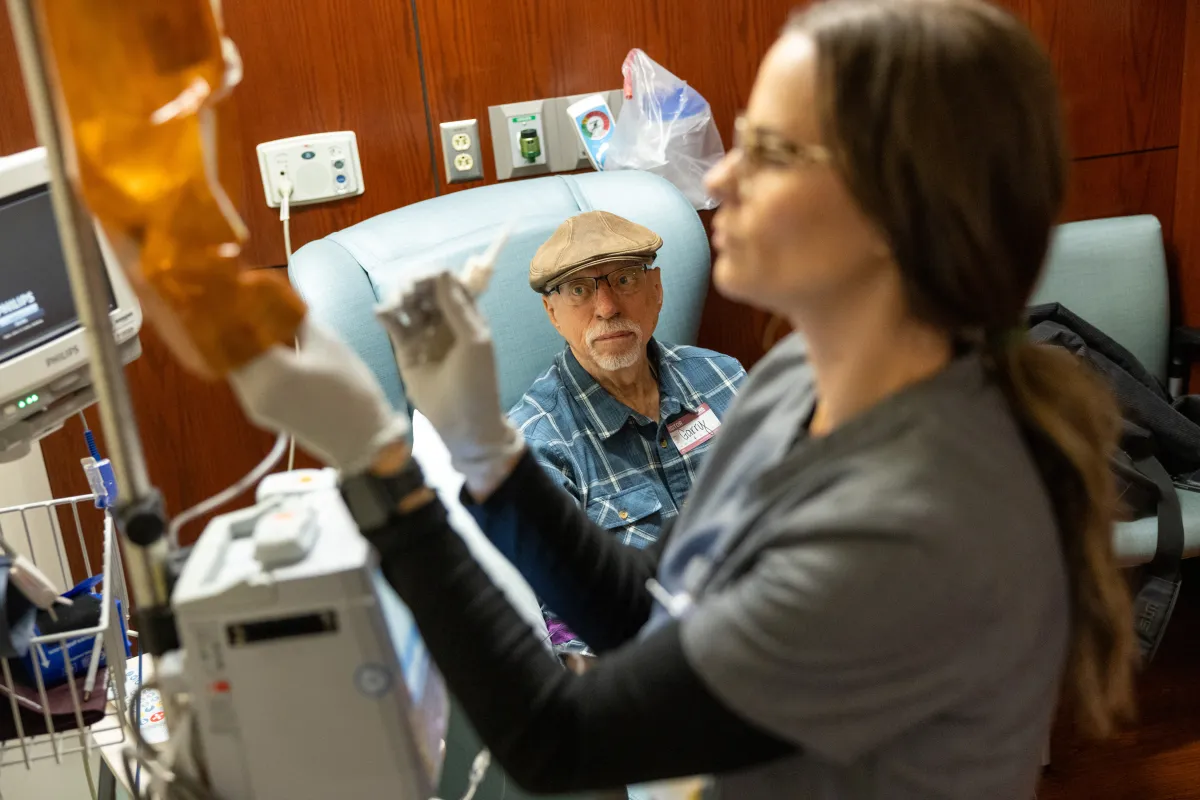
“The treatment is a drug called azacitidine, which targets the cancer-driving mechanism,” Buettner says. “Basically, cancer suppression genes are not being used, so azacitidine slows the enzyme systems that are blocking the tumor suppressor genes so that they can work again.”
Buettner worked to fight his cancer both as a patient and a chemist. He and Cullen published a paper around the time he was diagnosed that showed that vitamin C and azacitidine together helped slow tumor growth in an animal model.
“So, it seemed natural, right? Yes, it was a different cancer in the animal model, but we felt we could extrapolate this,” Buettner says. “So, we added IV vitamin C to my treatment in addition to the standard of care, and right now things are going well. I’m just one person in my story, though. Some patients respond well, and for some there is no measurable benefit, but the key thing is that we don’t see any harm.”
Being part of the story
Buettner’s experience adding vitamin C to his standard of care just adds a little more time in the infusion suite. An Iowa City resident, he makes the short drive to UI Health Care’s university campus seven days each month to get his infusions, which take about an hour with preparation time.
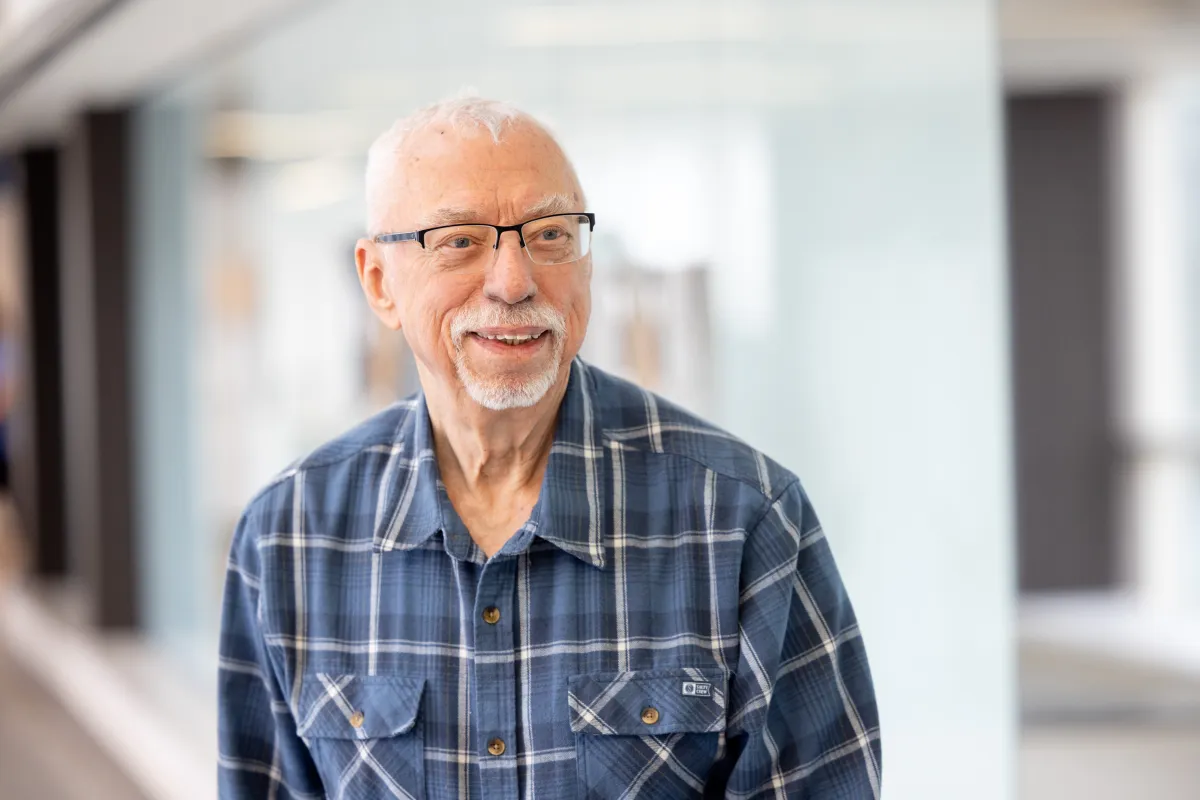
On four of those seven days, he also gets vitamin C, which usually takes up most of his morning.
Buettner says he’s doing well, and he doesn’t typically feel affected by his standard of care.
“I’ll feel very tired on about one out of those seven days,” Buettner says. “But then I’ll ask myself if it’s because I got up so early that day.”
Sometimes while he’s getting his infusion, he can see another patient in a neighboring chair getting vitamin C, knowing the bag above their head is the culmination of research he and others have been studying since the late 1970s.
“I can walk up and down the hall, so to speak, and I can tell when you’re getting vitamin C. It’s emotionally very touching to realize that here’s my career and these people are being helped by it,” Buettner says. “I’m just part of the story.”
Patient Stories