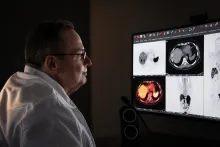
Why lung screening saves lives: The UI Health Care advantage
Lung cancer screening can detect cancer early, when it’s most treatable. If you’re between age 50 and 77 with a history of smoking, a low-dose CT scan could help save your life.
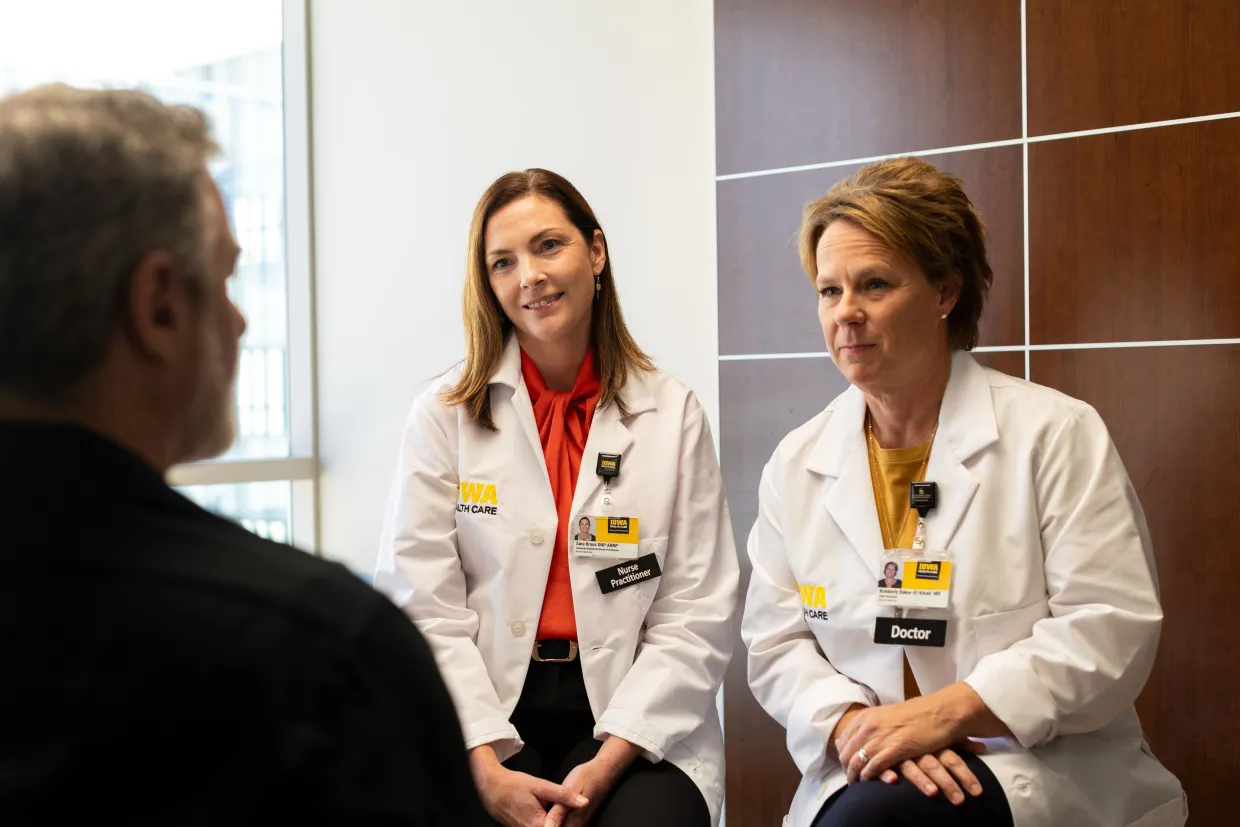
If you’re worried about lung cancer but unsure whether screening applies to you, you’re not alone. Eligibility is based on national guidelines that focus on people at the highest risk.
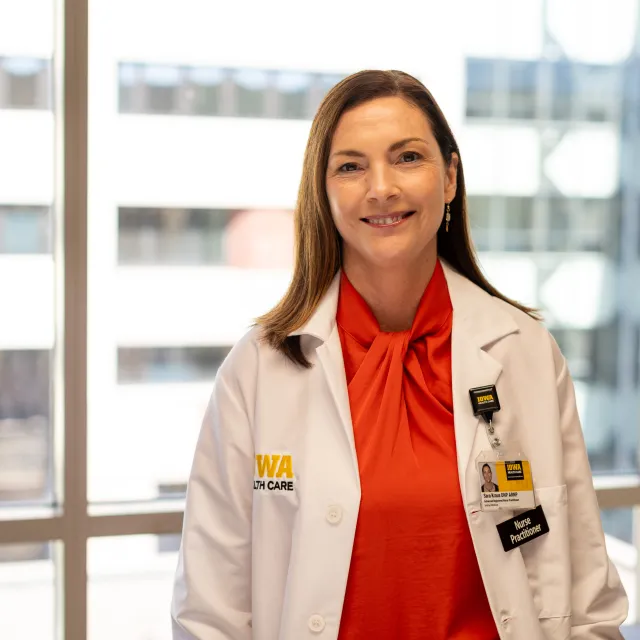
“Eligibility is determined by the Centers for Medicare and Medicaid Services,” says pulmonary nurse practitioner Sara Kraus, ARNP, DNP, FNP-BC.
To qualify for lung cancer screening, patients must meet all of the following criteria:
- You’re between the ages of 50 and 77.
- You have at least a 20 pack-year history of smoking. Pack-years equals the number of years smoking times the number of packs smoked per day. A 20 pack-year history means half a pack a day for 40 years, one pack a day for 20 years, two packs a day for 10 years, and so on.
- Be healthy enough to undergo treatment, like surgery, if cancer is found.
Screening also requires a willingness to return every year.
“We recommend that once we get people in, they continue coming back every year until they don’t qualify for the program anymore,” Kraus says.
Why screening matters, even if you feel healthy
Lung cancer screening is currently the best way to detect lung cancer before symptoms appear. “It’s the best way of detecting early lung cancers,” Kraus says.
When lung cancer is found early, treatment options are very different. “We want to catch these cancers when they’re small and when there are curative treatment options,” she says.
If lung cancer is not caught early, it can metastasize. At later stages, there are fewer treatment options.
Early detection can mean the difference between a cure and treatment. “Potentially, we can cure lung cancer if we catch it early enough,” she says.
A low-dose CT scan is a quick and simple imaging test designed specifically for lung cancer screening.
“A CT scan is basically a series of X-rays,” Kraus says. “It reconstructs what a person’s lungs look like on the inside, and we can detect early lung nodules.”
The scan itself is straightforward:
- No needles
- No IV
- No contrast dye
- No enclosed tunnel
- Takes about 5–10 minutes
“Chest CTs are easy to complete, and they’re very fast,” Kraus says. “Modern CTs have low radiation doses. No needle stick, no IV.”
Making lung screening accessible — and covered
Cost concerns are one of the biggest barriers to lung cancer screening.
“People are afraid that their insurance won’t cover the CT, and it’s going to be costly,” Kraus says.
For eligible patients, however, screening is typically fully covered by insurance.
“As long as you have coverage through Medicaid, Medicare, or commercial insurance under the Affordable Care Act, there should be zero out-of-pocket costs,” Kraus says.
Shared decision-making is part of the process when enrolling in lung cancer screening for the first time. Providers need to have a conversation with you about the risks and benefits of screening, which is a great time to have your questions answered by a medical professional.
Support from referral to follow-up, so nothing falls through the cracks
UI Health Care’s lung screening program is designed to support both patients and referring providers.
“We have a lung cancer screening specialty team,” Kraus says. “Once we receive a referral from your primary care provider, our team reviews your chart for eligibility and then contacts you by phone.”
Support includes:
- Help confirming eligibility
- Shared decision-making visits by phone or in person
- Evening appointment options
- Direct follow-up calls for abnormal findings
- Tracking systems that flag overdue follow-up
"Our system flags us if you’re overdue to come back for a CT,” Kraus says.
What makes the UI Health Care advantage different?
While lung cancer screening itself follows national standards, what sets UI Health Care apart is what happens after screening, if cancer or concerning findings are detected.
“We have lung nodule specialists in our clinical cancer center,” Kraus says.
If cancer is diagnosed, you’ll have access to coordinated, multidisciplinary lung cancer care, including pulmonologists, surgeons, radiation, and medical oncologists, who can offer advanced therapies.
“Lung cancer is not a death sentence,” Kraus says. “We have a lot better treatment options available now. People are living longer with lung cancers,” she adds, “even if it’s not operable in the beginning.”
Taking the next step
If you think you may qualify, or aren’t sure, starting the conversation with your primary health care provider is the first step.
“We want to support providers because they’re really the first contact with patients,” Kraus says.
For patients, screening is designed to be easy, covered, and supportive.
“Lung cancer screening is not a big obstacle,” Kraus says. “It’s very easy, it’s covered by their insurance, and we can answer questions at any point.”