Radiation care close to home in the Quad Cities
When Jeff Yets was diagnosed with throat cancer, receiving radiation therapy close to home in the Quad Cities helped him and his wife, Karyn, manage the daily demands of treatment.
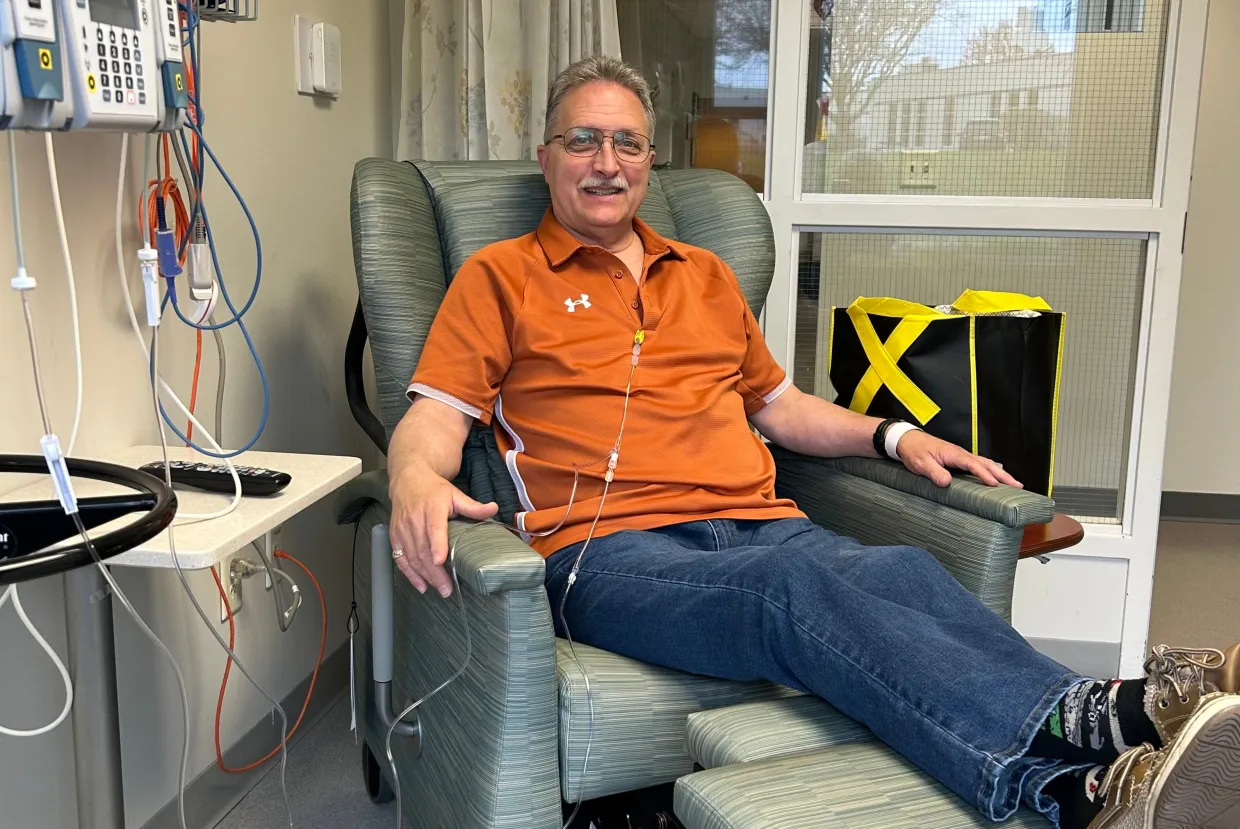
Radiation therapy close to home can make cancer treatment more convenient. UI Health Care offers radiation oncology services in the Quad Cities, connecting patients with local care and the expertise of specialists in Iowa City.
Before cancer, daily life for Jeff and Karyn Yets was comfortably familiar.
Jeff Yets worked from home as a technical writer, creating operator’s manuals and installation instructions. Karyn Yets loved crafting and planning events for family and friends, and Jeff was often right beside her, helping build, assemble, or create whatever she needed.
Then Jeff Yets developed a relentless sore throat. At first, it seemed like dental pain or possibly an infection. After visits to the dentist and rounds of antibiotics, the pain continued.
When Karyn Yets noticed a lump on the side of her husband’s neck, the couple knew they needed more answers. His primary care provider referred him to an ENT who did a biopsy which confirmed he had throat cancer.
“It was a little scary in the beginning,” Karyn Yets says. “When we found out it was actually cancer, we worried it had spread.”
Once Jeff Yets’s primary care provider connected with UI Health Care’s radiation oncology and cancer care teams in the Quad Cities, the Yetses felt instantly comfortable. One of the most reassuring moments came when a member of the care team spoke honestly about what treatment would involve and added that this was a curative type of cancer.
“She told us it was going to be rough, that it was going to be painful, but that this is just a stepping stone,” Karyn Yets says. “She said, ‘You can move on with your life, and this will just be a memory.’ That was amazing.”
Why care close to home matters during radiation therapy
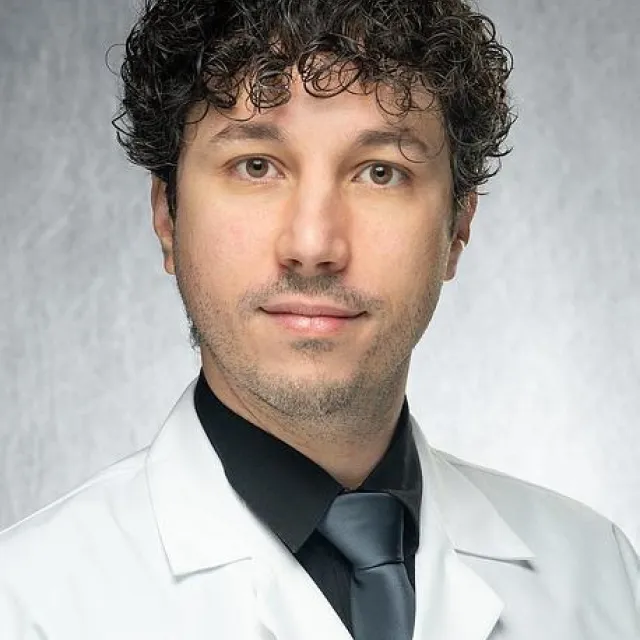
Radiation therapy often requires repeated, often daily, visits over several weeks. Geovanne Mauro, MD, a UI Health Care radiation oncologist in the Quad Cities, says repeated appointments can become exhausting for patients and families, especially when travel is added to treatment.
“Patients get exhausted, and it’s not always easy to travel an hour or more every day for cancer care,” Mauro says. “This is a way that we can save patients time, money, and effort, and they get the best treatment closer to home.”
For Jeff Yets, treatment included radiation five days a week and chemotherapy three days a week. Because care was available close to their home in the Quad Cities, the couple was able to keep more of their daily routine intact during an intense period of treatment.
This proximity mattered in practical ways. Jeff Yets was able to continue working from home for much of his treatment. When he was tired, he could rest and return to work later. Karyn Yets was able to be closely involved in his care, eventually stepping away from work so she could help with tube feedings every two hours after treatment made it too painful for her husband to eat.
“The journey is mine, but it’s ours,” Jeff Yets says. “She has taken care of me, and it’s been unbelievable.”
Support can make a difficult treatment journey feel less lonely
Mauro says family support stands out in Jeff Yets’s care journey.
“He has very good energy,” Mauro says. “He faced this treatment the best way possible, and he has a wonderful family to support him.”
For some patients, radiation therapy can involve some of the most difficult weeks of their lives. The Yetses approached treatment with a clear mindset.
“We went in there with positive attitudes,” Karyn Yets says. “Every day, it was a blessing, and everyone was so upbeat and so nice.”
Mauro says this kind of support and mindset can make a meaningful difference during radiation treatment.
“Patients with good support and a good mindset typically have better outcomes,” Mauro says.
Connected to UI Health Care cancer expertise
For patients in the Quad Cities, local radiation oncology care provides an important connection to UI Health Care’s broader cancer expertise.
Mauro says UI Health Care’s Kimberly Road location in Bettendorf, Iowa, helps Quad Cities-area patients receive expert cancer care near home while still having access to additional specialists and treatments, at the university campus in Iowa City when needed.
“Everything that is available through University of Iowa Health Care is available for patients in the Quad Cities,” Mauro says.
The Quad Cities team reviews cases in coordination with radiation oncology colleagues at the university campus in Iowa City. This means that patients receive care guided by the same standards and expertise.
Behind the scenes, this coordination can include case review, treatment planning, quality assurance, and referrals to additional specialists when needed.
Modern radiation therapy uses advanced planning and imaging
Mauro says radiation oncology has changed significantly in recent years, with newer techniques allowing more precise treatment and, for some patients, shorter treatment or fewer side effects.
“Radiation has evolved a lot,” Mauro says. “Over the last 10 years, we have developed techniques that could treat patients with a lower dose of radiation or a shorter course of radiation and with more precise treatment. This can result in fewer side effects and fewer toxicities, all while preserving the chances of a cure.”
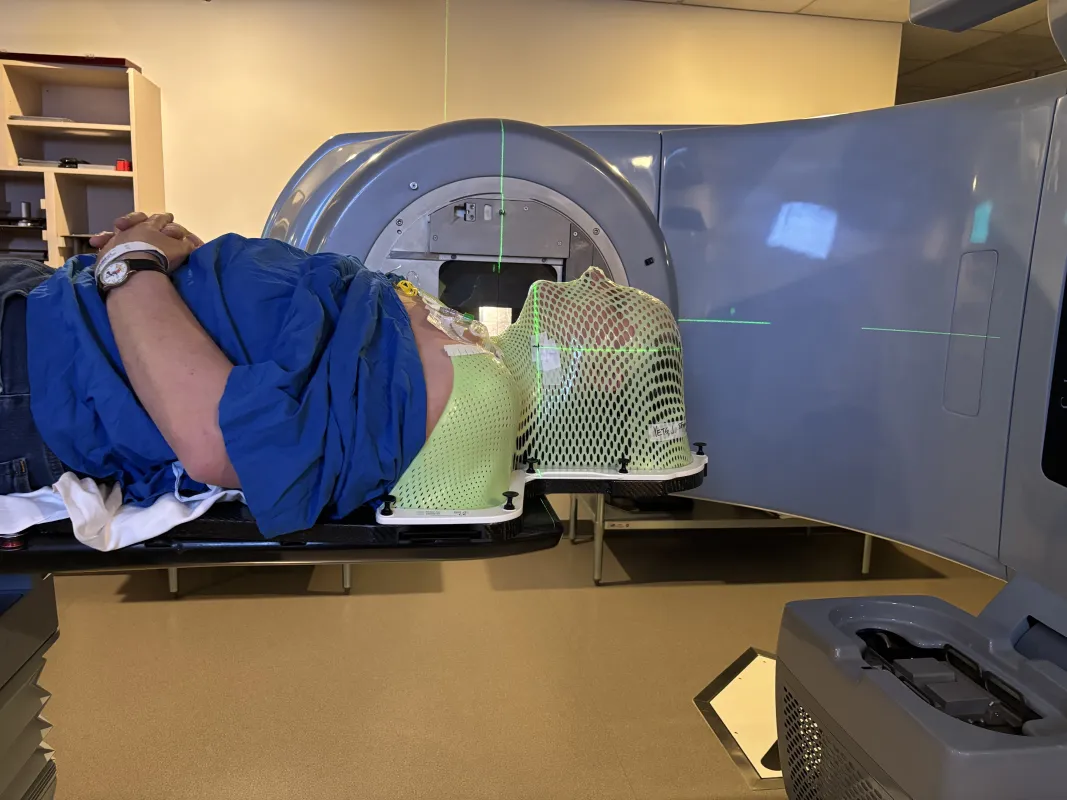
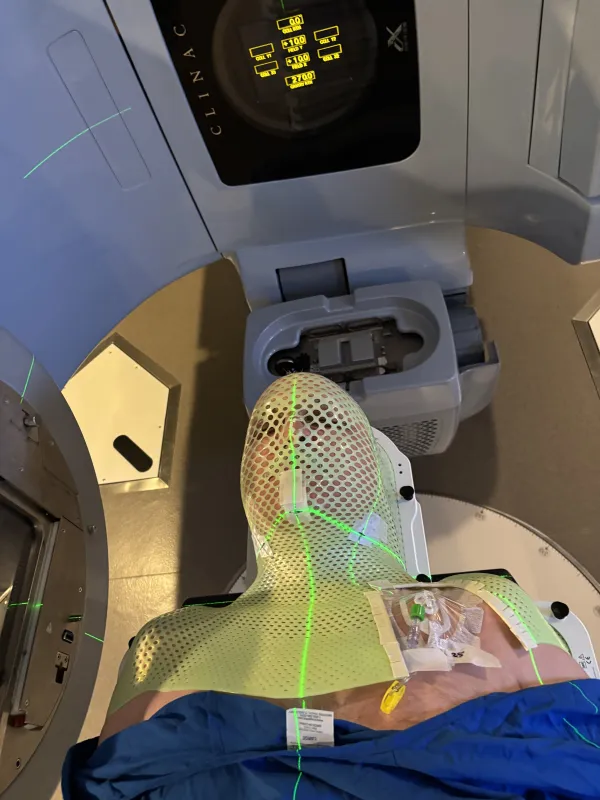
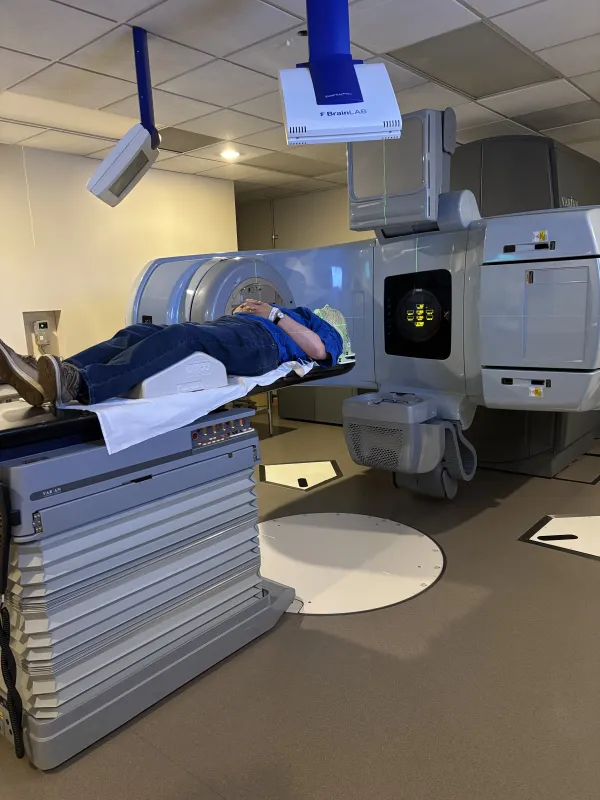
The UI Health Care clinic in the Quad Cities has a linear accelerator and uses image-guided radiation therapy.
“Here, we have a Linac system,” Mauro says. “All treatments are guided by active imaging, so all patients do CT scans inside the machine. We can better position the patient and deliver with more accuracy.”
For some highly specialized treatments, patients may still be referred to UI Health Care in Iowa City.
“If I feel that the patient’s care needs to be addressed in Iowa City, we often can make a new appointment for the following day,” he says.
Survivorship is a moment worth recognizing
Now, as Jeff Yets moves forward in survivorship, he says he feels thankful and eager to help others however he can. Later this summer, he is expected to be recognized during Survivors Night at the Quad Cities River Bandits minor league baseball game, a moment that he says will be emotional.
“I’m blessed and humbled,” he says. “I probably will break down.”
Mauro says events like Survivors Night are meaningful because cancer treatment can feel isolating, and seeing others who have gone through treatment can help patients feel optimistic about their own journeys.
“It makes a whole difference to them,” Mauro says. “It gives so much hope.”
For the Yetses, the experience reinforces the importance of local care, expert support, and having people beside you through treatment. That support includes more than one provider or one appointment. Radiation therapy involves a large multidisciplinary team, including physicians, physicists, nurses, radiation therapists, technicians, administrative team members, and reception staff who work with patients throughout the course of care.
“We have the technology to fight cancer but nothing can replace the human side,” he said, adding that the staff had an “outstanding commitment to care, kindness, and compassion that they engage in every day and all day.”
For Jeff, that human side of treatment is something he wants other patients to understand. The technology matters, but so does the compassion and commitment of the people delivering care every day.
“You will be in capable hands,” Jeff Yets says, “and you can tell they love and care for each and every one of the people that come in.”
Patient Stories