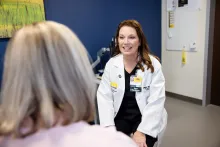
High-risk breast clinic
Some women have a higher‑than‑average chance of developing breast cancer based on their personal health history, family history, genetics, or certain breast tissue characteristics.
Being “high risk” doesn’t mean you will develop cancer. It simply means your lifetime risk is elevated enough that you may benefit from earlier, more frequent, or more specialized screening and prevention strategies. Many women discover they may be at higher risk through a routine mammogram, where information about family history, previous biopsies, and reproductive history is used to estimate a lifetime risk percentage.
At University of Iowa Health Care Holden Comprehensive Cancer Center’s High‑Risk Breast Clinic, we’ll create a personalized plan designed around your unique risk factors. Our team uses the latest evidence‑based guidelines to recommend the right imaging, proactive surveillance, and prevention strategies for you. Our goal is to give you clarity, reduce your risk, and support you every step of the way with expert, compassionate care.
Leaders in advanced, comprehensive high-risk breast cancer care
Our High‑Risk Breast Clinic is built around expertise, coordination, and leading‑edge technology — all in one location. From imaging to consultation to follow‑up, our team works together to provide seamless, streamlined care for you.
You’ll receive care from specialists whose entire focus is breast cancer. Our multidisciplinary team of surgeons, radiologists, medical oncologists, advanced practice providers, nurse practitioners, genetic counselors, and nurse navigators bring deep expertise and the latest evidence‑based practices to every case.
We also offer state‑of‑the‑art breast imaging and expert interpretation, which is critical for early and accurate detection. This includes an American College of Radiology (ACR)‑accredited breast MRI, a distinction not available everywhere in Iowa. This allows our imaging to meet the highest national standards for quality, safety, and accuracy.
Risk factors for breast cancer
The cause of breast cancer is unknown, but some things are known to increase your risk of developing it.
Consider getting evaluated to help determine your risk if you have any of the following factors:
- Family history. If you have an immediate family member (mother, daughter, or sister) who has been diagnosed with breast cancer, you’re at a higher risk of developing breast cancer.
- Genetics. The BRCA1 and BRCA2 genes are the most common inherited genes to cause breast cancer, but there are many others we can test for.
- Having dense breasts. You have a higher risk of developing breast cancer if you have dense breast tissue.
- Previous breast biopsies. Having multiple breast biopsies, or having biopsies showing atypical, but not cancerous cells, can raise your risk of breast cancer significantly.
- Prior chest irradiation. Receiving radiation treatment to the chest, such as for lymphoma, before the age of 30 can also raise your risk of developing breast cancer.
Other factors can combine to put you at a higher risk of developing breast cancer. These include:
- Age. After age 50, your risk of breast cancer increases.
Early menstruation. If your first period came before age 12, you’re at a higher risk of developing breast cancer.
- Late menopause. If you don’t develop menopause until age 55 or older, you’re at a higher risk of developing breast cancer.
Being overweight or obese. Women with obesity after menopause have a higher risk of developing breast cancer than those at a healthy weight.
- Drinking alcohol. Alcohol use is linked to an increased risk of breast cancer.
- Not getting enough exercise. Regular physical activity reduces breast cancer risk.
- Smoking. Tobacco use is linked to an increased risk of breast cancer.
- Not having children. Women who have not had children or had their first child after age 30 have a slightly higher risk of breast cancer.
Assessing your risk for breast cancer
Understanding your individual risk is the first step in providing personalized breast cancer prevention and early‑detection care — and it’s important to do this early. The sooner you know your risk level, the sooner we can tailor a screening plan.
When you have a mammogram or breast imaging completed, you'll also fill out a standardized questionnaire about your personal and family history and lifestyle choices. Using this information, we’ll generate an initial risk score.
If your assessment and imaging indicate that your lifetime risk of breast cancer is 20% or higher, you will be referred to the High‑Risk Breast Clinic for a more in‑depth evaluation. Screening recommendations are very different for high‑risk women, so understanding your personal risk level ensures you receive the right type of screening at the right intervals.
During your visit, we take a comprehensive look at your risk factors, family history, and prior breast health findings to determine whether you meet or exceed the 20% threshold. Our goal is to provide clarity, guidance, and a proactive roadmap for monitoring, prevention, and long‑term health. We follow the evidence‑based guidelines of the National Comprehensive Cancer Network (NCCN) to create an individualized plan.
A second opinion is always available if you wish to get confirmation of a diagnosis or reassurance about your next steps.
Genetic counseling
Understanding whether your risk is influenced by inherited genetic factors is an important part of high‑risk breast care. Many women with a strong family history, early‑onset breast cancer in close relatives, or certain personal medical histories may benefit from a referral to genetic counseling.
Genetic counselors help determine whether genetic testing is appropriate, and, if so, which test best fits your situation. They review your family history in detail, discuss the possibility of inherited gene changes such as BRCA1, BRCA2, or other less common cancer‑associated genes, and explain what your results may mean for you and your family.
Prevention and early detection of breast cancer for high-risk women
There are several ways we help reduce the risk of breast cancer or detect it as early as possible, when it is most treatable. Your care team at the High‑Risk Breast Clinic will partner with you to decide which steps are right for you. Strategies may include:
High‑risk patients often benefit from a more frequent and targeted screening schedule. This may include a yearly mammogram alternating with yearly breast MRI to help catch any cancer that could develop between annual mammograms.
Our team works closely with breast imaging specialists so that you receive the most appropriate tests at the right time, and we help coordinate any additional imaging that may be needed.
Chemoprevention refers to the use of medications or chemical agents to prevent the development of cancer.
For some women, medications that prevent estrogen from affecting cells can significantly reduce breast cancer risk. Premenopausal women, for example, may be candidates for tamoxifen, which has been shown to lower risk by approximately 33% to 50%.
If chemoprevention is appropriate, we will connect you with a medical oncologist who can review benefits, potential side effects, and whether this approach is a good fit.
Early detection also relies on knowing your own body and seeking care promptly. If you notice a new lump, bump, nipple discharge, or other breast changes, contact your care team as soon as possible — don’t wait to see if symptoms improve on their own.
Our Care Team
- Cancer
- Surgery
Need help finding a high-risk breast specialist?
Locations and Offices
Related Health Topics
Awards and Recognition
An emerging body of evidence suggests that treatment at a comprehensive cancer center may offer patients better chances for long-term survival.