Are you at higher risk for breast cancer? Here’s how to find out and what to do next
Some women face a higher risk of breast cancer due to family history, genetics, or other factors. At UI Health Care’s High-Risk Breast Clinic, our experts help identify your risk and provide personalized screening and prevention recommendations.
Many women wonder whether their personal or family history might put them at higher risk for breast cancer. But knowing when to seek specialized care isn’t always clear.
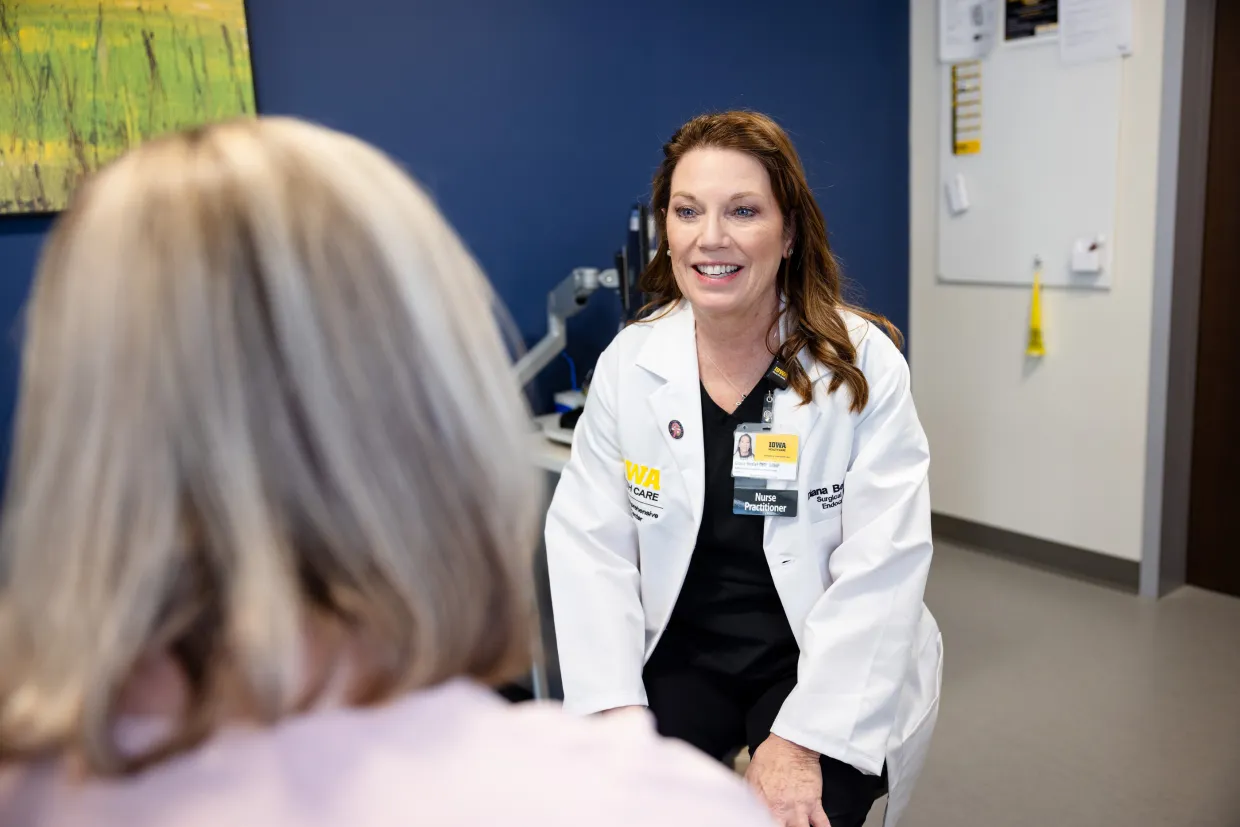
"Family history carries an increase in risk. If you have a first-degree relative diagnosed with breast cancer, that doubles the risk,” says Diana Besler, DNP, a breast cancer specialist with UI Health Care’s High-Risk Breast Clinic.
- Having a first-degree relative (mother, sister, or daughter) with breast or ovarian cancer
- Genetic mutations to BRCA1 or BRCA2, two genes commonly associated with breast cancer
- Dense breast tissue, which can both increase risk and make cancer harder to detect on mammograms
- A history of multiple or abnormal breast biopsies
- Early menstruation (before age 12)
- Late menopause (after age 55)
- Age 30 or older at first childbirth or never having children
- Lifestyle factors such as alcohol use, smoking, or limited physical activity
Having one of these factors doesn’t mean you will develop breast cancer, but it may increase your risk enough that more personalized screening is recommended.
How doctors determine your breast cancer risk
Many women first learn about their potential risk during routine breast imaging.
When you come in for a mammogram at UI Health Care, you may be asked to complete a short questionnaire about your personal and family health history.
The information is used to calculate your estimated breast cancer risk using tools like the Tyrer-Cuzick model, a widely used risk assessment system.
“It asks about things like when you had your first period, when you had your first child, your family history, and whether you’ve had breast biopsies,” Besler says.
If the assessment suggests you have a lifetime breast cancer risk of 20% or higher, you may be referred to UI Health Care Holden Comprehensive Cancer Center. In many cases, patients are referred to the High-Risk Breast Clinic by their primary care provider or a radiologist if they don’t have a primary care provider — often after a screening mammogram identifies elevated risk.
If you don’t have access to a primary care provider, self-referral to the High-Risk Breast Clinic is also an option. While many patients are referred by a provider — which can help streamline scheduling and ensure medical records are readily available — the clinic also welcomes individuals who wish to seek an evaluation on their own. At the clinic, specialists can:
- Review your family history in depth
- Recalculate your risk using additional clinical tools
- Discuss whether genetic testing might be helpful
- Develop a personalized screening and prevention plan
What screening looks like for women at higher risk
Women with an elevated breast cancer risk often need more frequent or advanced screening.
According to national guidelines, these screening plans may include:
- Annual mammograms
- Breast MRI screenings
- Imaging tests every six months to monitor breast health more closely
“Both mammogram and MRI are recommended yearly. We like to alternate a breast MRI about six months after a mammogram, so every six months you’re getting some type of imaging,” Besler says.
In some cases, regular screenings may begin at an earlier age than 40, depending on your family’s medical history.
For example, a woman whose mother was diagnosed with breast cancer at age 45 may start enhanced screening at age 35.
The goal is to detect any cancer as early as possible, when treatment is most effective.
Support and guidance at the UI Health Care High-Risk Breast Clinic
Appointments at the High-Risk Breast Clinic are designed to give you time to fully understand your risk and options.
The first visit is typically a consultation focused on reviewing your personal and family medical history and calculating your breast cancer risk. If additional screening —such as a mammogram — is needed, it may be scheduled following that visit. Care teams review each referral to ensure patients are scheduled for the most appropriate type of visit.
- A comprehensive risk assessment
- A clinical breast exam
- Personalized recommendations for screening
- Guidance about genetic counseling or testing
- Education about lifestyle factors that may influence risk
- An order or schedule for breast imaging, if needed
“We obtain a thorough family history and make sure the risk assessment score is accurate,” Besler says. For some women, prevention options may also be discussed.
Prevention options for women at elevated risk
If you have a higher breast cancer risk, you may have options to help lower your chances of developing the disease.
These options may include:
- Risk-reducing medications such as tamoxifen
- Lifestyle changes, including maintaining a healthy weight and regular exercise
- Increased screening to detect cancer earlier if it develops
- For women with very high breast cancer risk, preventative mastectomy can be considered
“Medications like tamoxifen can reduce breast cancer risk by about 30% to 50% in some women,” Besler says.
The decision to take such medications is personal and made in consultation with a medical oncologist.
Lifestyle also plays an important role. Besler encourages women to exercise and begin strength training before menopause. Body fat can influence your hormone levels, particularly after menopause, which may contribute to an increased risk of breast cancer.
“Excess body fat can start acting as an endocrine gland and secreting estrogen,” she explains. “Exercise also tends to boost your immune system."
When to talk with a specialist
If you’re unsure whether you may be at higher risk for breast cancer, there are a few signs that it may be worth discussing with your provider. Your primary care provider can help guide next steps and determine whether a referral to the High-Risk Breast Clinic is appropriate — especially following routine screening results.
Consider talking to your provider about a risk evaluation if you have:
- A family history of breast or ovarian cancer, especially at younger ages
- A known genetic mutation linked to cancer risk
- Dense breast tissue identified on mammograms
- A history of abnormal breast biopsies
- New breast symptoms, such as a lump, nipple discharge, or changes in breast appearance
“A lot of women say they don’t know who to call or who to contact if they have a breast concern,” Besler says. “Now, they have us.”
One of the biggest benefits of the High-Risk Breast Clinic is that patients know they have a dedicated team they can reach out to.
Taking the next step
Understanding your breast cancer risk can help you make informed decisions about screening, prevention, and overall health.
If you think you may have risk factors — or simply want peace of mind — the first step is to start the conversation with your health care provider. In some cases, you may also be able to request an appointment with the clinic directly, though many begin with a referral from their provider.
At UI Health Care’s High-Risk Breast Clinic, specialists work with you to evaluate your risk and create a plan designed specifically for you.