2 PICU nurses show compassionate care to patients and families through the hardest moments
Chrissy McCullough and Cale Muhlhausen provide compassionate care to critically ill children and their families
Working in the Pediatric Intensive Care Unit (PICU) at the university campus, Chrissy McCullough, BSN, RN, CCRN, has always taken a patient-centered approach to nursing, guided by her own version of the golden rule: “If this were my own child, how would I want them to be cared for?”
That same philosophy resonates with fellow PICU nurse Cale Muhlhausen, BSN, RN, CCRN. Working on the third shift, Muhlhausen sees his role as both caregiver and advocate — ensuring his patients’ needs are met while keeping families informed and honoring parents’ wishes in every aspect of care.
In pediatrics, young patients are often unable to express what they are feeling or what they need. In those moments, both McCullough and Muhlhausen shift their focus beyond the bedside to embrace a family-centered approach, especially amid the high-intensity situations they encounter in the PICU each day. That approach guided each of them as they cared not only for a young patient, but also for the patient’s parents as they faced a devastating diagnosis and an unimaginable decision for their child.
Care that carries through the hardest moments
“My baby was born earlier this year, and after 19 ‘normal’ healthy days at home, we brought them into the clinic due to some concerning spots on their legs,” explains the patient’s parent. “We were shocked to find out that our baby had an extremely rare type of infant leukemia, and they were hospitalized very quickly.”
Within 30 minutes of being admitted to the hematology/oncology floor, the baby was moved to the PICU, where they spent the next five days. Muhlhausen was the patient’s primary night shift nurse, arriving just as the infant was intubated. He had an incredibly busy first night with the patient, including three separate trips to the adult hospital for multiple scans.
“I realized just how stressful Cale’s night had been – you never would have guessed it based on the ease that he went about his shift,” notes the parent. “Throughout all the chaos, Cale was calm, competent, compassionate, and efficient. He cared for our baby, but also made sure he checked in on both of us.”
The next night, when things had calmed down a bit, Muhlhausen took the time to talk with both parents and got to know them and their child more.
“He took an interest in how we had chosen our baby’s name and made us feel that he didn’t just view our baby as another patient, but as a little human being,” says the parent.
Muhlhausen cared for the patient through those nights, and McCullough was the baby’s primary nurse for three of those days.
“Chrissy somehow managed to achieve the perfect balance of being present for us at a moment’s notice, while also giving us the space we needed at times to process what was happening or spend time with family,” recalls the parent.
Both nurses went above and beyond their basic duties, providing exceptional care to the patient and compassionate support to the parents. For example, McCullough went out of her way to find a bow to place around the baby’s EEG leads, helping them look less like a hospital patient. The next day, she brought another bow she had made herself so the family would have options, along with a book they could read together at the bedside.
“She cared about the small details,” notes the parent.
Supporting families through hard decisions
On the third day in the hospital, the family received devastating news and faced an unimaginable decision about their child’s care. They ultimately chose to focus on comfort and time together.
Knowing the family planned to take photos after the breathing tube was removed, Muhlhausen asked if he could also remove unnecessary IVs and the arterial line, making it easier for them to dress their child in a favorite sleeper. When the sleeper became soiled in the process, he reassured them not to worry and that he would take care of it. By the next morning, the family returned to find a perfectly clean sleeper ready to go, a tidied room, and dinner leftovers neatly wrapped and placed in the refrigerator.
“This was by no means necessary or his job, but he took the time to make our room clean and comfortable for the challenges of the day ahead,” the parent notes in their nomination letter. “Not only did Cale notice the clinical things, but the small and personable things as well.”
McCullough also once again demonstrated her deep empathy for both the patient and parents. She brought in a lavender-scented baby bath wash, shampoo, and lotion, so that the parents could give their baby a final bath and have memories of something that smelled nice and didn’t remind them of the hospital. She also arranged for a larger bed for the room, so that the parents could snuggle with their baby in bed until their last breath.
And when that tough moment came, McCullough knew what to do.
“Chrissy gave us space and time to be with our baby after they passed. Her shift was supposed to end at 7 p.m. that night, but we found out later that Chrissy decided to stay until we left so that she could care for us and our baby through our final moments in the PICU,” explains the parent.
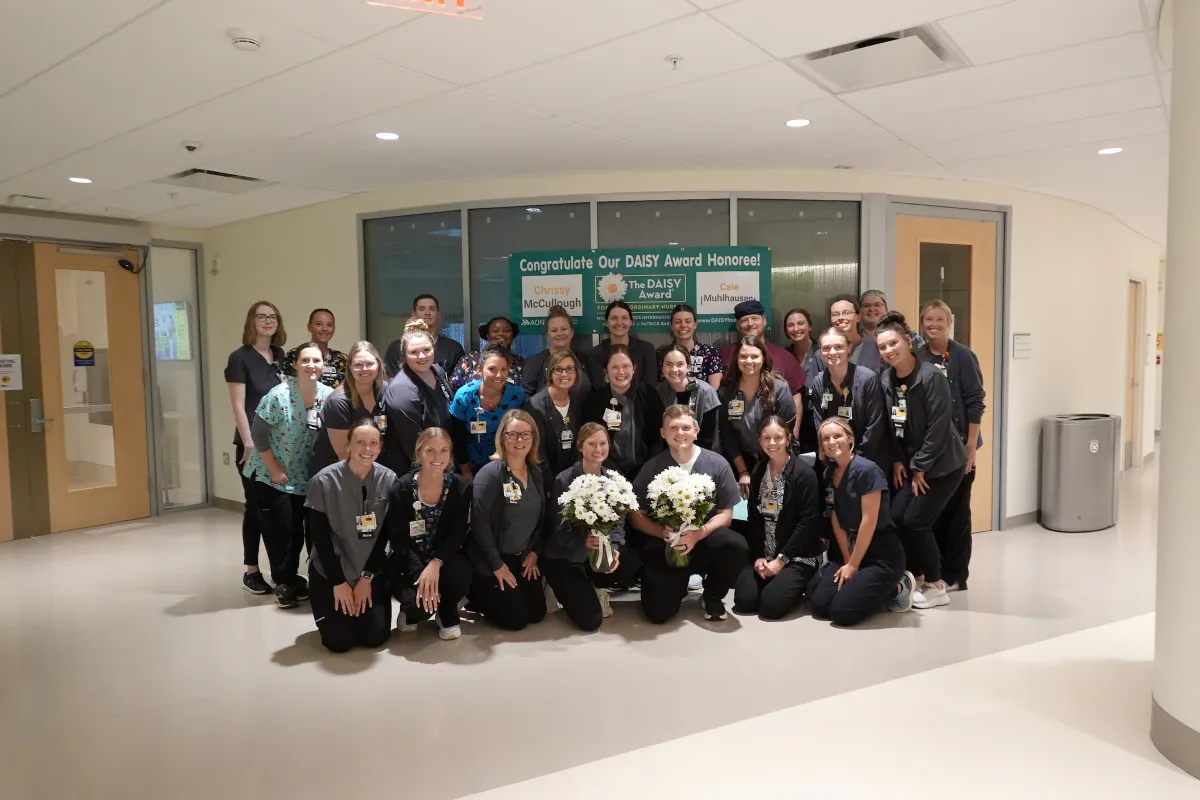
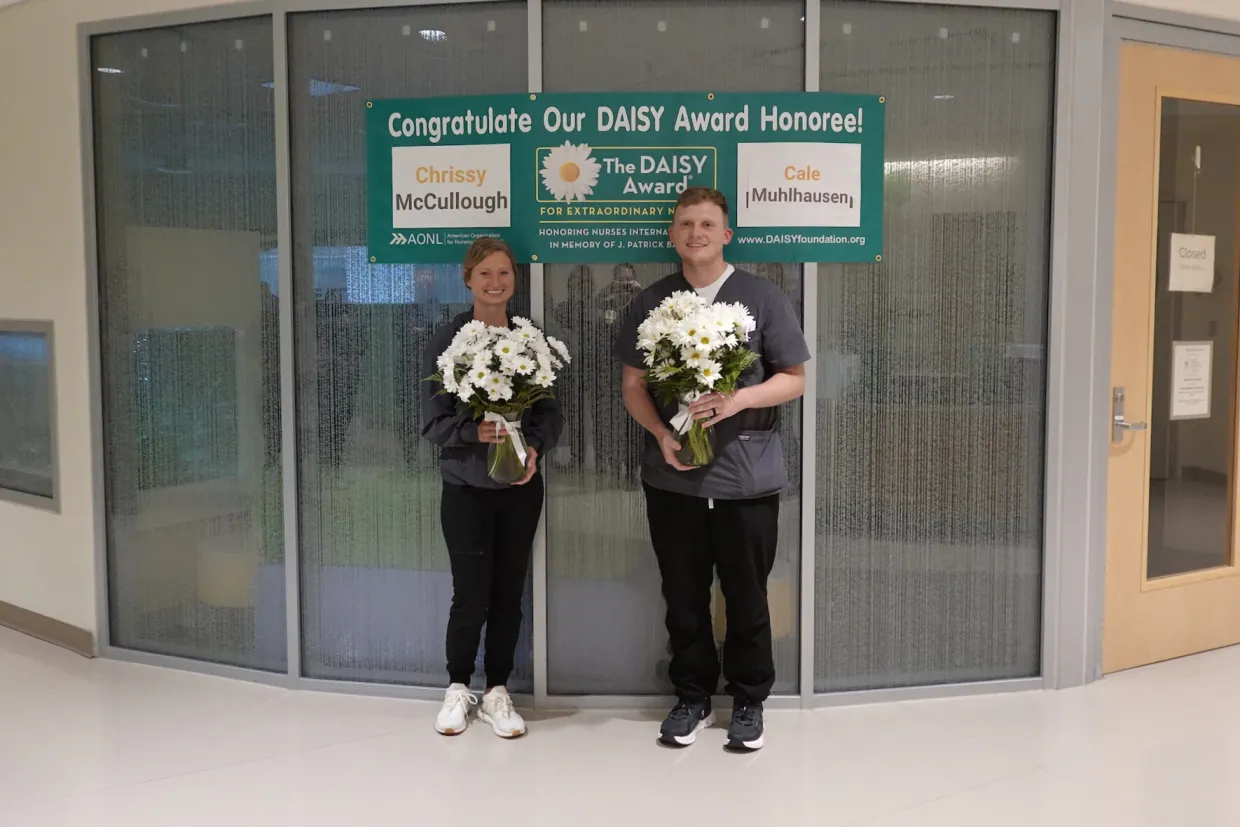
For their kind actions and compassionate care, McCullough and Muhlhausen were recognized with a DAISY Award. However, both agree that they don’t view their actions as extraordinary. Instead, they describe being able to support a family during its darkest moments as a privilege.
“Those little actions really matter in this setting. When parents are struggling with their critically ill child, they have no sense of privacy or normalcy. So, it feels natural to do what we can to help them cope with the situation,” says McCullough. “It’s a privilege to care for people and to take the time to make it meaningful. It’s our job to try to make it hurt a little less.”
They are also quick to give credit to the rest of the PICU team at the university campus. Muhlhausen says the reason they are able to go above and beyond for families in cases like this is because of the support they get from their fellow nurses, doctors, respiratory therapists, and many others.
“Nursing is a team effort,” McCullough adds. “You can’t do it alone.”