PICU nurse brings playfulness, passion to pediatric care
Andrew Thomsen, BSN, RN, brings together skill, heart, and a little bit of fun in a way that a patient’s mother described as “heartwarming and awe-inspiring.”
Pediatric Intensive Care Unit (PICU) nurse Andrew Thomsen, BSN, RN, works the night shift by choice because he likes the routine. And although every shift is different, one thing remains consistent: his fun-loving and heartfelt approach to care, no matter the hour.
When Thomsen met a medically complex, nonverbal pediatric patient and their family, he immediately helped them feel at ease.
"Growing up, one of my best friends had a nonverbal family member, so interacting with someone who communicates differently never felt unfamiliar to me," Thomsen says. "You still talk to them. You still include them. They're the patient."
Thomsen interacted with the patient like he would with any other. He greeted them, asked how they were doing, and made a point to include them in care decisions throughout their stay — something that stood out to the family.
During their time in the hospital, the patient was experiencing complications from an especially challenging surgery, which required them to lay flat for a long period of time. Thomsen was attentive to the patient’s comfort, recognizing their signals for discomfort, quickly reacting to their physical needs, and sharing words and songs of encouragement.
For Thomsen, ensuring every patient feels respected and included is just as important as providing excellent clinical care.
“This patient was having a rough time when I first met them, lying in the same position for days on end, and they wanted so badly to move and be comfortable,” Thomsen says. "I asked one of the patient’s parents what they would normally do to calm them down at home. They shared that their child reacts well to the song, 'Head, Shoulders, Knees, and Toes,’ and I think I lost count of how many times I sang that song.”
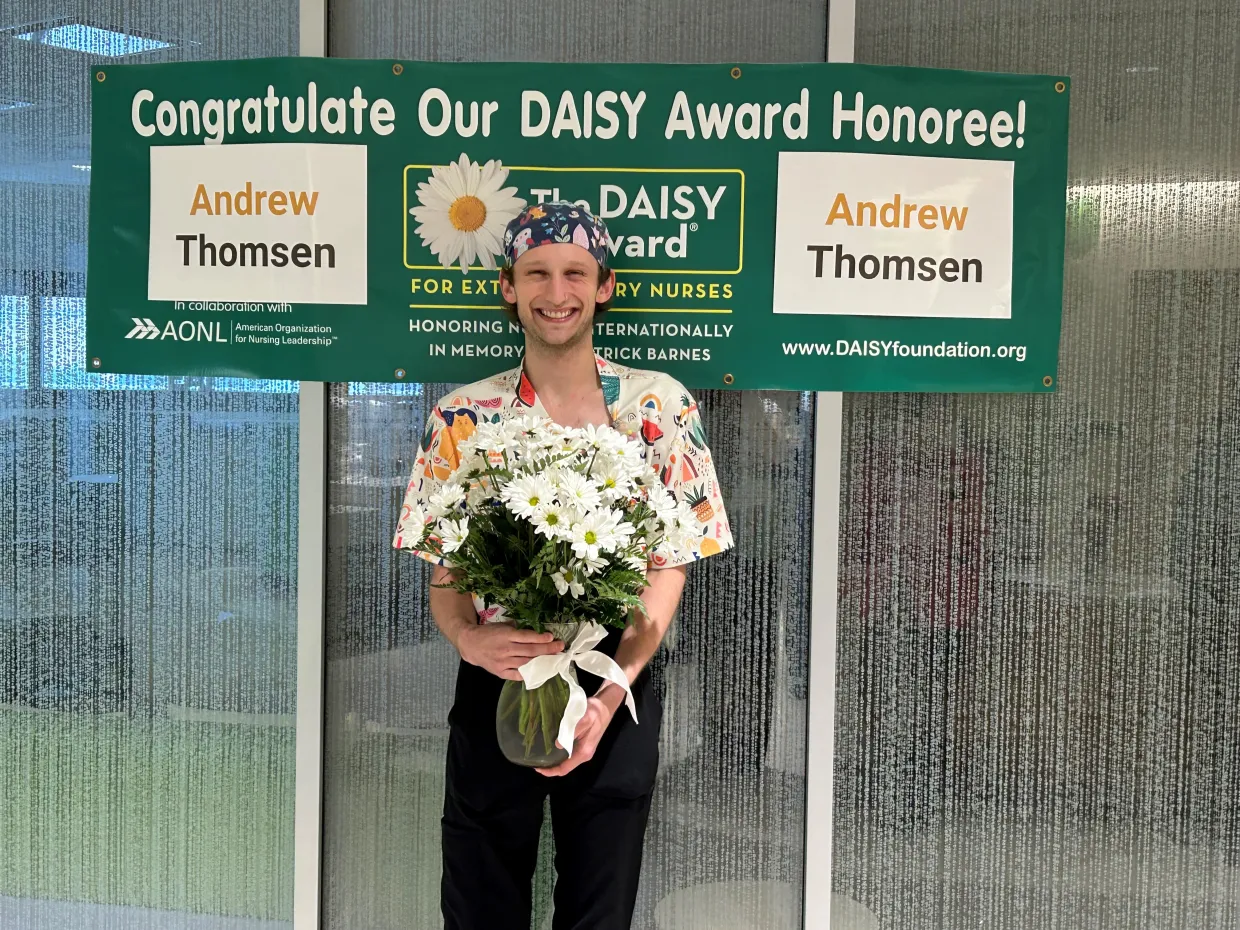
Thomsen remained thorough and thoughtful during the patient’s stay. His attentiveness to details like bed weight checks calmed the patient’s parents and built a level of trust that allowed them to take care of their own needs and rest. He was later recognized with a DAISY Award after the parents nominated him for going above and beyond for them and their child.
"[Our child] is non-verbal but otherwise very socially expressive,” wrote one of the parents in their nomination letter. “Most people, once they learn our child is non-verbal, direct any and all questions to us and don't talk or interact directly to them. Lack of verbal communication, however, didn't stop Andrew. With his outgoing and cheerful, disposition, he went right up to our child and took the time to talk to them, leading to a rapport of trust.”
The parent also noted: “I was so comfortable that our child was in good, capable hands on Andrew's watch that I even went and slept at a hotel for one night to get a good night's rest, something I have never done while our child was an inpatient at any hospital system before.”
Not only does Thomsen have a knack for treating his patients, but also for knowing exactly what their family members need.
“A lot of times these families are just exhausted,” Thomsen says. "I try to say to them ‘I know this is going to be really hard, but I need you to try and get some sleep.’ I promise them I'm not going anywhere, and that they will be the first to know if anything happens.”
Looking back on moments like these, Thomsen says they've helped define the kind of nurse he strives to be—and the guidance he offers others entering the profession.
“Some advice I would give to all nurses is that you are smart, capable, and still learning, so be kind to yourself,” he says. “But my favorite piece of advice is to never underestimate the healing power of being a little silly. It really goes a long way.”