How to quit smoking — and stay smoke-free
While the benefits of giving up cigarettes are clear, it’s often not easy to do. Here are a few tips.
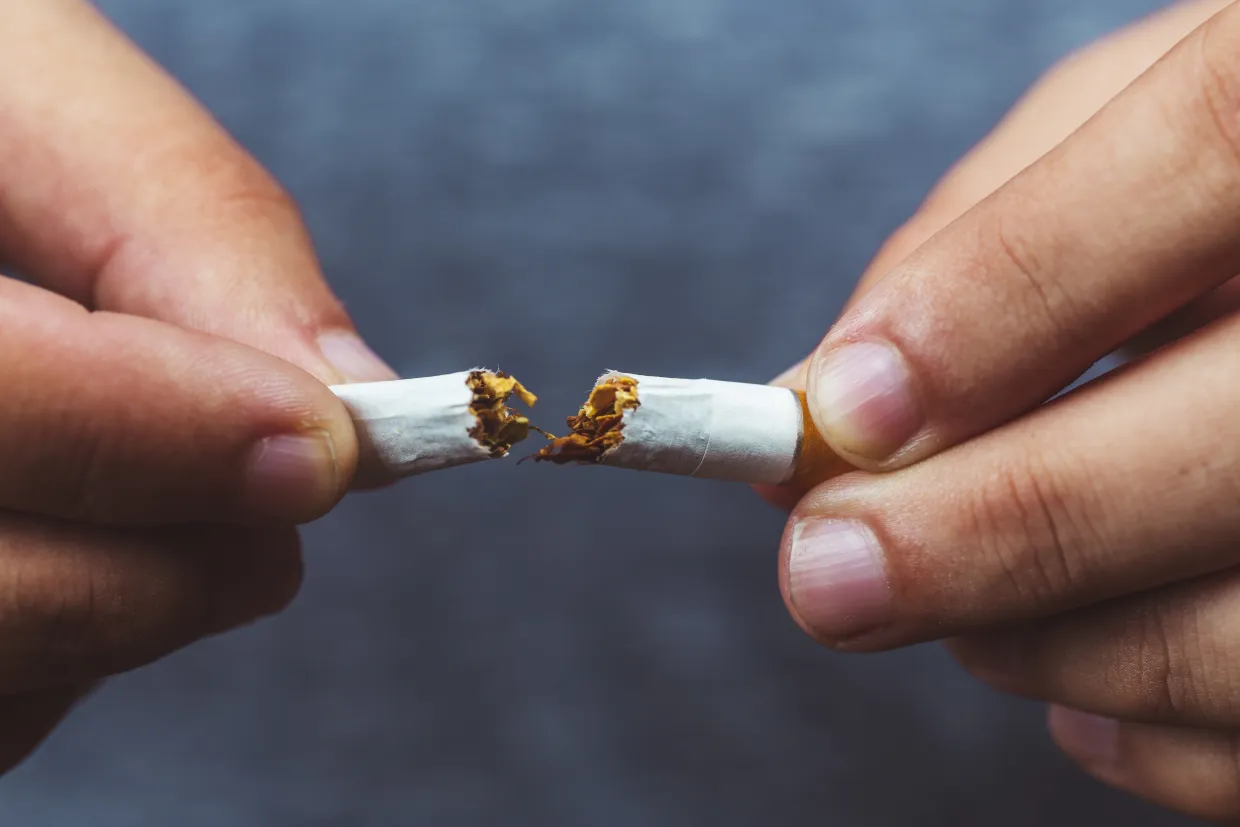
Why quitting tobacco improves your health
Looking to quit smoking? Maybe you tried once, but it didn’t work out? Don’t get discouraged. On average, it could take you as many as seven attempts to give up tobacco use before you quit for good, says Autumn Carstens, MEd, tobacco treatment specialist at UI Health Care.
The reasons for you to stay tobacco-free are clear. About 90% of lung cancer cases are associated with smoking, Carstens says.
Not only does quitting help reduce your risk of lung cancer, but it also improves overall physical and mental health.
If you are a smoker, it could take about 15 years for your lungs to heal. The good news is your lungs begin to see health benefits within just minutes of quitting. If you have lung cancer, quitting can help improve your response to treatment. Plus, not smoking creates a healthier environment for everyone around you.
Still, kicking the habit isn’t easy.
According to Carstens, there are two keys to successfully quitting tobacco: making a plan and correctly using nicotine-replacement products.
How to build a personalized quit plan
To stop smoking, start with a plan.
“When people quit but don’t have a plan in place, they haven’t had a chance to build up to that mindset or do the things they need to quit,” Carstens says.
First, set a quitting date for some time in the future—but not too far away. Typically, Carstens recommends setting a date within a couple of weeks. Going "cold turkey” suddenly might work for some people, Carstens notes, but it tends to be a short-lived experience.
Consider the triggers that will make you want to reach for a cigarette. Address them before you quit. For instance, throw out any smoking-related paraphernalia in your home such as lighters and ashtrays.
“Get those products out of your personal space so they’re not a constant reminder,” Carstens says.
Triggers can also include friends or family members who are smokers. Identify the support network that will help you stay smoke-free—not just friends and family but also professional sources such as quitlines. 1-800-QUIT-NOW is a national portal that can connect you to a network of state quitlines.
Try smoking-cessation apps and find one that works for you, Carstens advises. Different apps have different features such as encouraging text messages, a calculator that tells you how much money you’re saving by not smoking, or a social media component that allows users to interact with others anonymously, avoiding the shame that’s attached to smoking.
“Apps have been incredibly beneficial for a lot of people,” Carstens says.
How to use nicotine-replacement products correctly
“Using nicotine-replacement products correctly and effectively can make a world of difference,” Carstens says.
While some nicotine-replacement products are prescribed by health care providers, there are also FDA-approved, over-the-counter options like:
- Gum
- Lozenges
- Patches
These products may help you quit smoking, but they work in different ways. Patches, for instance, act longer than gum and lozenges. If insurance doesn’t cover these products, consider buying them in smaller, less expensive boxes, Carstens advises.
Read and follow the package guidelines.
“A lot of people don’t read the packaging, so they don’t use the products the right way,” Carstens says.
Consult your health care provider or a tobacco cessation specialist to determine the right product for you—and how to use it. A tobacco quitline can also give you proper guidance.
Build a plan, beat triggers, and stay on track
Quitting smoking starts with preparation and a strong support system. By setting a quit date, identifying and managing your triggers, and leveraging tools like apps and nicotine-replacement products, you can increase your chances of success. Remember, you're not alone—support networks and health care professionals are available to guide you every step of the way. With the right mindset and resources, a smoke-free life is within reach.