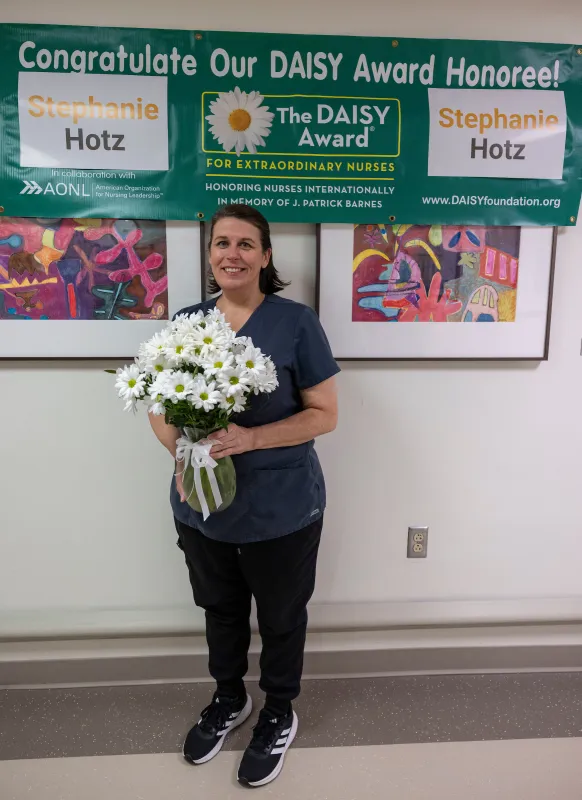
Caring through the quiet hours: Night shift nurse helps patients navigate the unknown and find their way again
Stephanie Hotz’s empathetic approach to caring for patients during the night shift at the university campus helps them face challenges with confidence.
After undergoing multiple surgeries, a patient in the Adult Acute Care Unit at the university campus was understandably anxious about adjusting to life with a tracheostomy.
The uncertainty of what lay ahead weighed heavily, especially during the quiet of the night.
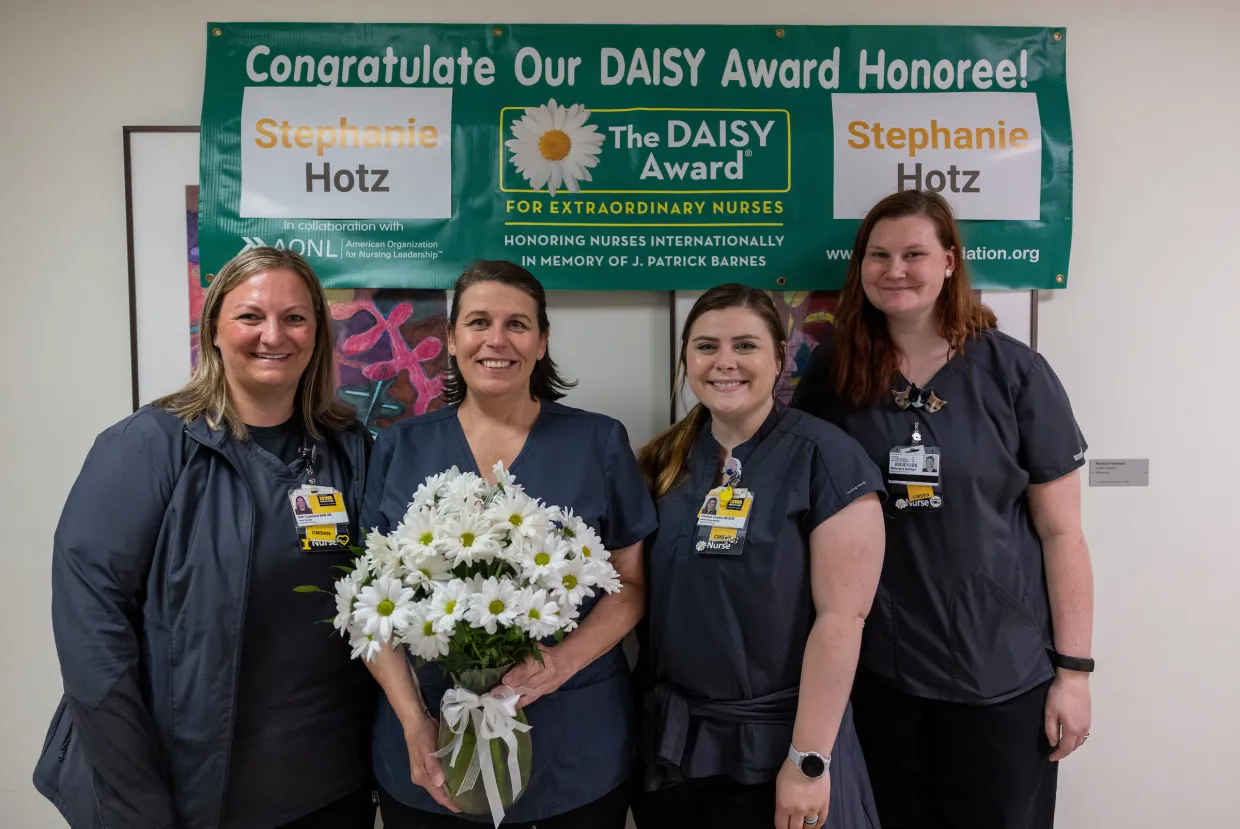
That’s when Stephanie Hotz, BSN, RN, a nurse in the Medical Surgical Services Division, stepped in to help ease their anxiety. She noticed the patient’s unease and offered more than routine care. She listened, provided reassurance, and helped the patient begin to see a path forward in their new reality. The experience left such a lasting impression that the patient later nominated Hotz for a DAISY Award, recognizing the extraordinary impact of her everyday care.
“I've never in my life had a nurse so compassionate and kind,” wrote the patient in their nomination letter. “You can tell she loves her job and her patients and truly cares about them. My family and I are floored by her dedication and commitment to her patients.”
Unlike many of the patients she cares for, who often face life-threatening illnesses requiring complex procedures, this patient's situation was, in Hotz’s words, "a fairly simple case."
The patient, who was otherwise healthy and vibrant, had vacation plans with their family, and was struggling with the everyday adjustments of living with a tracheostomy, like showering, traveling, and maintaining a sense of normalcy.
Recognizing she could help the patient sort out some of these small details, Hotz went and researched solutions at home after work. She returned the next day armed with information, demonstrating techniques on things like how to shower and suggesting helpful products that could ease the patient's transition. She also helped the patient create a MyChart account so they could establish ongoing support and care.
Caring through the quiet hours
Hotz notes that her dedication comes from a deep understanding of the fears her patients often face. Many worry about their prognosis, and while she can’t always change the outcome, she focuses on improving their quality of life once they return home. For this patient, it was especially rewarding to know she had helped them regain their active, busy life.
“I really do enjoy helping them work through that anxiety and find the best way to cope with their new situation,” she says.
Hotz notes that she leans on humor to lighten difficult moments and pairs it with a pragmatic outlook that helps her celebrate small victories. It’s this outlook that shapes not just how she interacts with patients, but how she approaches her shifts.
“I love working nights,” Hotz says. “I am really attentive at night, because patients need you to be present, and need to know that you will be there for them.”
Hotz makes a point of working around patients’ sleep schedules, providing care when they’re awake whenever she can to avoid unnecessary disruptions.
“And when they’re awake, I take every opportunity to talk to them and try to educate them on their condition, their care, or what life might look like when they go home,” she adds.
As the patient who nominated Hotz for a DAISY Award puts it: “She made a frightening experience relatable and put our minds to ease.”
Hotz's story is a reminder that compassionate care comes in many forms. It's not always about grand gestures or dramatic interventions. Sometimes, it's about taking the time to do a little research, offer practical advice, and simply be present for a patient who is facing an uncertain future.