Improving maternal care through community doulas
For some, pregnancy can be one of the most exciting stages of a person’s life. It can be a period of anticipation, reflection, and preparation toward welcoming a new life into the world.
It is also a time of rapid physical change, exertion, and mental uncertainty which can cause anxiety for the patient and their family. These feelings can be amplified for single parents, low-income families, and those who are not fluent in English, which can increase the likelihood of negative outcomes before, during, and after the birthing process.
Recognizing these challenges, the UI College of Nursing, UI Health Care, and Johnson County Public Health formed the Community Doulas of Johnson County program to help provide better maternal care to lower income mothers in the area.
What is a doula?
A doula is a community member that provides emotional and physical support, education, and advocacy for pregnant people during pregnancy, delivery, and the postpartum period.
Providers and nursing staff care for multiple patients at a time every single day, and they tend to handle many different requests and responsibilities at once. Doulas help fill in some of these gaps in the health care system by serving as a resource for the patient to answer questions and add a positive presence.
“Similar to how child life specialists help pediatric patients calm down and get through the procedure, I feel like we provide similar comfort for moms,” says Allison Largo, a certified doula from the Community Doulas of Johnson County program. “Especially when it’s your first baby, and you don’t know what to expect. We help calm any of those fears.”
Doulas have been shown to improve outcomes for pregnant people, including:
- Increased spontaneous vaginal birth
- Shorter duration of labor
- Decreased C-sections, use of pain medication, infant distress at birth, and negative maternal feelings about childbirth experiences
“All of the women that have delivered in our program and were supported by our doulas have said that they could not have done it without the doulas--that the support the doulas provided to them was amazing,” says Julie Vignato, PhD, RN, RNC-LRN, CNE, assistant professor in the UI College of Nursing and the principal investigator for the research study.
The Community Doulas of Johnson County
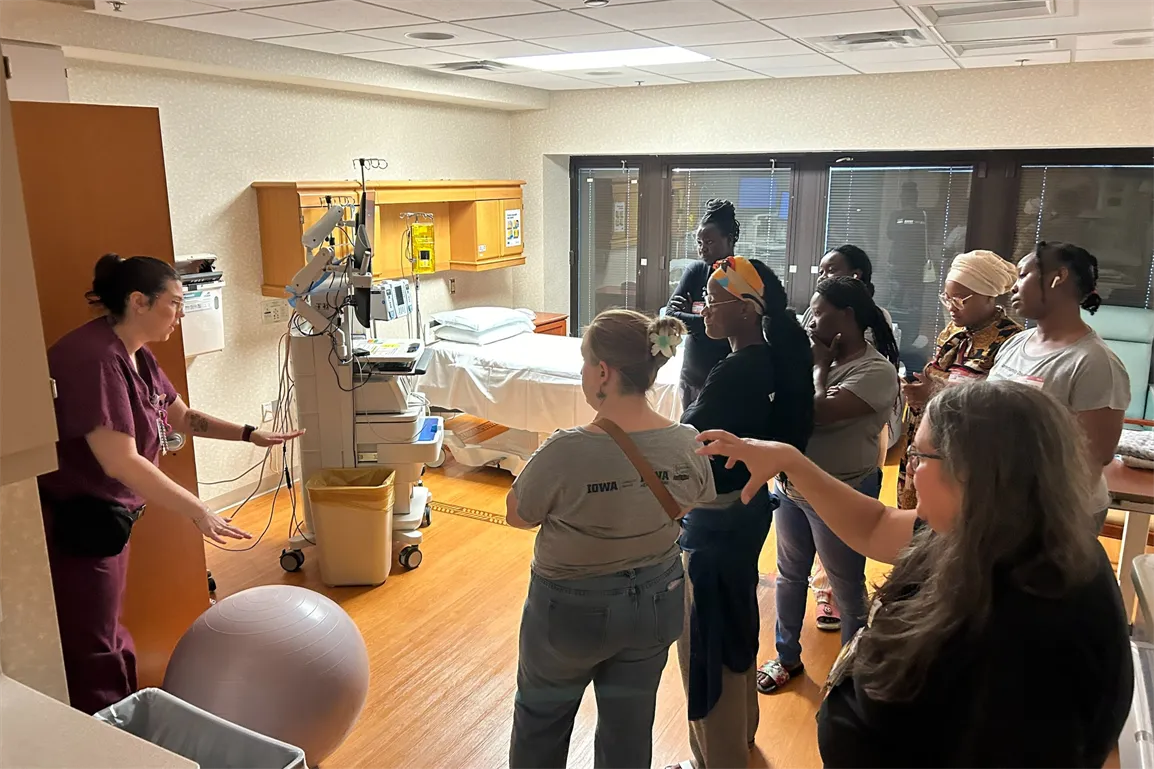
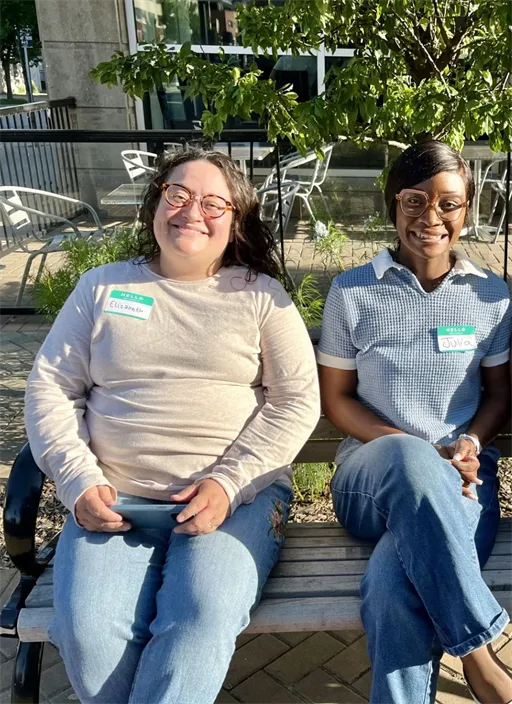
The Community Doulas of Johnson County program began in March 2024, and accepted ten community members to begin their doula training. The doulas are on track to assist with 50 births by December 2026.
The program offers its services to any low-income pregnant person living in Johnson County.
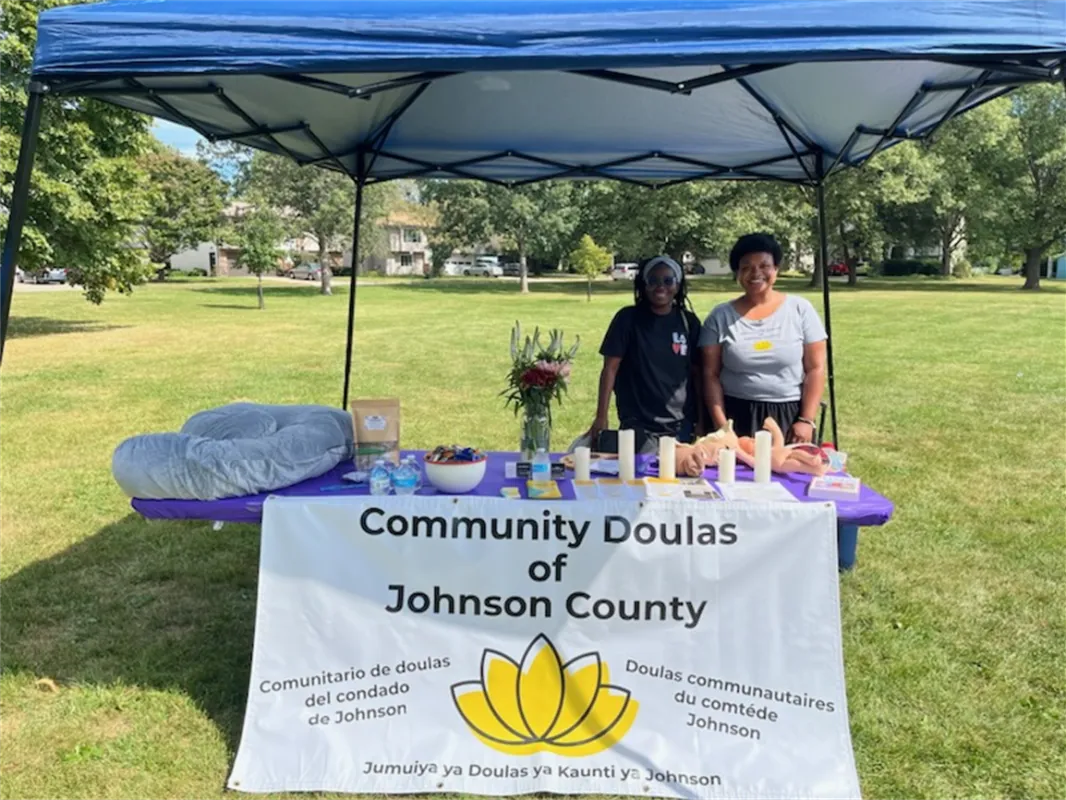
“Our doulas have served a wide range of communities in need,” Vignato says. “Our doulas are also bilingual.”
Doulas set up four prenatal visits with the patient at their home, attend the birth, and meet with the patient four times following the birth. Doulas develop trusting relationships with pregnant mothers and help prepare them for birth. All the current childbirth education classes in Johnson County are in English, so the prenatal visits often bridge that barrier.
Postpartum visits are just as critical, with the patient dealing with the physical exhaustion of caring for a newborn and the mental stress of a completely new responsibility.
Setting itself apart
The Community Doulas of Johnson County program offers many resources that can’t be found anywhere else in the area, including two doula coordinators that provide support for the program’s doulas and help prevent burnout.
“Our doulas aren’t employees, they’re community members, and many of them have full-time jobs on top of this,” says Amber Goodrich CNM, ARNP, MSN, FACNM, division director and clinical associate professor of obstetrics and gynecology-midwifery and obstetric clinical administrative leader of the Community Doulas of Johnson County. “They don’t have a nursing background or anything like that, they just have a desire to do this.”
These doulas receive some compensation, but the program focuses on educating the doulas to help them establish their own business to provide these services to the community.
Looking for results
The program also serves as a research study that is collecting data to better understand the effectiveness of doulas on reducing the rates of maternal disease and death in Iowa.
“Specifically, we would like to know how doulas affect early access to prenatal care, improving mental health conditions, improving breastfeeding rates, and reducing rates of hypertension during pregnancy,” Vignato says. “Hypertensive diseases during pregnancy are a leading cause of pregnancy-related deaths and are linked to other complications that could negatively affect the birthing process.”
The data from this program will be combined with other doula programs supported by Iowa Health and Human Services to gain a better understanding of the impact that doula services can have.
Continuing to grow
The program is currently structured as a pilot project. However, with the success of the program, the demand for its services has continued to grow.
“Frankly, one of the problems that we have had is that a lot of pregnant mothers in need not currently living in Johnson County are requesting these services,” Vignato says. “We cannot expand outside of Johnson County at this point.”
Vignato says the current goal is to continue establishing the need and sustainability of community doulas in improving health outcomes, so programs such as this one can expand in the future and be available for more pregnant mothers in the state.
“For many, this is the most difficult thing they will ever go through in their life, and both their life and the baby’s life is on the line,” says Largo. “We need to give patients the personal attention they need.”