Nurse reflects on career-defining ECMO journey
Elizabeth Moore helped establish an adult program at UI Health Care to provide the highest form of life support to patients with heart failure or lung failure.
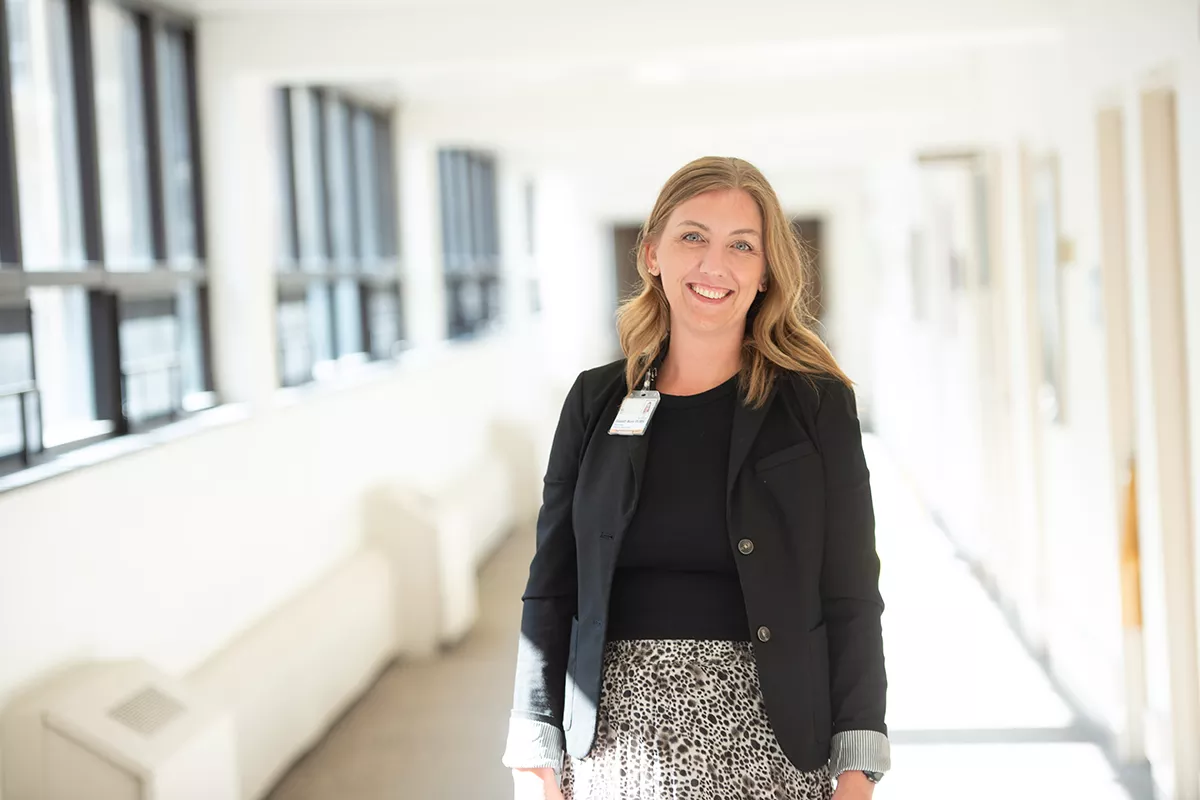
Elizabeth Moore, MBA, BSN, RN, is a third-generation nurse. Her dad entered nursing as a second career. Moore’s grandmother, Esther Bechtel, became a nurse after graduating from University of Iowa in 1939.
And while the mission of nursing remains much the same over multiple generations, the technology and opportunities have drastically changed.
One of those advancements is ECMO, or extracorporeal membrane oxygenation, the highest level of life support. People who need ECMO have a severe and life-threatening illness that stops their heart or lungs from working properly.
Moore, associate director of UI Health Care Heart and Vascular Center, first learned about ECMO while working as a neonatal intensive care unit nurse in the early 2000s.
"After taking care of a few babies that were on ECMO, it sparked my interest,” Moore says. “I took that leap of faith, put in my application, and joined the ECMO team."
Thriving in the unknown
That moment sent Moore in a new direction, one that would change her career, with the hospital’s need for ECMO coordination to support the addition of an adult lung transplant program.
“As a neonatal nurse, we had teeny-tiny babies that you can literally hold in the palm of your hand,” she says. “Then all of a sudden, I was learning about adult critical care.”
Yet Moore learned she thrives in the unknown. She began training and helped start the adult ECMO program in 2005.
She was on call the night UI Health Care put its first adult patient on ECMO. Flash forward a couple of years and Moore teamed up with a physician from Hawaii, Mark Ogino, MD, who was focusing on ECMO simulation.
Ogino asked Moore to help him train a group of physicians at an Extracorporeal Life Support Organization (ELSO) ECMO Training Course in Atlanta, Georgia. Sixteen years later, she’s still heavily involved in the organization, serving as global education director.
Moore also met Robert H. Bartlett, MD, shortly after joining ELSO. Known as the “Father of ECMO,” Bartlett encouraged Moore to think beyond boundaries and supported her ambitious goal of creating a global standard for ECMO education. Moore says the mentorship had a big impact on her career.
"I've met amazing people, and I’ve been in the right place and at the right time,” Moore says. “I've never been afraid to say yes to very intimidating opportunities. They fortunately have all turned into an incredible professional journey for me."
In the early days of adult ECMO, UI Health Care leadership questioned the viability of the high-dollar program. At one point, UI Health Care was one of just 30 adult ECMO centers. But cost remained a concern.
“From the clinical perspective, I knew how valuable this program was to Iowans, but I didn't know the business language to state my case and protect its place at UI Health Care,” Moore says. “The return on investment of a program like this has a value beyond the dollars and cents associated with the procedure of supporting a patient on the machine.”
So, Moore pursued an executive MBA degree. She wanted to learn from a cross section of leaders outside health care. Moore knew she’d need to help evaluate profitable programs, determine how to maximize them, and figure out how to reduce costs. Moore’s MBA has helped her accomplish these goals.
UI Health Care is now considered an international leader in ECMO and is home to one of just 27 ELSO-endorsed training sites in the world.
Nursing opened doors
Saying yes to new opportunities keeps Moore passionate about her career path. She doesn’t have a “typical” day, but she says her personality prefers that. Moore appreciates all those who have helped her.
“I have been fortunate to have mentors that recognize my passion and potential beyond my credentials or titles,” she says. “They have learned what drives me professionally and have helped to open doors that have allowed me to explore and grow as a leader and health care professional.”
Moore was recently named interim director of clinical services for UI Health Care Heart and Vascular Center. In this role, she collaborates with leaders and physician partners to guide and integrate clinical and operational strategies for cardiovascular services across the health system. She oversees inpatient, outpatient, and procedural care, and she establishes strategic priorities to position the Heart and Vascular Center as the region’s premier provider of cardiovascular care.
As ELSO’s global education director, Moore works with an international network of experts to shape the standards for ECMO education. Together with her colleagues, she has authored 10 publications that define the road map for achieving and sustaining high-quality ECMO education on a global scale.
“Serving as ELSO’s education director has been invaluable in my role as a cardiovascular leader,” Moore says. “It has connected me with national and international colleagues, allowing me to learn best practices and explore ways to enhance our programs. It also provides a platform to share the incredible work being done here at Iowa with the broader ECMO and cardiovascular community."
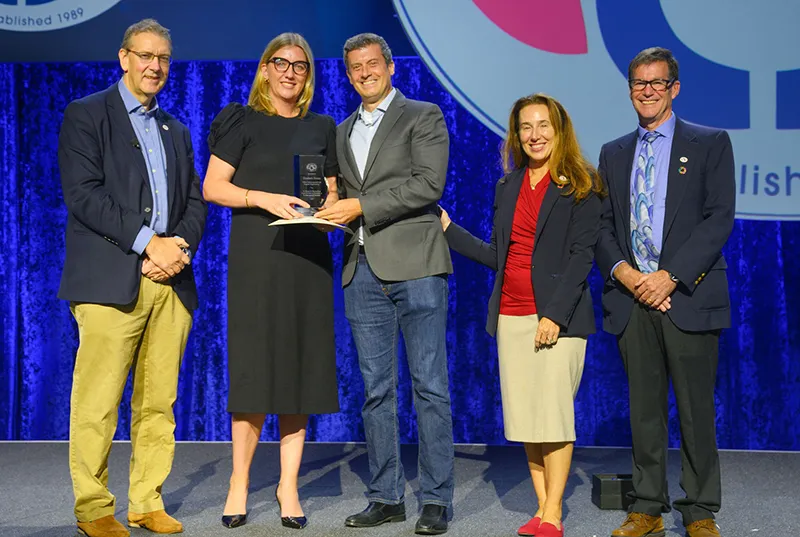
Moore was inducted into the Fellowship of the Extracorporeal Life Support Organization (ELSO) in September 2025. The honor recognizes physicians, nurses, perfusionists, therapists, and researchers around the world who have advanced ECMO delivery in diverse and lasting ways. Moore is the first Iowan and only the fifth nurse to be inducted into the fellowship.
“Starting my career in nursing has opened so many doors that I didn't even know existed when I chose this path,” Moore says.