Stronger together: Neurobehavioral Specialty Unit's unified care approach helps patients build a better life
The Neurobehavioral Specialty Unit shows how an intense commitment to open lines of communication and sharing both the ups and the downs as a team can help facilitate patient success.
When care is complex, the strength of a team can make all the difference.
That’s especially true in the Neurobehavioral Specialty Unit on 1JPE at our university campus, where collaboration across disciplines is essential to supporting patients with a wide range of needs. In one case, team members worked with a patient over the course of more than a year, seeing remarkable progress through consistent, compassionate care. What began as a focus on safety evolved into something much more: a deeply collaborative effort rooted in trust, open communication, and a shared goal of helping the patient build a life that feels as normal as possible.
Nurses, psychologists, aides, behavioral health consultants, teachers, recreational therapists, psychiatrists, and social workers all play a vital role in treating this patient (and every patient) with dignity, protecting safety, and supporting overall well-being.
“We've all learned a lot of lessons along the way, so to see where we're at in terms of this particular patient's growth and happiness is pretty fantastic,” says Kelly Vinquist, PhD, co-director of this subspeciality inpatient unit.
Since the patient transferred to the unit and has worked with this interdisciplinary team in a focused and patient-centric way, they went from showing little expression to engaging significantly more by smiling, laughing, and making their needs known.
As director of nursing services for behavioral health, Tom Martz, DNP, NEA-BC, believes the collaboration between the disciplines is the driving force behind the team’s success.
“This might be the first team in my 53 years working in hospitals where I have seen this level of integration. We are all intertwined and share a mindset, yet respect each person’s area of expertise,” says Martz. “So many voices come together to make sure we are on the same page. It’s not always easy, and sometimes it is a moving target, but it is all those voices that make sure we’re not looking at things only through the lens of one discipline.”
Staying on the same page
Strong alignment around shared goals and open lines of communication fosters trust across the Neurobehavioral Specialty Unit. The team uses multiple communication channels to help everyone stay up to date on a patient’s progress each day.
One key tool is a Teams message thread — a “living document” where team members share updates from their shifts, describe new techniques, and reflect on what worked and what didn’t. Because the entire treatment team can view and contribute to the thread, it’s easy for anyone starting their shift to quickly get up to speed. In addition to practical insights, the thread has also become a space to celebrate wins, which helps sustain team morale.
Offline, a large whiteboard serves as a brainstorming hub. Team members jot down ideas for therapies or goals they’d like to explore with patients. Together, they talk through what it would take to achieve them, then revisit the discussion later to share feedback and make any necessary adjustments.
“We welcome ideas from everyone on the team and work hard to be sure everyone feels heard,” notes Martz. “We’ve been able to get a lot of things right because of our culture of idea sharing.”
The team’s deep commitment to all their patients and constant willingness to share knowledge and support one another is what keeps them moving forward, even on the hardest days.
“There’s times when we all feel emotionally exhausted, but we know that there's just a little bit more we have left in the tank to take it to the next step,” adds Vinquist. “We gently push ourselves and each other to do more as a team. We talk about what went well, and what didn’t go well. We laugh, we cry, we celebrate, and we make sure that as a team, we don’t go home on hard days without first talking to someone we trust.”
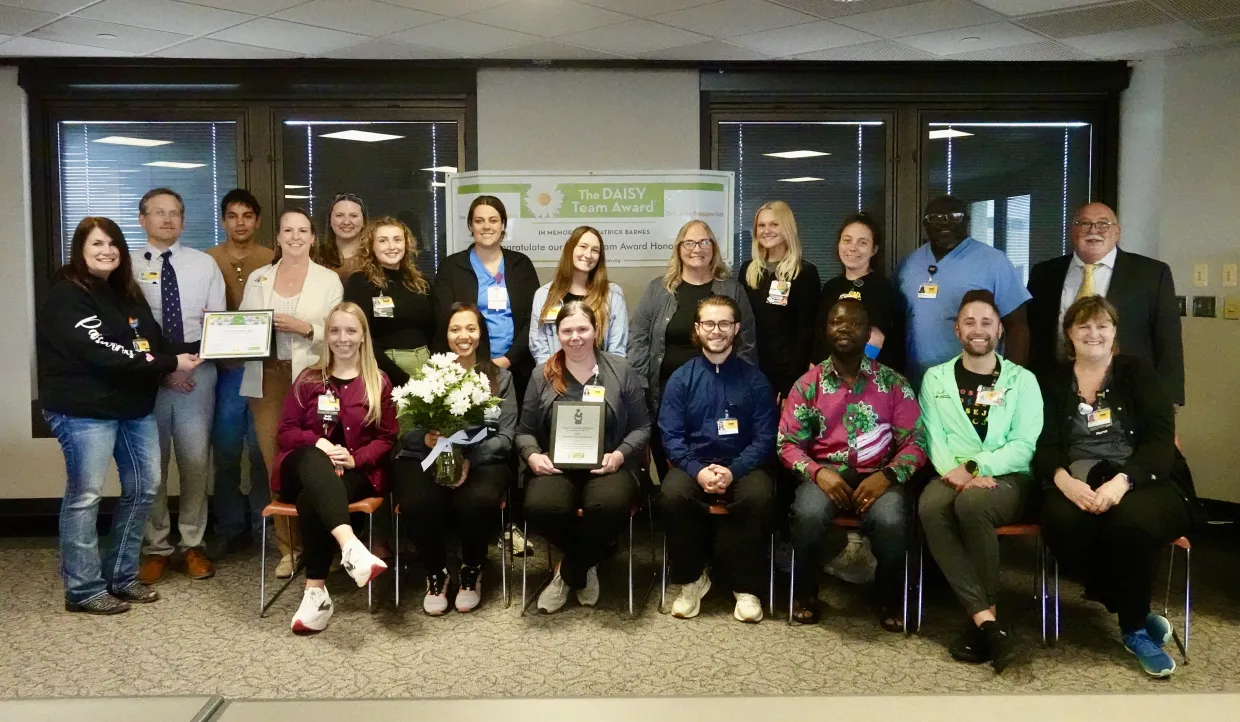
For their exceptional teamwork and dedication to each other, the Neurobehavioral Specialty Unit was recognized with this year’s DAISY Team Award.
“We don’t do this work for recognition; we do this work for our patients,” says Vinquist. “But having something like the DAISY Team Award recognize our team for all their efforts and to highlight how all their hard work is paying off — that's really special.”