Nurse cultivates connection through awareness and action
For pediatric nurse Zoie Burton, BSN, RN, caring for her teenage patient went beyond providing regular medical duties – she created a welcoming environment connected over shared interests.
Within the first few months of her professional nursing career, Zoie Burton found herself in the middle of a three-night stretch caring for a nonverbal teenage patient who required complex care at UI Health Care Stead Family Children’s Hospital.
The patient had complex medical needs and relied on specialized equipment for breathing and communication. They communicated through vocalizations, facial expressions, and eye movements.
While Burton is accustomed to the constant monitoring required in caring for pediatric cardiac and respiratory patients, this case felt different. The patient, closer to her in age than most, prompted Burton to seek out meaningful ways to connect on a more personal level.
“I just tried to get to know them,” Burton says. “Since we are closer in age than many of my younger patients, I thought we might share some interests, even if we seem different at first.”
It was the start of a strong relationship.
A relationship built on connection and care
Burton took a collaborative approach, working closely with both the patient and their parents. She asked how she could best keep the patient comfortable and make the hospital feel more like home. For the patient, that meant maintaining their usual schedule, keeping their environment calm, and honoring the ways they preferred to engage with the world.
“Being in the hospital can be really hard,” Burton says. “We want to make it the best experience we can while patients are with us.”
Burton’s care extended into all hours of the night, often with the goal of helping the patient feel more like a teenager and less like a patient. Burton, the patient, and one of their parents bonded over their love of Taylor Swift, and while the patient’s family slept, Burton would even spend time styling their hair.
“You want to feel good about yourself, even when you’re in the hospital. Even though they couldn’t express it verbally, I know they are like any other teenager who wanted to have their hair done,” Burton says. “I just try to bring joy into every day. It’s really hard to be a patient, so I try to give them a glimpse of happiness if I can.”
Burton’s collaboration and attentiveness extended beyond comfort. During a routine check, she noticed something unusual on the patient’s monitor — a subtle shift in cardiac rhythm that didn’t match what she had seen before. She gently woke the patient’s parent to confirm it wasn’t part of the normal pattern.
Lab results revealed the patient’s potassium levels had dropped dangerously low, triggering an arrhythmia. Burton’s vigilance allowed for early intervention, preventing what could have become a far more serious complication.
Compassion that left a lasting impression
Through it all, Burton’s guiding philosophy was simple – joy and connection matter. Even when a patient cannot speak, they can feel when someone sees them as a whole person.
Over time, the patient developed additional complications and was transferred to the pediatric intensive care unit, where they eventually passed away.
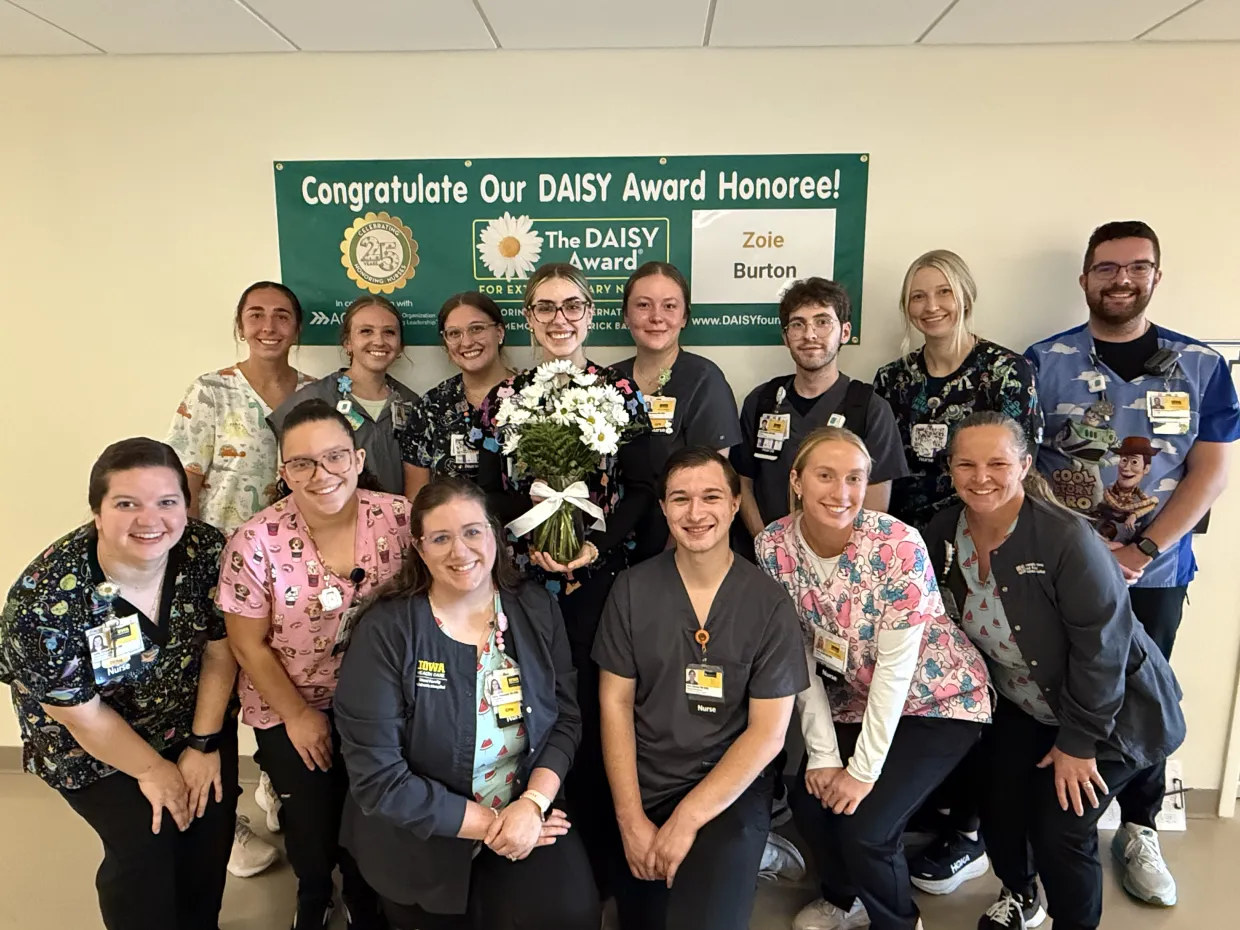
Burton was later recognized with a DAISY Award after being nominated by the patient’s parents, who cited her remarkable ability to connect with their child on a personal level while providing expert care in a complex situation.
When Burton received the DAISY Award following a stressful shift, she was surprised not only by the recognition, but also by a special guest there to present it: the patient’s parent who she spent many nights with.
“There were lots of hugs and lots of tears. Then they read my nomination to me — it was the first time I heard it,” Burton says. “It was so incredibly special, and I was thankful to have them there.”
The moment served as a powerful reminder that even during the most challenging days, compassionate care can leave a lasting impact on patients and families.