Managing Syncope and Indications for Pediatric Cardiology Referral
Referral to pediatric cardiology for syncope is recommended when:
- Syncope occurs in the act of physical activity or exercise
- Pre-syncope chest pain that is felt to be cardiac in origin
- Complaints of palpitations or heart racing prior to syncope
- Abnormal EKG
- Family history of sudden cardiac death or sudden unexplained death
- A non-cardiac cause is not evident (untreated anemia, inadequate fluid intake, simple faint, etc.)
If you have a pediatric patient experiencing syncope or pre-syncope, follow these guidelines:
- Document symptoms associated with and preceding syncope or pre-syncope, palpitations, and chest discomfort
- Evaluate for cardiac murmur
- A family history for sudden cardiac death, sudden unexplained death, congenital heart disease, cardiomyopathy, pacemakers, ICDs, and coronary artery disease in the young (<55 years old) should be reviewed
- Fluid intake should be evaluated (anything less than 2 liters per day is low)
- Caffeine and other stimulant intake (green tea extract, guarana, etc.)
- Salt intake should not be limited for otherwise healthy patients without hypertension
- Document patient exercise
- less than 150 minutes of moderate to strenuous exertion per week is associated with pre-syncopal syncopal symptoms
- chronic deconditioning is strongly associated with syncopal symptoms
- walking in a patient less than 65 years old is not considered moderate exertion
- 12-lead EKG
- Orthostatic blood pressures and heart rates (see description on the following page)
- 24-hour or 48-hour Holter if symptoms of palpitations, near-syncope, or syncope occur daily or every other day
- Event monitor for 7 to 30 days if symptoms occur at least once a week or once a month
- If symptoms occur with exercise, we would be happy to facilitate an echocardiogram and possibly a treadmill stress test.
- Obtain the following lab tests and treat abnormalities accordingly:
- CBC (anemia, etc.)
- BMP
- Iron Panel and Ferritin (iron deficiency even without low hemoglobin is associated with syncopal symptoms)
- TSH
- Vitamin D
Orthostatic blood pressures and heart rates:
- Patient will be instructed to lie supine quietly for at least 5 minutes
- Obtain a heart rate by palpating the radial pulse for 1 minute, immediately followed by a manual blood pressure measurement
- Upon completion, the patient will sit up with feet on floor (if possible) and quickly obtain a heart rate and manual blood pressure measure.
- Immediately, the patient will stand, and a heart rate and manual blood pressure is reassessed.
- Patient will continue to stand quietly for the remainder of the test. A heart rate and blood pressure will be reassessed at 5 minutes and 10 minutes at which point the test is concluded.
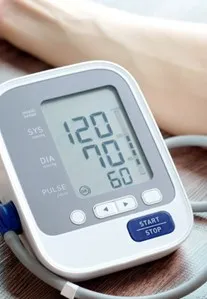
Syncope-related terms and diagnoses
Autonomic dysfunction/dysautonomia is an umbrella term describing a condition where there is altered function in one or more components of the autonomic nervous system that negatively affects health. We think of it as a term for the overall “thermostat” of the body that has some dysfunction in regulation related to the autonomic nervous system in pre-syncopal patients, including heart rate, blood pressure, and temperature. Dysfunction in autonomic regulation can also include digestion, sweat gland function, urinary function, and sexual function.
“About one-third to half the population faints at some point in their lifetime” (Shen et al., 2017). Heat exhaustion, severe emotional stress, significant dehydration, straining in the bathroom, seeing blood, needles including blood draws and vaccinations, severe pain, and fear can all cause a syncopal event that would be considered “expected” for the conditions. Conditions can be mixed that make fainting more likely to occur such as taking a hot shower after recovering from influenza when they were not drinking or eating enough for a few days.
upon standing from a sitting or supine position. At that time, a drop in systolic blood pressure by ≥20 mmHg and/or a decrease in diastolic blood pressure by ≥10 mmHg within the first 3 minutes of standing (Boris et al., 2022). Creating a data dictionary for pediatric autonomic disorders. Clinical Autonomic Research. https://doi.org/10.1007/s10286-023-00923-3). A delayed OH is when the blood pressure drops after 5 minutes and can be a sign of vasodepressor response in children. It is normal to see an increase in heart rate as compensation for the drop in blood pressure
If a patient is 18 years old or younger, POTS in noted when there is a 40-point increase in heart rate from supine to sitting or to standing or a heart rate at least 120 bpm upon standing for 10 minutes with no orthostatic hypotension. A patient needs to have reported symptoms with this change in heart rate as well, including lightheadedness, dizziness, nausea, diaphoresis, headache, fatigue, and other autonomic dysfunction symptoms (Boris et al., 2022). Symptoms need to be occurring for 3 months or greater to equate a POTS diagnosis. If symptoms have occurred for less than 3 months, a more appropriate diagnosis is orthostatic intolerance.
Orthostatic intolerance includes symptoms like dizziness, lightheadedness, headache, palpitations, and vision changes when in an upright position that resolve while seated or supine. There should be no changes in orthostatic blood pressures or heart rates, or OH or POTS is a more appropriate diagnosis.
IST is a heart rate consistently greater than 100 bpm at rest or greater than 90 bpm on average over 24 hours. A patient is also reporting symptoms including palpitations, dyspnea, or dizziness. If there are no symptoms, then it’s not IST syndrome. Chronic deconditioning can lead to elevated baseline heart rates which can confound the diagnosis.
Conversion disorder (functional neurologic symptom disorder) is characterized by neurologic symptoms, such as weakness, abnormal movements, or nonepileptic seizures, which involve abnormal nervous system functioning rather than structural disease. [DSM 5, American Psychiatric Association, 2013]. In our pediatric cardiology practice, we have identified conversion disorder at times associated with syncopal symptoms. We coordinate with psychiatry when this is suspected. Anxiety, especially when associated with panic attacks, can cause elevated heart rates, tingling of the perioral area and of the extremities (fingers, hands, feet, etc).
Post-exertional syncope that is non-pathologic can occur when exercise is stopped suddenly and there is a reduction in “lower extremity muscle pumping...that results in less cardiac venous return and cardiac output.” A normal variant that is not pathologic can commonly be seen in runners at the end of a race in track and cross country when they suddenly stop exerting themselves. Meaningful drops in blood pressure immediately after exertion have been recorded since 1898 (Tipton, 2011). Patients with baseline hypertension are more susceptible to it. Exertion while dehydrated or on hot days and/or on humid days worsens symptoms.
Treatment Recommendations
- Increase fluid intake (100 ounces or 3 liters daily)
- Increase salt consumption (3,000 mg/day to 6000mg/day)
- Compression stockings ( 30-40mmHg) in select individuals
- Healthy diet (no skipping meals, breakfast every morning, etc.)
- Some individuals require a small snack 1 to 1.5 hours prior to competition
- Aerobic and anaerobic activity for 150 minutes every week, consisting of moderate to strenuous exertion and resistance training/weightlifting
- Activities that can increase vascular tone include walking, swimming, rowing machine, biking, and jogging. Please note that walking on a flat surface is not considered sufficiently strenuous to moderate exertion for pediatric patients.
- Activities that focus on core strength like planks, squats, and sit ups have been found to reduce symptoms as an adjunct to aerobic exercise as well as activities that focus on lower extremity strength like squats and calf raises
- Counter maneuver pressure activities
- Practice good sleep habits
When clinically indicated, we collaborate with these pediatric subspecialty teams at UI Stead Family Children’s Hospital. We would be happy to facilitate a referral:
- Endocrinology for Hypoglycemia, hypothyroid, hypoadrenalism
- ENT for Dizziness, or feeling like they are “rocking on a boat”, or the “room is spinning”, evaluation needed for peripheral vertigo
- Genetics for Beighton Score of 5 or more, chronic joint pain, or joints easily dislocate
- GI for Syncope with nausea/vomiting, constipation, diarrhea, reflux, appetite suppression
- Hematology for Iron and/or ferritin deficiency and/ or anemia
- Neurology for Syncope or dizziness with headaches/ migraines, loss of bowel or bladder with syncope, seizures, dysautonomia, concussion
- Neuropsychology and/or Psychology for Post-concussive syndrome, ADHD/ADD, school issues, short term memory loss/brain fog, breath holding spells, conversion disorder
- OB/GYN for Syncope/dizziness during menstruation or heavy periods
- Physical therapy for orthostatic intolerance to increase strength in lower extremities to increase blood return during position changes
Shen, W., Sheldon, R.S., Benditt, D.G., Goldberger, Z.D., Grubb, B.P., Hamdan, M.H., et al. (2017). 2017 ACC/AHA/HRS Guideline for the Evaluation and Management of Patients with Syncope. AHA Journal, 134(5), e60-e122. https://doi.org/10.1161/CIR.0000000000000499
(Boris et al. (2022). Creating a data dictionary for pediatric autonomic disorders. Clinical Autonomic Research. https://doi.org/10.1007/s10286-023-00923-3
DSM 5, American Psychiatric Association, 2013
Tipton, C.M. (2011). Concerning postexercise hypotension. Exercise and Sport Sciences Reviews, 29(2). https://doi.org/10.1097/JES.0b013e3182164376