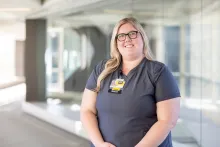
Clerk’s story shows how empathy, patience can shape a stronger workplace
Lessons learned early on continue to guide how Bethany Husmann shows up for patients, families, and her coworkers in a high-stress care environment.
Starting her role as a clerk in the Day of Surgery Lounge at the university campus in early 2023 marked a significant new chapter for Bethany Husmann.
After being out of the workforce for 15 years and navigating a major life transition, the fast-paced perioperative environment could have felt overwhelming. Instead, Husmann found a team that showed her how patience, kindness, and teamwork can shape not only how work gets done, but how people feel while doing it.
Because she has a visual impairment, Husmann’s training looked different than it might be for others. Tasks sometimes took longer, and she often had to rely on repetition and consistency to build confidence.
Rather than seeing this as a limitation, Husmann’s colleagues met her with patience and encouragement — allowing her the time she needed to complete tasks, stepping in calmly when frustration set in, and offering reassurance without taking work away from her. For example, when physicians called requesting updates or rooms for families, Husmann often had to wait for verbal confirmation rather than relying on visual cues others could see immediately. Teammates helped by filling in details when needed, while still giving her the space to complete the task herself. That balance of support without rushing or judgment made a difference.
“That experience really taught me how we treat each other matters just as much as the work itself,” Husmann says. “When people are patient with you, it gives you confidence. It makes you want to do better.”
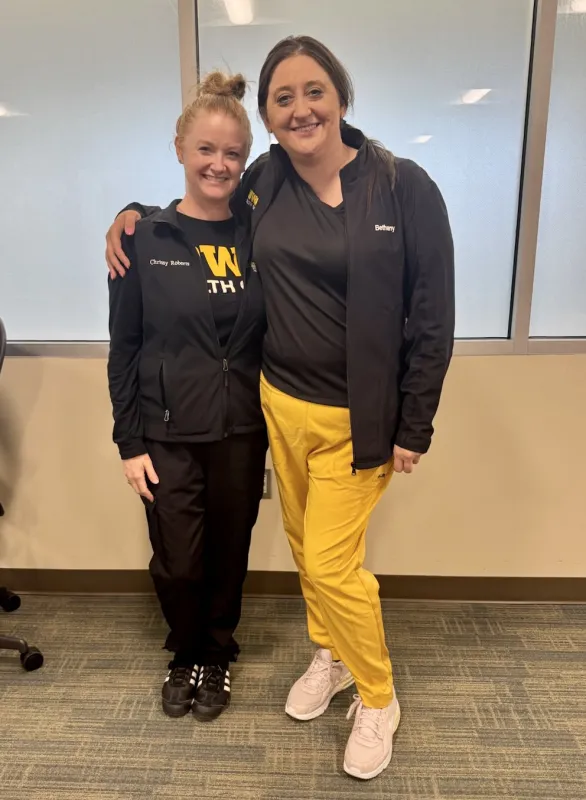
It starts with how you show up
The lessons Husmann learned during her training days continue to influence how she approaches her work today in her role as a clerk in the Day of Surgery Lounge. It’s a high-stress environment for patients, families, and staff alike — one that is sometimes shaped by long drives, early mornings, fear, exhaustion, and uncertainty. She’s learned that success in this role isn’t just about efficiency or knowing the system, but about recognizing what people are carrying with them and choosing how you show up for them.
“People don’t always know what someone else is going through,” she notes. “A little kindness, a calm response, or even just being willing to listen can completely change an interaction.”
Husmann says she always tries to intentionally put those lessons into practice. She looks for ways to set a positive tone during busy shifts, whether that’s offering encouragement to a coworker, sharing a positive message in the team chat, or responding to tense situations with empathy rather than defensiveness. She’s learned that small gestures — checking in, offering a break, or simply acknowledging someone — can go a long way.
Those same principles guide how she works with families who are waiting for loved ones undergoing surgery. Husmann makes a point to connect with people as people, helping ease anxiety and build trust during what is often one of the hardest days they’ll experience.
“We’re all human at the end of the day,” Husmann says. “When you treat people that way, with respect and understanding, everything works better. It costs nothing to be kind, but it can make all the difference.”
Husmann also encourages colleagues, especially those new to the team, to resist self-doubt and to give themselves grace as they learn. She believes patience shouldn’t stop at patient care — it should extend to coworkers as well.
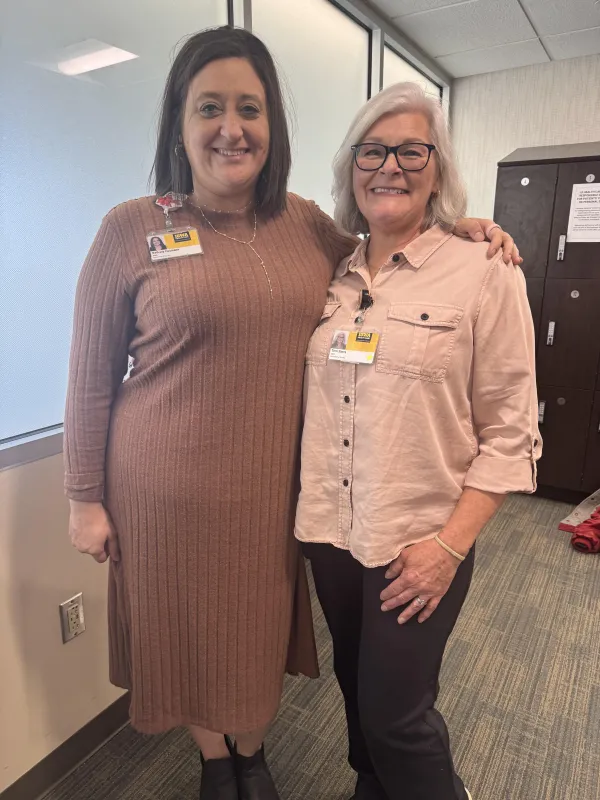
“It’s easy to walk away when things get hard,” she says. “But the real work is sticking with each other, having honest conversations, and choosing to make the workplace better.”