UI-based program seeks to improve the quality of care for adults with disabilities
Project ECHO offers free guidance to mental health experts in Iowa and beyond
Health care providers, community agencies, and other professionals that help Iowans with intellectual and developmental disabilities are now supported by a free telehealth program hosted by the University of Iowa.
Through a Project ECHO (Extension for Community Healthcare Outcomes) structure, these professionals can receive expert guidance in a collaborative “all teach, all learn” environment. Anyone who provides support or services to adults with intellectual or developmental disabilities (IDD) can share skills and best practices related to the treatment of these individuals.
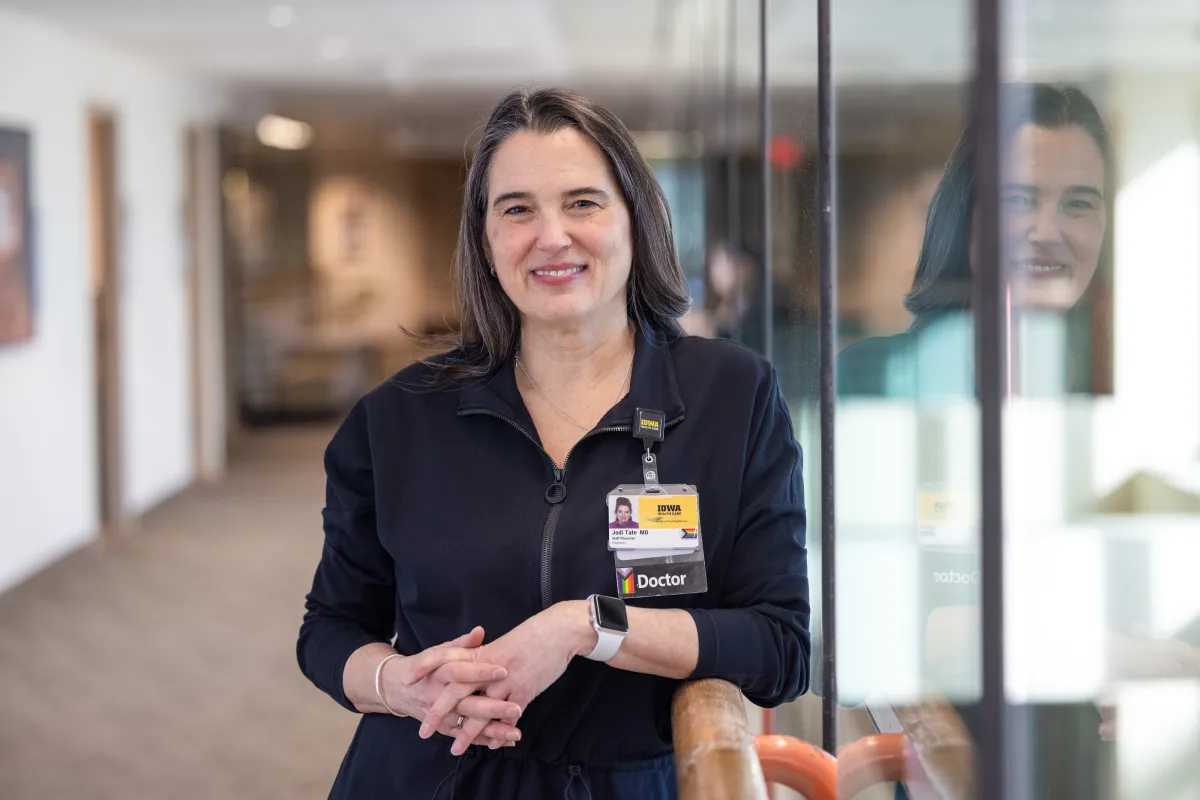
“The goal and the vision of this initiative is to improve overall health care outcomes for adults with these disabilities in Iowa by opening a space for everyone involved in caring for these adults to share knowledge and learn from each other about best practices for care and support,” says Jodi Tate, MD, clinical professor of psychiatry with UI Health Care and the founder and director of Iowa’s IDD Complex Care Needs Project ECHO.
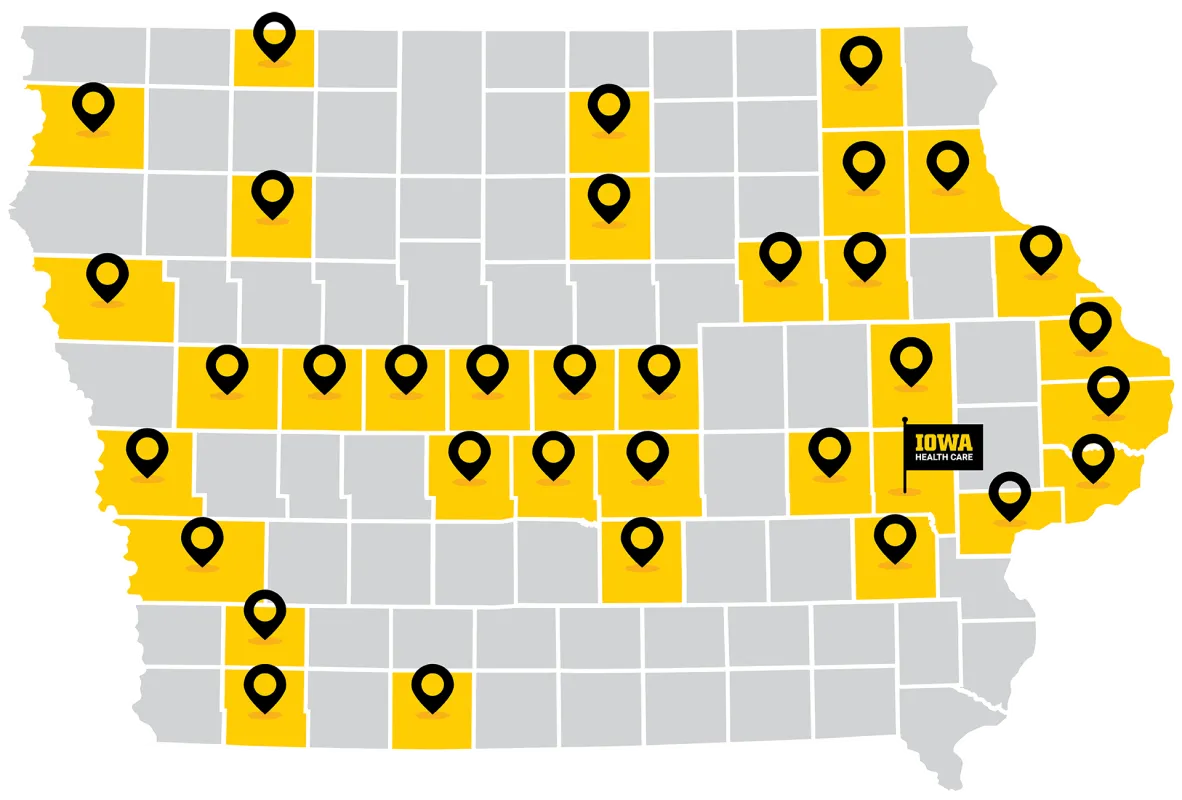
Since launching in September 2024, Iowa’s Project ECHO has engaged 147 participants from 62 organizations across 35 counties in Iowa. The program is based on a nationally renowned community health care model and funded entirely by Molina Cares.
“Project ECHO is a commitment to the people of Iowa that we will invest in the well-being of those who live in the communities we serve,” said Jennifer Vermeer, president of Molina Cares of Iowa. “Meeting the needs of this population takes a skilled workforce developed with the education and training they need, and I look forward to future collaboration and investment from partners in this proven approach.
The need for Iowa’s IDD Project ECHO
Individuals with intellectual or developmental disabilities have higher rates of emergency room visits and increased illness and death from a specific cause when compared to individuals without those types of disabilities. Complexities in the health care system and the lack of training for health care providers and support professionals contribute significantly to these disparities.
As a psychiatrist with more than 20 years of experience, Tate specializes in treating adult patients with intellectual and developmental disabilities and complex care needs. She started Iowa’s IDD Complex Care Needs Project ECHO to improve the capacity to support and care for adults with these disabilities in communities across Iowa. The sessions focus on sharing expertise, learning from each other, and building collaboration and knowledge.
“We’re trying to work together to make the system work better for patients and providers,” Tate says.
Making an impact across Iowa
As of January 2026, Iowa’s IDD Complex Care Needs Project ECHO has held 29 sessions. Along with the connections in 35 Iowa counties in all corners of the state, professionals in three other states (Georgia, North Carolina, and Nebraska) have also participated.
“I feel like we’re off to a great start,” Tate says.
Those who have attended a session have had a very positive reaction. In a survey completed by about two-thirds of participants, 100% reported that the sessions were relevant to their work.
When asked if they would use what they learned during a Project ECHO session, 95% responded with “definitely yes” or “probably yes.”
Also, more than 80% of respondents to the survey said they would be “extremely likely” to recommend Iowa’s IDD Complex Care Needs Project ECHO to other colleagues.
How Project ECHO works
Anyone who provides support or services to adults with intellectual or developmental disabilities can register and submit a de-identified case on the website for Iowa’s IDD Complex Care Needs Project ECHO.
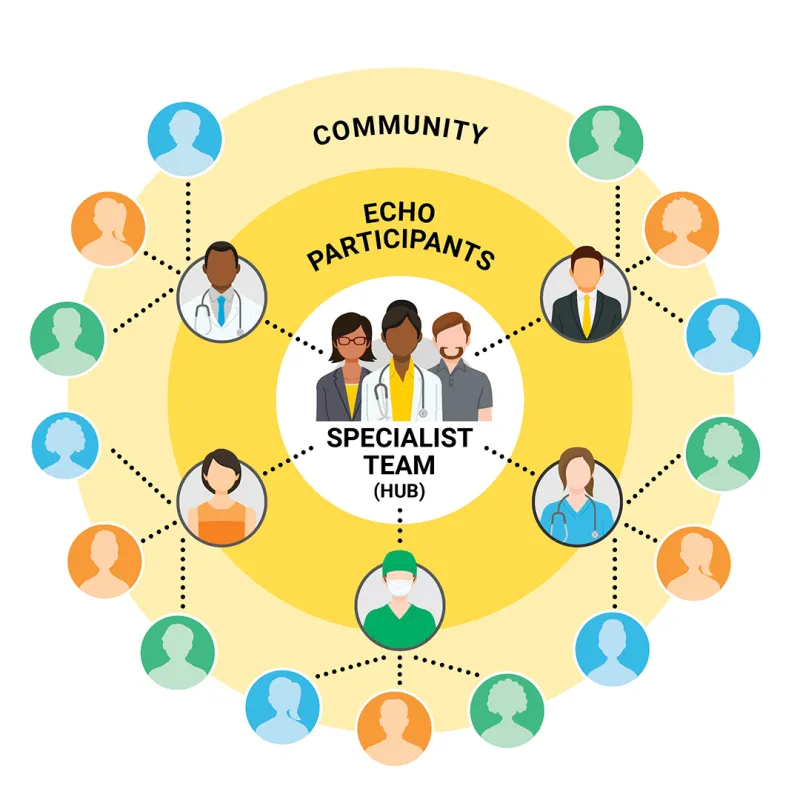
Selected cases are discussed during virtual meetings that are held twice monthly for the providers. During this time, providers discuss and consult on a de-identified case with the Project ECHO hub team, an interdisciplinary panel of health care specialists with training and expertise in caring for adults with intellectual or developmental disabilities. The virtual sessions are free for the attendees.
The hub team for Iowa’s IDD Complex Care Needs Project ECHO is composed of 11 members from a variety of medical and institutional backgrounds. Tate brings a clinical psychiatric perspective, while other members offer insights according to their own specialties, including behavioral health, social work, family medicine, occupational therapy, and case management from Iowa Health and Human Services and Iowa’s managed care organizations.
Of the 11 members on the hub team, five are part of the UI.
The hub team and participants listen to each case, ask clarifying questions, and offer recommendations tailored to that specific case.
Jennifer Simmering is the service director of Crossroads, Inc., a Muscatine, Iowa-based nonprofit that provides housing, employment, and other services for adults with intellectual and developmental disabilities.
She’s also a member of the hub team for Iowa’s IDD Complex Care Needs Project ECHO.
“Project ECHO has been a fantastic experience and one I'm excited to help extend to my counterparts at other organizations,” Simmering says. “Having the opportunity to bring many different specialties and perspectives to the table to focus on the needs of one individual is something we talk about a lot in disability services but are rarely able to deliver on because of time, money, and staffing constraints.”
The origins of Project ECHO
The original Project ECHO was founded by Sanjeev Arora, MD, at the University of New Mexico in 2003 with the goal of increasing rural access to treatments for hepatitis C.
The success of this evidence-based, interdisciplinary, lifelong-learning model has inspired the creation of 8,700 offshoot Project ECHO programs in more than 200 communities around the world, with more than 8.6 million participants having attended an ECHO session so far.
The Iowa program is the result of a collaboration between UI Health Care, the Iowa Department of Health and Human Services, the Iowa Association of Community Providers, Molina Healthcare, Iowa Total Care, and Wellpoint.
There are a handful of other Project ECHOs in Iowa, including the Behavioral Health ECHO and the Hepatitis C ECHO, both of which are managed by the Iowa Primary Care Association.
Looking ahead
Now in its second year, Iowa’s IDD Complex Care Needs Project ECHO is building on feedback from the program’s first year. The team has refined and expanded their curriculum to better meet the needs of professionals across the state.
The hub team has also extended invitations to a broader audience — including physicians, advanced practice providers, therapists, nurses, and anyone involved in providing health care services or support to adults with intellectual and developmental disabilities.
The success of UI Health Care’s first Project ECHO has inspired the creation of other Project ECHO programs within the UI Department of Psychiatry that will launch this year.
“All are welcome to join us in this collaborative effort to improve care, share expertise, and strengthen support systems for individuals with intellectual and developmental disabilities throughout Iowa,” Tate says.
Read the original article published in November 2025.