New shoulder implant technology gives competitive bodybuilder a big lift—and a fresh perspective
UI Health Care orthopedic surgery team is the first in Iowa to use the pyrocarbon implant for patients with advanced shoulder arthritis.
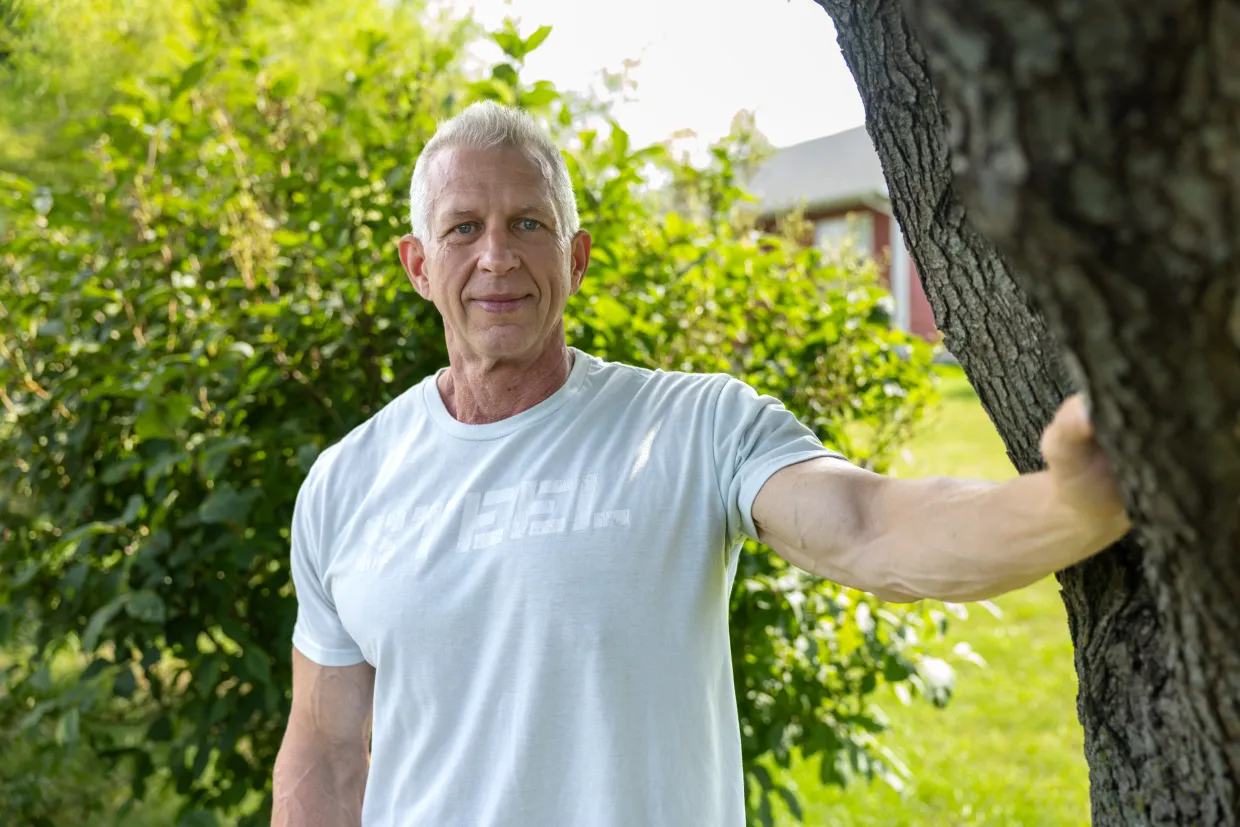
Michael Donahoo, 61, tried for more than a decade to manage the increasingly debilitating pain plaguing his left shoulder.
Donahoo had just turned 50 when he felt the first painful pinch during a workout at a gym in San Francisco. He pushed through the discomfort, continuing his strenuous weightlifting regimen without adjustment. As the pain worsened, Donahoo modified his workouts until he could no longer safely exercise his shoulder.
“When I was lifting, it sounded like rubbing gravel together,” he says.
Eventually, Donahoo was unable to lift his left arm above his head—a movement key to his job as a union electrician. The pain kept him awake at night.
“It impacted my life every day,” he says.
Donahoo, who now lives in North Liberty, Iowa, was diagnosed with advanced shoulder arthritis and underwent conservative treatments, including a corticosteroid injection and a platelet-rich plasma injection, which didn’t provide lasting relief. Still, he wasn’t eager to see a surgeon. Donahoo was terrified he’d need shoulder replacement surgery—and that it would end his near-daily weightlifting practice.
Lifting had been part of Donahoo’s life since high school, eventually leading him to compete in weightlifting and bodybuilding events.
It became “like my therapy,” Donahoo says. “You can shut off the world.”
Pyrocarbon a viable material for shoulder implant
Donahoo was right to be concerned. The metal and plastic components used in traditional shoulder replacement surgery, while acceptable for many patients, can loosen and fail over time.
Fellowship-trained shoulder surgery specialist Brendan Patterson, MD, MPH, an orthopedic surgeon and assistant professor in the Department of Orthopedics and Rehabilitation at the University of Iowa, had a different solution for Donahoo.
In 2023, Patterson became the first doctor in Iowa to perform a partial shoulder replacement (hemiarthroplasty) using a pyrocarbon humeral head, an implant developed by the medical technology company Stryker and approved by the U.S. Food and Drug Administration in late 2022.
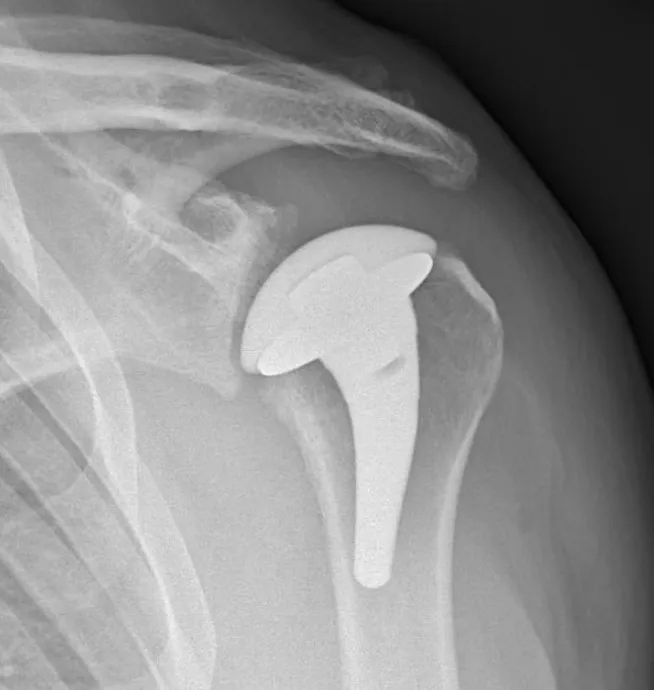
The implant is made of pyrocarbon, a biocompatible material with properties more similar to bone. Pyrocarbon is a lightweight alternative to cobalt chrome, a material commonly used in shoulder replacement surgeries. The pyrocarbon implant’s ball (humeral head) provides stability and less stress on the shoulder socket (glenoid) over time—theoretically reducing the risk of future shoulder problems.
“This implant is thought to wear less aggressively on the socket,” Patterson says. “It’s a really promising implant for younger patients or patients like Michael, who have very high activity levels to maintain. With this implant, there is theoretically less concern about component failure, especially with higher-level activities.”
The right implant to fit a patient’s activities and expectations
Patterson thought Donahoo was a prime candidate for shoulder replacement with the pyrocarbon implant.
“We select the right implant for the right patient, so every patient can achieve success, whatever ‘success’ is for them,” Patterson says. “We want everyone to have a great shoulder, but Michael had a different level of expectation.
Still, Patterson laid out Donahoo’s options, including a traditional replacement. He also made it clear that, because the implant is new, there is little data on its use in U.S. patients. Data from Europe and Australia, where it has been used longer, has been promising, according to Patterson.
“[Patterson] never pushed me to have the surgery,” Donahoo says. “He said, ‘These are your options. Think about it.’”
Believing it was his best chance to fix his shoulder and return to weightlifting, Donahoo underwent shoulder replacement surgery with the pyrocarbon implant in April 2024.
Patterson, who performed the surgery, was well prepared. Prior to the operation, he uploaded the computerized tomography (CT) scan of Donahoo’s shoulder into a 3-D software program that enabled him to practice performing the surgery virtually. This is an important step, Patterson says, because using the pyrocarbon implant increases the procedure’s complexity.
“You need to approach this as a very technical surgery,” he says.
Slow but steady progress with post-surgery rehab
When the two-hour procedure was complete, the work of recovery and rehabilitation began for Donahoo. Patterson had been clear about this long and sometimes difficult phase, using the phrase “fine wine” to help Donahoo understand that his replaced shoulder would “get better with age.” It was a phrase Donahoo would repeat to himself for months.
At first, Donahoo’s shoulder was so stiff that a physical therapist had to manually stretch it. Even after six months, when he was cleared from physical therapy, Donahoo says his recovery was “nowhere near where I thought it would be.”
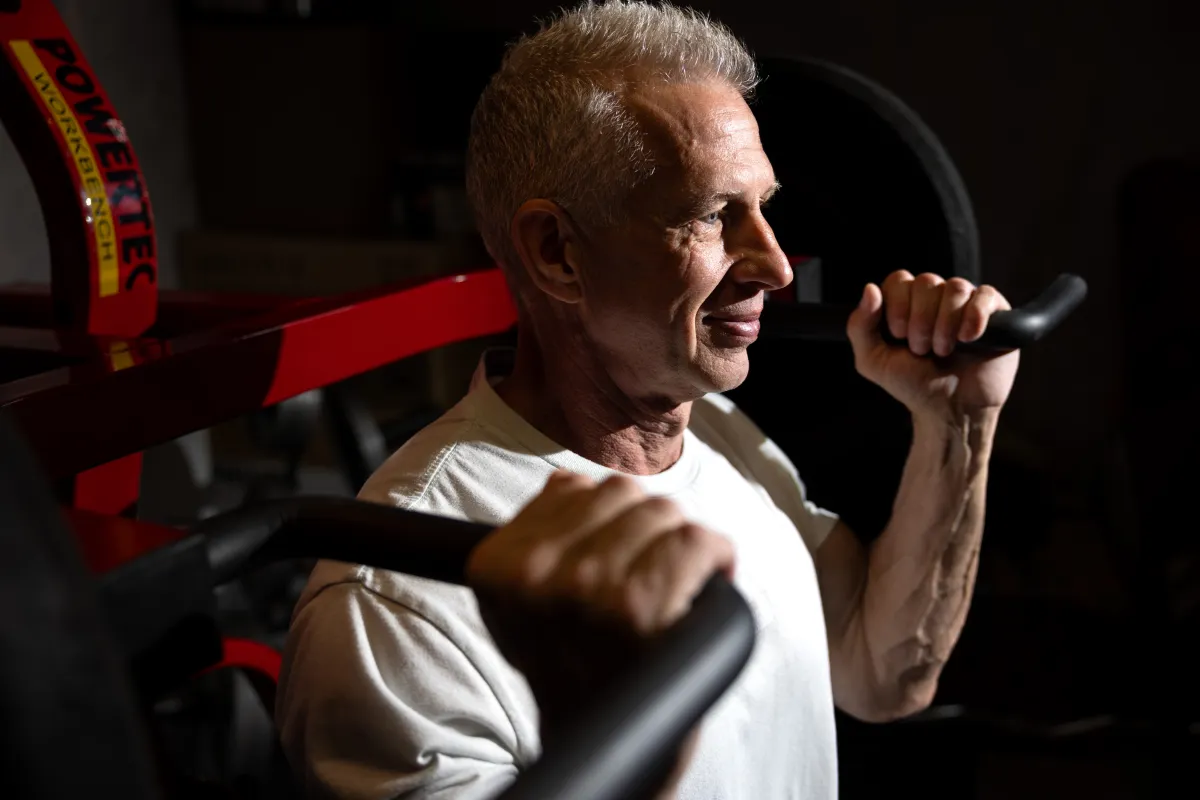
Still, he cautiously returned to the gym, always warming up with his physical therapy exercises before slowly reintroducing his body to weightlifting.
“It’s been a slow process [and] a huge commitment,” he says.
At a follow-up visit, Patterson showed Donahoo an X-ray indicating that the pyrocarbon implant had settled itself into his shoulder. About a year after surgery, Donahoo says his shoulder is at about 80%, other than lateral movements.
“It’s getting better and better every week,” he says. “It’s taken a lot of work.”
Shoulder replacement provides a ‘total reset’ to achieve goals
Donahoo says the surgery gave him an unexpected benefit: a fresh perspective. Now, weightlifting is less about getting bigger and stronger, he says, and more about physical and mental health and achieving goals like competing in bodybuilding events.
“It really was a total reset that did wonders for me,” Donahoo says. “Something I thought was going to be so negative turned out to be such a positive.”
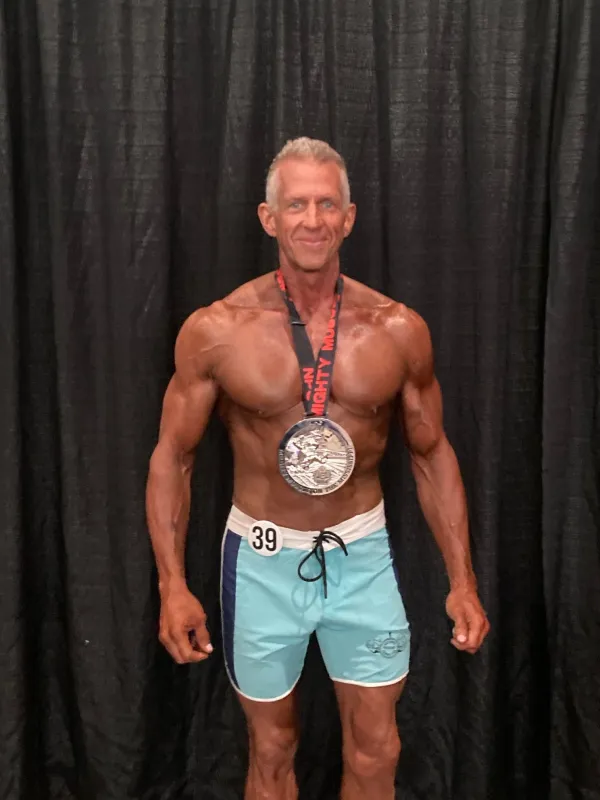
In May 2025, just 13 months after his shoulder replacement, Donahoo won a medal at Mighty Muscle on the Mississippi, a bodybuilding competition in Dubuque, Iowa.
“People were amazed I was even on stage [a year out] from my surgery,” he says. “This goal was a lifelong bucket list item that I thought would never happen.”
Patient Stories