What UI Health Care’s bone health program means for your ortho care
Did you know a broken bone after a fall can be a warning sign of osteoporosis? UI Health Care’s Own the Bone program helps you understand your bone health and take steps to prevent a future fracture.
A fracture can be your body’s warning sign
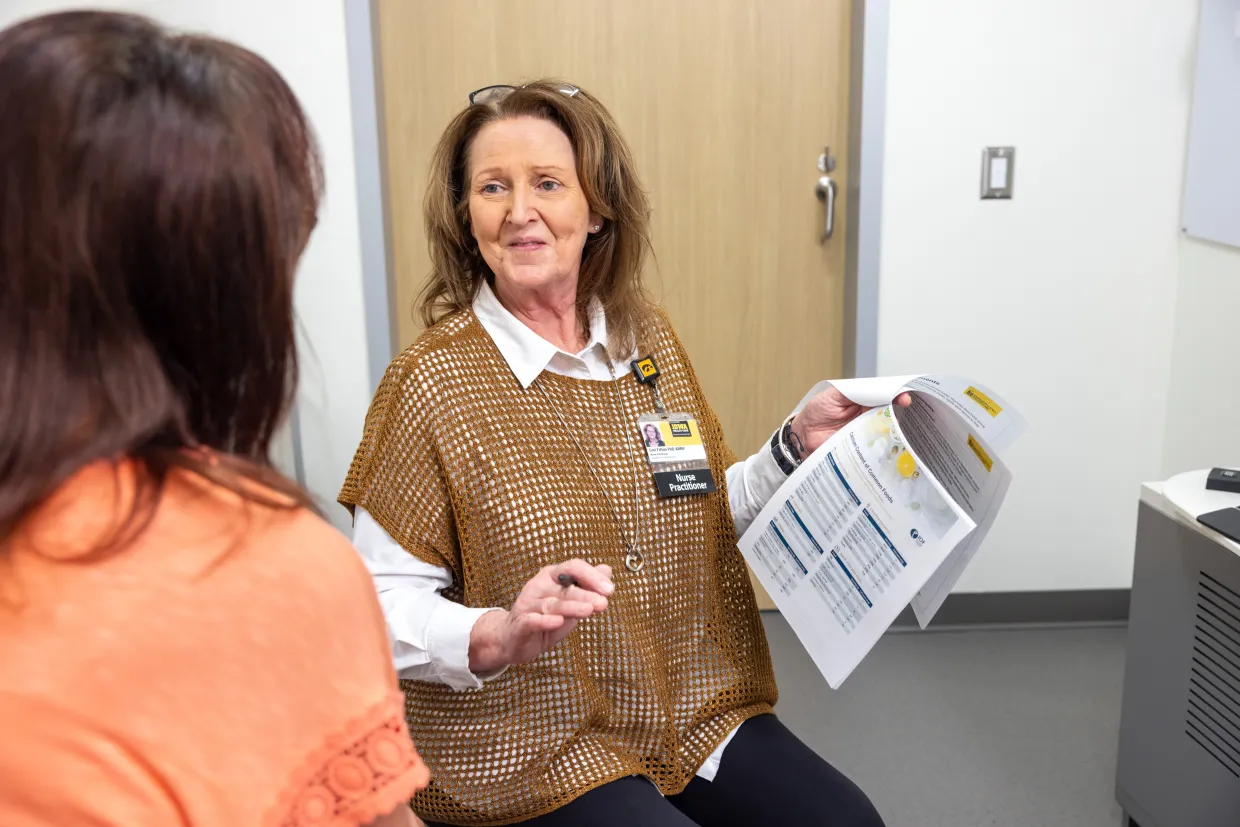
If you break a bone from a simple fall, it can be easy to blame the fall itself. But Lori Fitton, PhD, APRN, CNP, CCD, an orthopedics and rehabilitation clinical instructor at UI Health Care, says many people don’t realize that a fracture may point to something deeper.
“Patients often believe the fall is the cause of the fracture,” she says. “In America, we aren’t doing a very good job of letting them know there’s often an underlying disease, which is osteoporosis.”
She says that osteoporosis is a disease that is underrecognized, underdiagnosed, and undertreated.
This matters because the first fracture can be a turning point: your chance to prevent the next one.
“When the bone breaks down, that’s a warning sign,” Fitton says. “That’s telling you to avoid that next fracture by getting an assessment.”
That’s why UI Health Care has built a program designed to step in at the right moment. Own the Bone is a national program through the American Orthopaedic Association (AOA) focused on preventing secondary fractures, which is the second break that can happen when osteoporosis goes unaddressed.
UI Health Care has been chosen as an Own the Bone Star Performer for its commitment to helping patients understand their risk for future fractures and helping prevent them.
Why people at risk should take bone health seriously
Osteoporosis is often called a “slow, silent disease” because it can develop without obvious symptoms.
“You don’t even realize you have it until you break a bone,” Fitton says.
A key red flag is what’s known as a fragility fracture, a break that happens from a low-impact fall. Even a wrist fracture can be an early sign that your bones need attention.
“That fractured wrist is a harbinger now,” she says. “It could lead to a hip fracture in 10 years if we don’t intervene.”
Fitton emphasizes that fractures aren’t an inevitable part of aging.
“We shouldn’t fracture when we fall,” she says.
Talk to your provider if any of the following apply to you or a family member:
- You’re a woman in midlife or older (Fitton notes rapid bone change can occur around menopause).
- You’re a man age 70 or older (she recommends screening for older men).
- You’ve had a fragility fracture (a break after a simple fall or from standing height).
- You’ve lost height or are noticeably shorter than in younger years.
- You have a family history of hip fracture or osteoporosis.
- You use tobacco or drink alcohol regularly.
- You take long-term steroids or other medications that weaken bone.
- You have conditions that impair absorption of nutrients (e.g., gastric bypass, GI malabsorption).
- You have rheumatoid arthritis, COPD (chronic obstructive pulmonary disease), or other chronic illnesses that affect bone health.
- You’re a cancer survivor who had chemotherapy or radiation that can harm bone.
- You have low body weight or a very sedentary lifestyle.
If you’re unsure whether any of these apply, Fitton recommends asking your provider for a bone health assessment or a DEXA scan that measures bone density.

Worried about a fracture?
What happens in the Own the Bone program
If you’re part of the Own the Bone program at UI Health Care, your care team looks at the full picture of your bone health, not just the fracture itself.
This may include:
- Checking vitamin D levels
- Reviewing nutrition, including calcium and protein intake
- Discussing movement, strength, and balance
- Addressing fall risks at home and in daily life
- Talking about lifestyle factors like tobacco or alcohol use
- Starting or adjusting medication when appropriate
- Scheduling follow-up to monitor bone density over time
The goal is to help your bones heal now and stay stronger in the future.
What support looks like after a fracture
Bone health isn’t just one lab test or one medication. Fitton emphasizes that the basics matter, especially right away.
“When we see the patients in the hospital right away, we measure vitamin D and start nutrition planning,” she says.
She explains why nutrition comes first:
“Calcium, vitamin D, and protein are the building blocks for new musculoskeletal health,” Fitton says. “And if patients are vitamin D deficient, they’re not absorbing calcium or protein.”
From there, the goal is to follow up quickly and reduce the risk of another break. Her team tries to see patients within six weeks of a fracture and get them started on medication to prevent that second fracture.
This care includes more than medication.
“During that time, we take the opportunity not only to speak about nutrition, but exercise and fall prevention,” Fitton explains. “It’s a total package: tobacco cessation, alcohol modification, and addressing any toxic behaviors that might be contributing to poor bone health.”
Fitton uses a simple analogy for bone health that patients tend to remember:
“I can put rose bush fertilizer on the plant once a week, once a month, or once a year,” she says. “But if that rose bush doesn’t get any water or if it doesn’t get any sunshine, it really doesn’t matter how much fertilizer I put on.”
Taking the next step
Bone health care can help you protect your independence and prevent future fractures.
The earlier you understand your risk, the better.
“As we educate patients on bone health and the importance of bone health, they get it. They’re pretty savvy,” Fitton says.