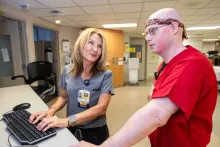
Work-related musculoskeletal disorders
Musculoskeletal disorders are injuries of the muscles, tendons, ligaments, joints, or nerves that arise from repeated and/or prolonged exposure to mechanical and physical stressors.
Symptoms may include pain, swelling, joint stiffness, altered sensation, or changes in skin color.
Common causes
Being aware of the causes of musculoskeletal disorders and working to prevent them is essential to preserving the health of employees.

Material handling
Injuries related to lifting, pushing, pulling, or carrying

Repetitive motions
Risk factors due to job demands, disadvantageous posture, and tools used

Job design
Pace of work, production pressure, and lack of recovery time increase the risk of injury
What employers can do
Injuries are best eliminated at the source. Focus on avoiding repetitive work patterns and implement strategies that reduce the burden of mechanical and physical stressors.
Automate
Automate tasks when possible
Rotate
Rotate employees between different job functions
Distribute
Evenly distribute work
Prevention strategies
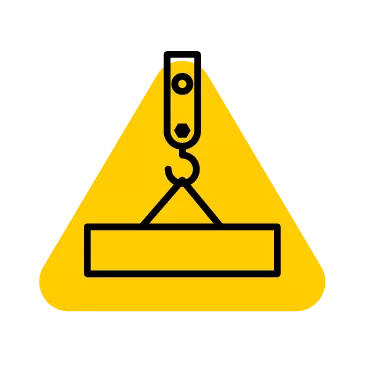
- Use assistive devices such as hoists and carts.
- Provide tools to avoid disadvantageous postures.
- Train workers on best practices
- Allow rest breaks
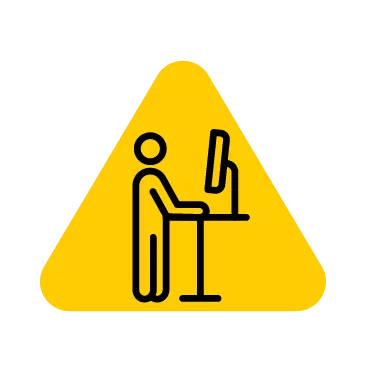
Optimize fitting the workstation to the worker