The heart of the matter: A new nurse’s sense of purpose
Shortly after finishing her 12-week orientation, Avalon Brinton, BSN, RN, found reassurance in her choice to become a nurse as she cared for a critically ill patient during the last moments of life.
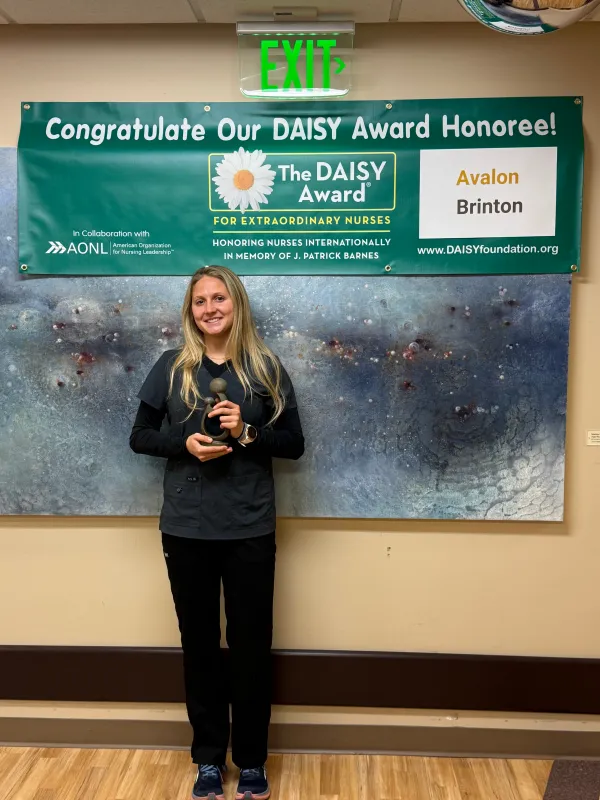
Not long ago, UI Health Care nurse Avalon Brinton was cleaning out her desk when she stumbled across a paper from nursing school – a short assignment detailing her “nursing philosophy.” Back then, it felt like just another assignment on a long list of requirements. Now, more than a year into her first job as a cardiovascular intensive care nurse, her words as a student served as a powerful reminder of why she chose this career path.
Brinton arrived in Iowa City by way of Colorado. She had only driven through the state prior, but with friends nearby and the promise of a strong unit and good mentors, she made the move.
In the early days, Brinton worried if her personality was the right fit for the ICU. “I’m not the fastest, or most ‘type A’ ICU nurse,” Brinton says. However, she quickly realized it’s not one single person who drives the unit’s success; it’s the way they work together as a team.
“Whatever your strength is — whether you slow down, see the bigger picture, or process quickly — when we come together, we just make each other better,” Brinton says.
Finding a sense of peace
That realization came a few weeks after Brinton finished her orientation. She was caring for an elderly patient who had been found unconscious at home. Brinton worked quickly and collaboratively with the medical team to keep the patient alive long enough for the patient’s family to arrive. She and her charge nurse also worked together to prepare the room for what would likely be a final goodbye.
Brinton guided the family gently through the process of transitioning to comfort care and helping coordinate palliative measures. She assessed the family’s need for additional support and arranged for a chaplain to come to the unit, then worked side-by-side with them to provide comfort to the grieving family.
“They were very sweet as they said their goodbyes. It is pretty intimate to witness a family in those last moments,” Brinton says. “As difficult as it is, it's very beautiful to be in that space. It is also what makes working in critical care fulfilling. Hard, but fulfilling.”
The family members didn’t stay by the patient’s bedside long. They were also elderly and needed to head home to manage their own health needs. Before they left, they expressed their deep gratitude to Brinton for her care.
Once they were gone, Brinton felt a quiet pull to remain with the patient. Though they had been unconscious throughout her care, she felt a sense of responsibility to ensure the patient wasn’t alone. Her fellow nurses monitored her other patient, giving Brinton the space to sit vigil at the patient’s side and stay with them as they passed.
“It wasn’t about me taking care of them anymore,” Brinton says. “It was about us being two humans together in that space.”
The heart of extraordinary care
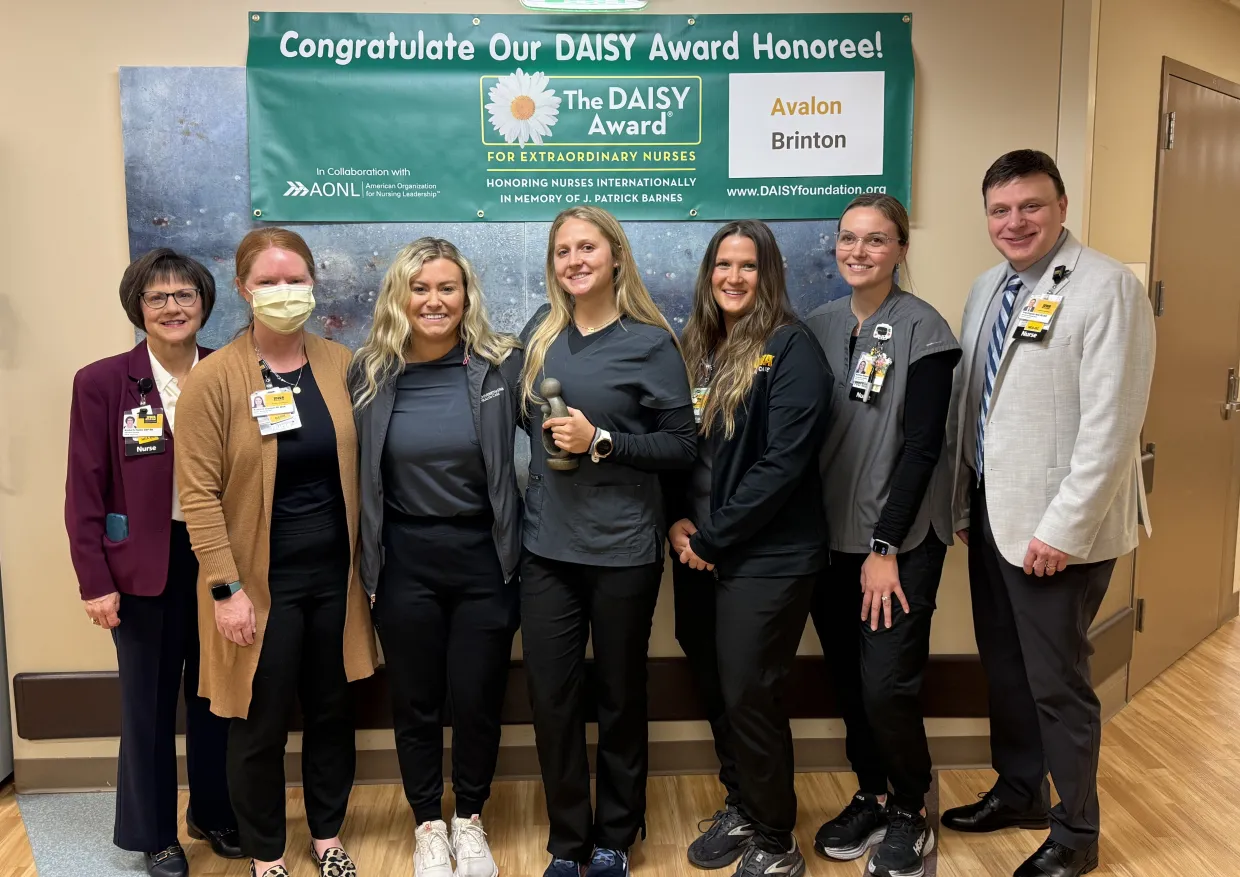
For someone so new to nursing, her colleagues saw extraordinary grace, instinct, and compassion, and later recognized Brinton with a DAISY Award. Brinton’s charge nurse wrote the nomination for the award, describing Brinton as having the “compassion and poise of a seasoned nurse,” while also citing her diligent bedside presence, and the dignity she ensured for a person whose life was ending. The nomination called her actions “extraordinary” for any nurse — let alone one so early in her career.
Though touched by the recognition, Brinton is quick to share that her purpose is not to win awards. For her, the moment in that quiet ICU room matters far more. It reminded her — perhaps more clearly than that long forgotten nursing philosophy paper — why she became a nurse.
“It’s all about love,” she says. “About humans helping other humans. None of it is easy, but it’s beautiful.”