Speaking through care: Nurse bridges language gap to help treat a patient
Brittany Wetjen, BSN, RN, OCN, proves that advocacy and persistence can transform care — even when language stands in the way.
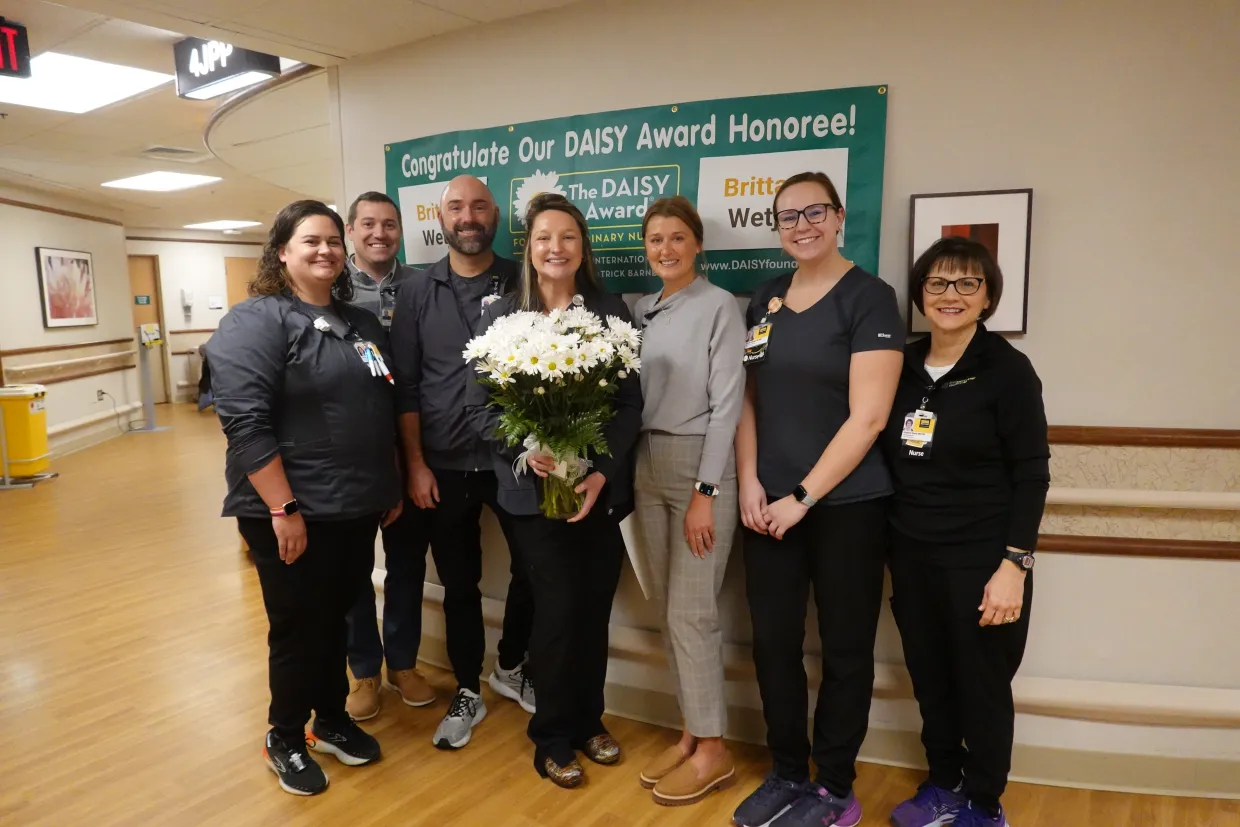
Nurses often advocate on behalf of their patients, but for staff nurse Brittany Wetjen, BSN, RN, OCN, uncovering one patient’s voice meant the difference between severe pain and relief.
Wetjen was working on what she calls her “home” unit — the Medical Surgical Oncology Unit at the university campus, where she began her career at UI Health Care – when she was assigned a patient being treated for a rare and painful rash.
"I walked into the room, tried to build a rapport with the patient and their caregiver, and just said, ‘What’s going on here?’” says Wetjen.
She didn’t expect a direct answer at the time, though. She knew from the report that the patient and their caregiver spoke a rare dialect, which could make communicating especially challenging. Other nurses had already made efforts to connect with an interpreter through Globo, a service offered through the Interpretation and Translation Services team, but had not yet been able to locate someone who spoke that specific dialect.
Wetjen says what she saw as she entered the room broke her heart. The patient’s skin was raw and bleeding. Their mouth was filled with sores, making eating or drinking impossible. But without the ability to communicate the severity of pain, which was later revealed to be 10 out of 10, the patient suffered behind polite nods and quiet endurance.
“I just kept thinking that this could be so much better,” Wetjen recalls. “The family had so much faith in us, and they didn’t realize how sick the patient was.”
Persistence, advocacy, and a team approach
Determined to give the patient a voice, Wetjen worked from every angle. She tried connecting with an interpreter through Globo again but struggled to find someone that could speak this rare dialect. Eventually, working with the patient’s caregiver, she was connected over the phone with a family member who spoke English, and pieced together the patient’s story. The patient was in agony.
Wetjen immediately turned her attention to making them more comfortable.
Drawing on her oncology experience, Wetjen recognized signs of severe mucositis, painful inflammation and sores of the mucous membranes lining the digestive tract, a condition she had seen in chemotherapy patients.
“The patient’s mouth was one big wound,” Wetjen explains. “I knew chlorhexidine rinses could make it worse, so we stopped those. We discontinued harsh wipes on the skin. And I suggested pain management strategies like morphine or ketamine rinses.”
The physician on the case was impressed with Wetjen’s proactivity, her willingness to question the care plan in the face of the patient’s discomfort, and her creativity in suggesting temporary adjustments that alleviated the patient’s symptoms.
“Sometimes, you worry about overstepping,” says Wetjen. “But the physician was so receptive to my ideas. It was a true team effort.”
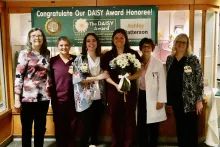
Together, they adjusted the care plan, easing the patient’s suffering and restoring dignity during their stay. Wetjen was later awarded a DAISY Award for her efforts, nominated by the physician she worked alongside that day.
In the nomination form, the physician noted, “Brittany’s thoughtful, patient-centered care not only improved outcomes but also demonstrated extraordinary compassion and advocacy. Brittany clearly is talented, thoughtful, and outstanding at her job.”
Wetjen says the DAISY Award was a surprise because, as she put it, “I was just doing my job. I’ve always been drawn to a good challenge or puzzle, and this was no exception. I’m grateful I could bring this patient a sense of peace and comfort.”
In Wetjen’s case, doing her job meant listening beyond words, advocating without hesitation, and never losing sight of the person behind the diagnosis.