UI Health Care first in nation to perform procedure using ARCHIMEDES biodegradable pancreatic stent
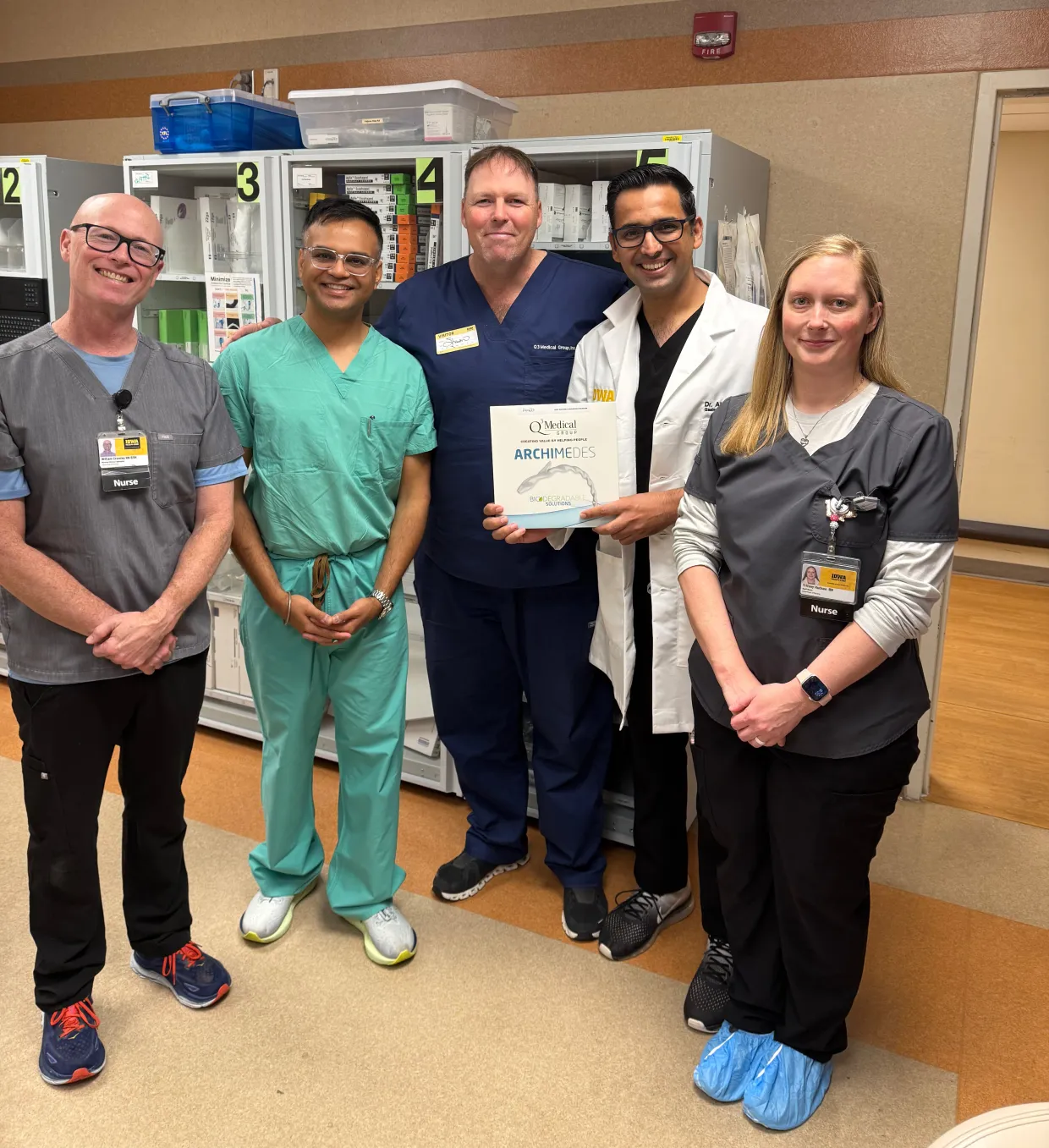
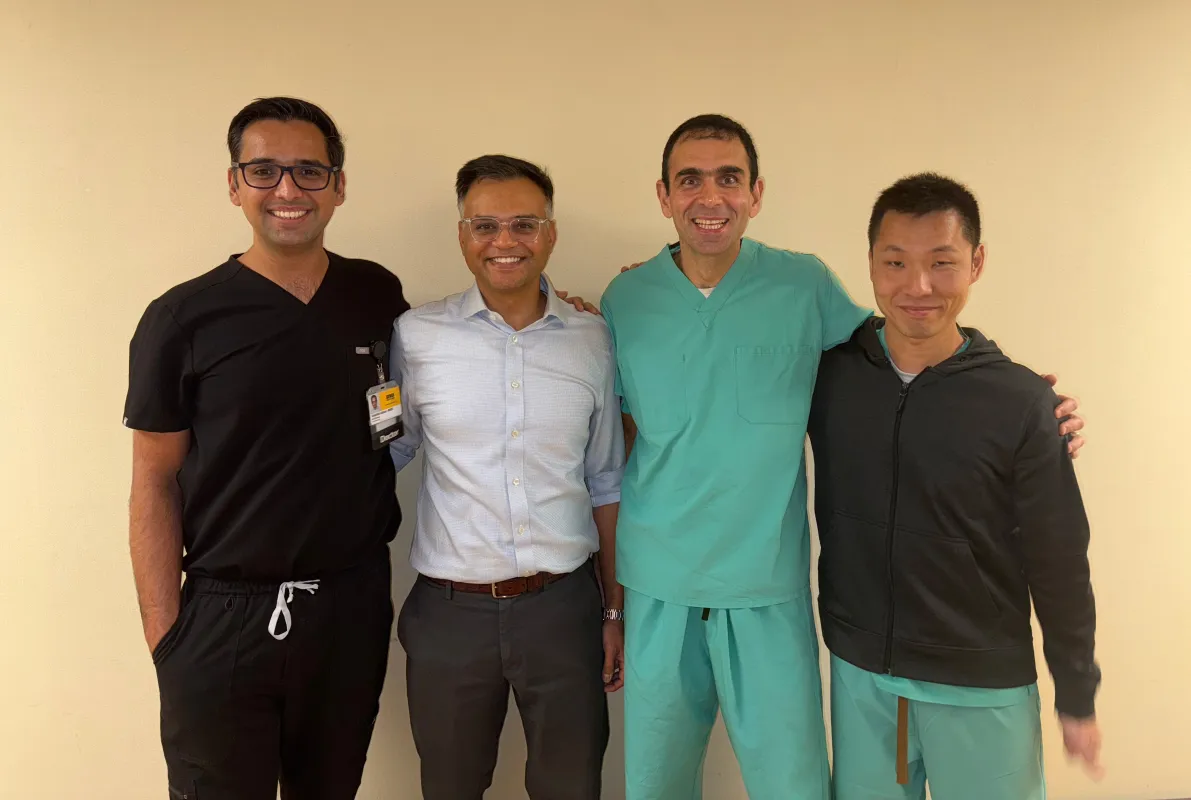
University of Iowa Health Care gastroenterologists Abdullah Abbasi, MD, Munish Ashat, MD, and Rintaro Hashimoto, MD, have performed the nation’s first procedure using ARCHIMEDES, a biodegradable pancreatic stent designed to provide a less invasive and more convenient treatment option for patients with pancreatitis, pancreatic cancer, and related conditions. This innovative device was recently approved by the U.S. Food and Drug Administration (FDA) for use in the United States.
Biodegradable stent removes need for additional procedure
For decades, patients requiring endoscopic retrograde cholangiopancreatography (ERCP), a medical procedure used to diagnose and treat problems in the bile and pancreatic ducts, have been fitted with stents.
The stent is a small plastic or metal tube inserted into the pancreatic duct, keeping the narrowed duct open to help prevent blockages and allow pancreatic fluids to flow into the bowels. While effective, it requires an additional removal procedure 2 to 4 weeks after the insertion, adding cost, discomfort, and risk of complications.
The ARCHIMEDES biodegradable stent streamlines care and improves recovery by slowly degrading, or dissolving, eliminating the need for an additional removal procedure and reducing infection risk.
There are three versions of ARCHIMEDES, each designed to degrade at a different rate. The only version currently approved for use in the U.S. is the fast-degrading stent, which dissolves within 12 days. The medium-degrading stent lasts about 20 days, while the slow-degrading version remains in place for up to 11 weeks. Future FDA approvals for the medium and slow versions are anticipated, expanding the technology’s potential to treat additional conditions and diseases.
“Most patients are able to leave the facility within 30 to 40 minutes and won’t feel the stent at all,” says Ashat. “By improving their recovery, we can reduce further discomfort and avoid complications.”
In addition to clinical success outcomes, convenience and peace of mind are two additional side effects of the ARCHIMEDES stent.
“In addition to eliminating multiple follow-up visits, biodegradable stents give patients the comfort of knowing they’re done after the first procedure,” says Abbasi. “Particularly for our rural patients, who sometimes drive hours to get to us, it can be a challenge to come back so soon after their procedure. With the ARCHIMEDES stent, we can often treat them in Iowa City then refer them to follow up in a clinic that’s closer to home.”
Leaders in innovative treatment options
UI Health Care's gastroenterology team is at the forefront of advancing minimally invasive treatments for complex gastrointestinal conditions. Since becoming the first U.S. center to perform a procedure using ARCHIMEDES, UI Health Care has completed 11 successful cases to date. Three additional medical centers across the country are also planning to adopt this technology.
“We are constantly looking for and implementing new technologies to help us treat our patients — often the most complex patients in the state of Iowa,” says Abbasi. “We are pleased with the outcomes we’ve seen with ARCHIMEDES and look forward to expanding its use, as well as introducing other new technologies to benefit our patients.”
Patients with pancreatic disorders can ask their provider for a referral to the James A. Clifton Digestive Health Center.
Learn more about our treatments for pancreatic disorders.