Craniosynostosis care in Iowa: Bodhi’s journey to the right diagnosis
At UI Health Care Stead Family Children’s Hospital’s Pediatric Craniofacial Clinic, Bodhi received specialized care, surgery, and helmet therapy that helped him grow into the vibrant little boy he is today.
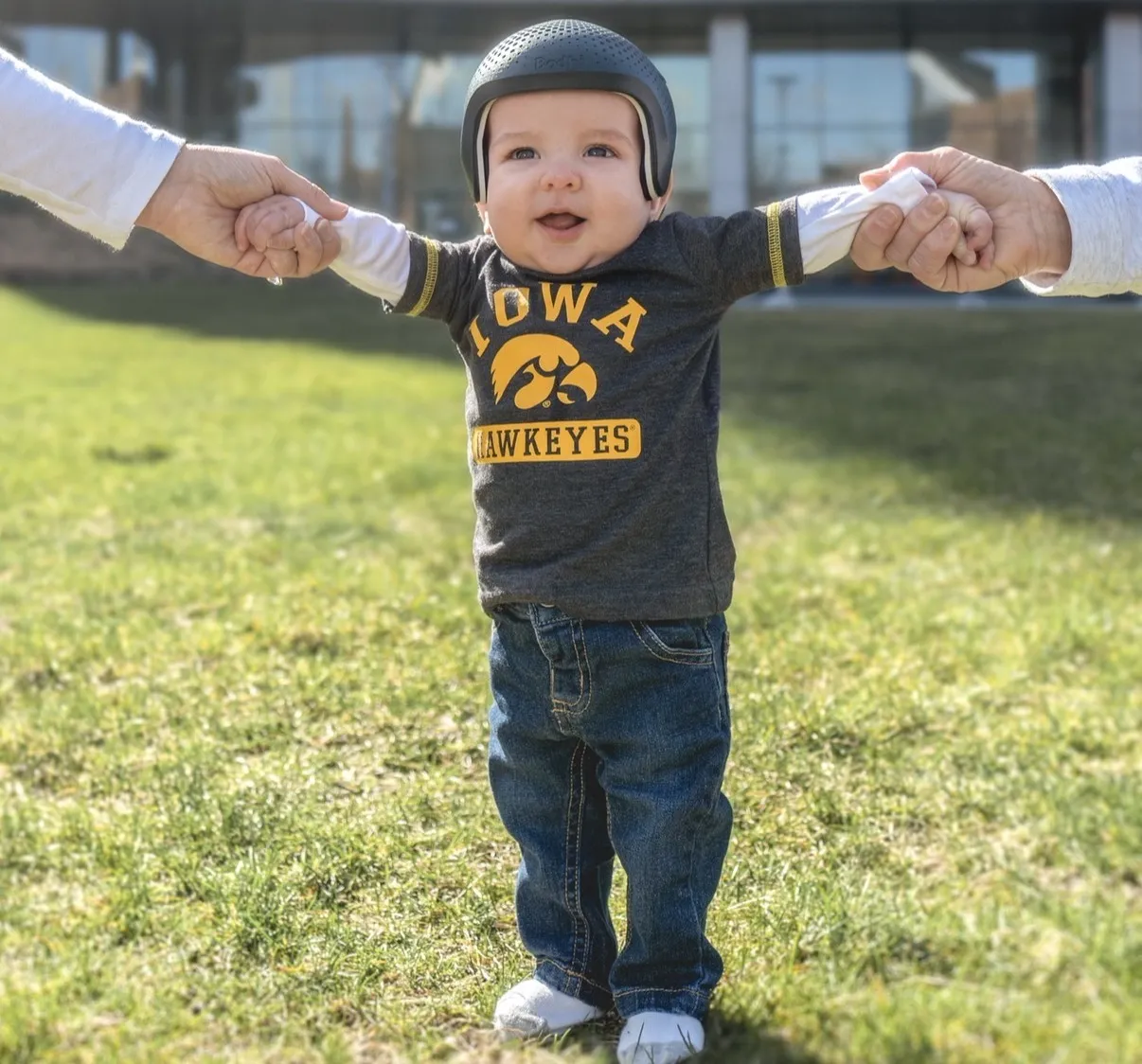
Megan Dorton noticed almost immediately that her newborn son Bodhi’s head shape seemed different.
“We noticed the shape of his head was not normal after delivery. We thought it was due to birth, but it never went away,” she says.
Dorton says her son’s head was shaped “almost like a football” with some ridging on top.
As the days passed, her concern grew. She even asked her pediatrician if Bodhi could possibly have craniosynostosis, a condition that happens when one or more growth plates in the skull close too early.
She remembers that Bodhi seemed uncomfortable, too.
“He was very irritated,” Dorton says. “You couldn't lay him flat on his back.”
Dorton and her husband, who live in Davenport, Iowa, kept pushing for answers. Finally, after reaching out to a friend who works as a nurse at University of Iowa Health Care, they brought Bodhi to the emergency department.
“Within four hours, we had imaging, his diagnosis, and a care team was formed that night,” Dorton says. “It was a huge sigh of relief, but the unknown was just so fearful.”
What craniosynostosis means for a growing baby
Dorton’s instincts were right: Bodhi was diagnosed with craniosynostosis.
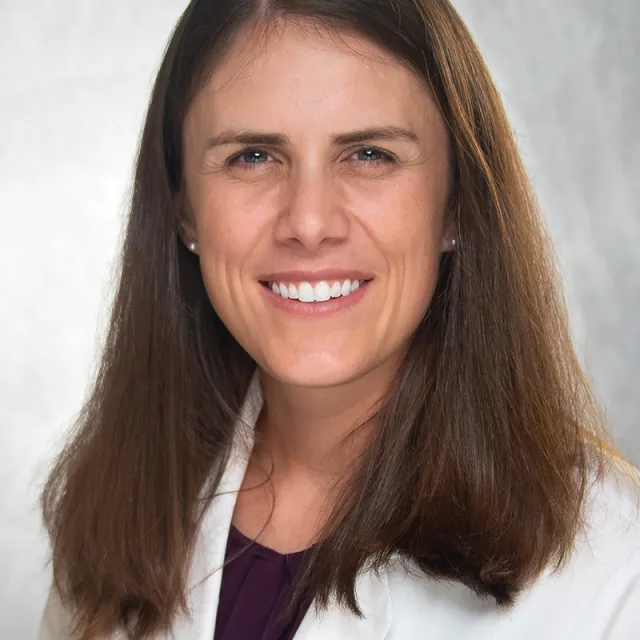
“When a growth plate in the skull closes too early, the head forms differently,” says Rebecca Reynolds, MD, a neurosurgeon at UI Health Care. “Bodhi’s skull closed when he was born or before he was born. That was much too early.”
Growth plates are soft areas between the bones that allow a baby’s skull to expand as the brain grows. In Bodhi’s case, his brain didn't have enough room to grow.
“We needed to reopen Bodhi’s growth plate,” Reynolds says.
Many babies are referred to UI Health Care for head shape concerns that turn out to be positional flattening, not craniosynostosis. In Bodhi’s case, “this was a true growth plate problem,” Reynolds says, “which meant it wasn’t going to fix itself.”
Meeting a team that listened
For Dorton and her family, getting to UI Health Care meant feeling heard.
“We are thankful for UI Health Care for listening to us and not just brushing it aside.”
What stood out most to Dorton was how the clinic team cared for Bodhi and for them as a family.
“They had so much compassion,” Dorton says. “It's almost like our baby is their baby.”
Reynolds walked the family through the diagnosis and their options.
“I got to know his parents incredibly well throughout this process,” she says. “They were incredibly supportive. I think that's a key piece of what makes his story so successful.”
Why specialized craniofacial care close to home matters
UI Health Care Stead Family Children’s Hospital Pediatric Craniofacial Clinic is the only center of its kind in Iowa, bringing together specialists who care for children with complex skull and facial conditions.
Reynolds says the neurosurgery team works closely with referring pediatricians so that patients are seen quickly.
Families can meet multiple specialists in one place, including pediatric neurosurgeons, craniofacial and plastic surgeons, otolaryngologists (ENT), medical genetics, and pediatric ophthalmology experts experienced in treating craniosynostosis. For parents, having a coordinated team working together streamlines care and helps ease some of the overwhelming emotions.
“We are going to be your medical home,” Reynolds says. “You don't have to go anywhere else to be able to get the care that you need.”
Making a tough decision
Because Bodhi was diagnosed early, Dorton and her husband had a choice between two surgical options.
One option was a minimally invasive procedure, which is performed in early infancy, followed by a year of helmet therapy. The other was a more traditional, open surgery done when Bodhi was older that would not require a helmet but would involve a longer and more invasive operation.
The family asked detailed questions about both options, including how each could affect Bodhi’s development. Because of the pressure on Bodhi’s brain, waiting carried more risk.
“We felt that we needed to do the earlier one,” Dorton says.
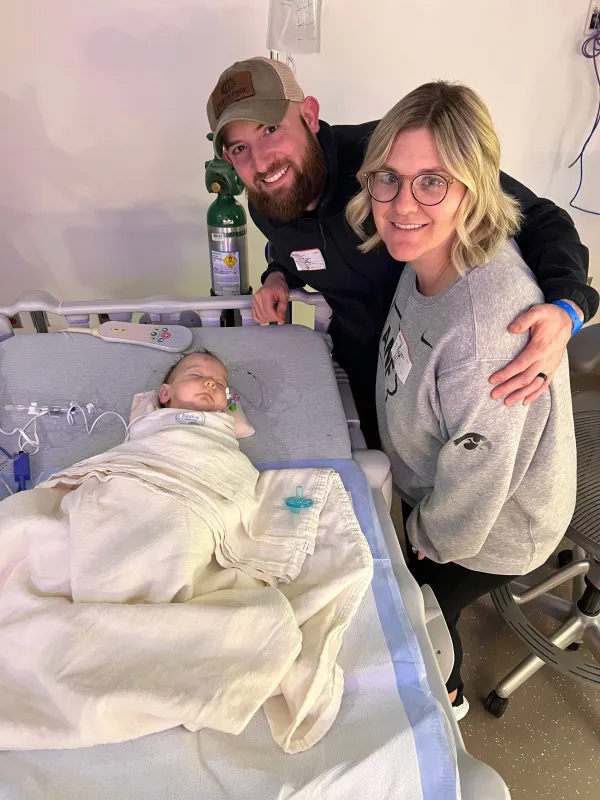
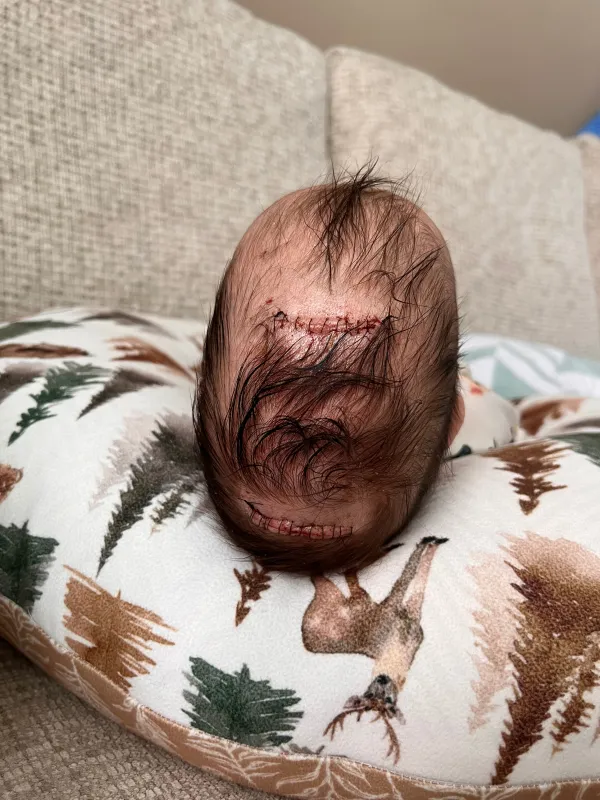
Bodhi had surgery at 11 weeks old.
Dorton remembers how hard that decision felt, but she also remembers the transparency of those conversations. The family asked Reynolds what she would do if Bodhi were her child. Given the severity of his case, Reynolds and her team said the earlier, minimally invasive option would be the best choice, while emphasizing that the decision was up to the family.
Dorton still remembers the day of surgery in vivid detail. She remembers the small acts of kindness, too. A Child Life staff member they knew, Lisa Miguel, met them in the hospital lobby and gave Bodhi an ornament and a stuffed animal.
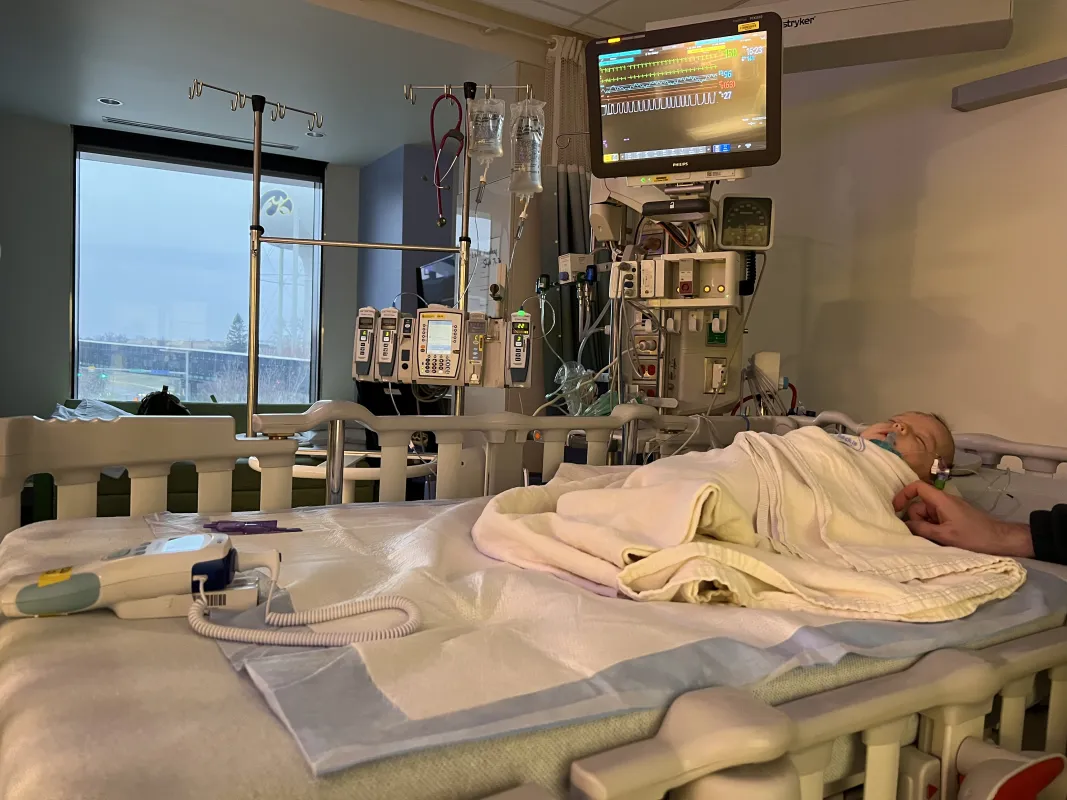
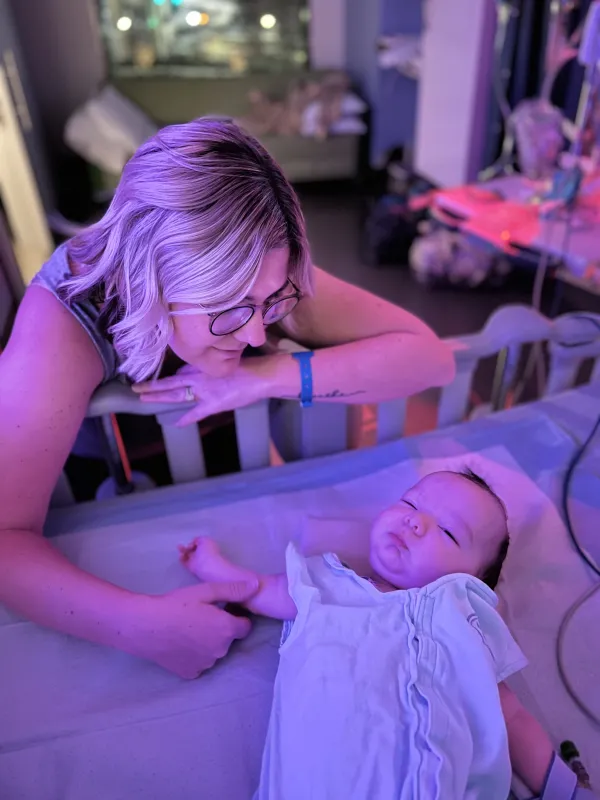
Bodhi needed a blood transfusion during surgery and recovered in the ICU, surrounded by monitors, tubing, and worried parents. Even in those stressful days, Dorton says the care team made a difference.
“The nurses and the doctors were wonderful,” she says.
How helmet therapy and Limb Lab became part of Bodhi’s story
Surgery was only one part of Bodhi’s treatment. Because he had the minimally invasive approach, helmet therapy was essential afterward.
“We reopen the growth plates for surgery,” Reynolds says, “but we don't change the shape of the skull during surgery.”
Instead, the team relies on the baby’s natural brain growth, guided by a custom helmet.
“His brain is going to be in the driver's seat,” Reynolds says. “The helmet is to help guide the growth in the direction that we want it to go.”
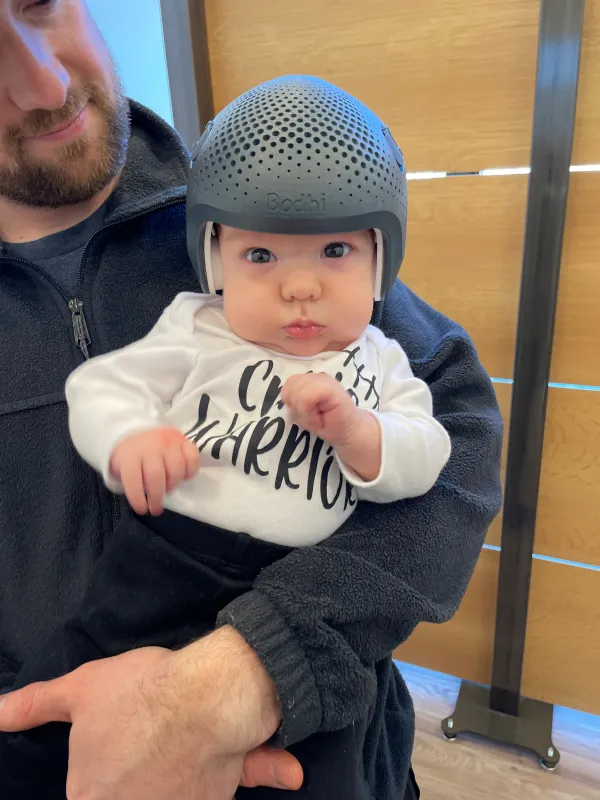
For Bodhi, that meant becoming the first patient in Iowa to receive a 3D-printed cranial helmet provided by Limb Lab, UI Health Care’s official orthotics partner. Bodhi wore the device as much as 23 hours a day.
“The helmet was breathable, and it was light,” Dorton says. “It wasn't thick and bulky, and he could still function normally as a baby.”
As he grew over the course of a year, Bodhi went through about six helmets. Reynolds says helmets are a critical piece of postoperative recovery for craniosynostosis.
“If we just did the surgery with no helmet, the outcomes would not be appropriate,” she explains.

Bodhi is now thriving
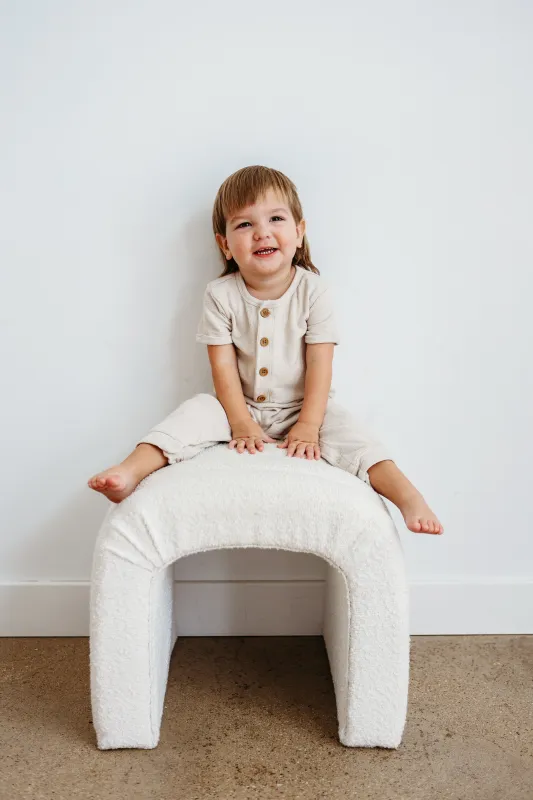
Today, Bodhi is 2 1/2 years old, and Dorton lights up when she talks about him.
“He is spunky, he is vibrant,” she says. “He is a sweet, tiny, outdoor-loving kiddo.”
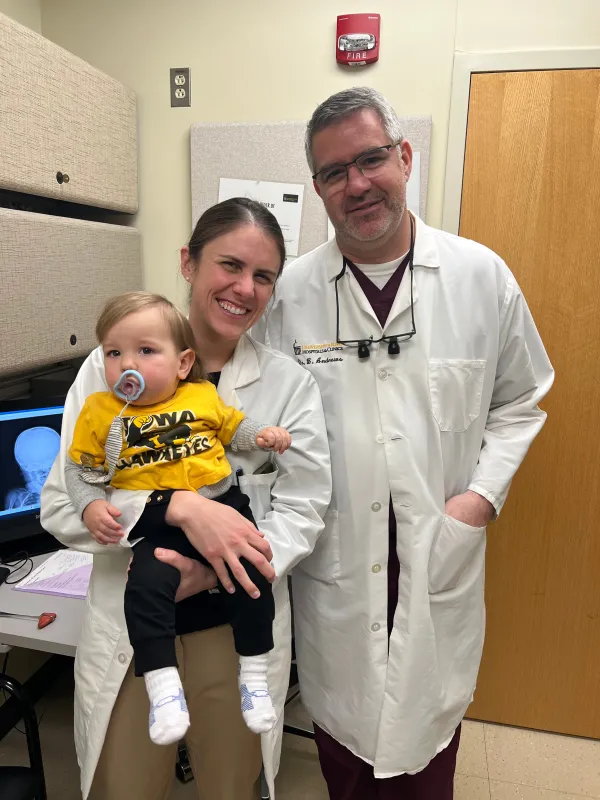
He still returns for follow-up care, and his team continues to watch how his skull develops as he grows.
“We are watching for any developmental concerns or headaches,” Dorton says.
For now, Bodhi is doing what his family hoped for from the beginning: growing, playing, and living life as a little kid.
“This is something that we can treat early with surgery, and then kids go on to develop very healthy, active lifestyles,” Reynolds says. “This is not something that's going to limit his ability to run, play, go to school, and be a normal kid.”
For Reynolds, this is her favorite part of her job.
“I love watching kids grow up and really be who they were meant to be,” she says. “Being able to play a small part in that is very much a privilege.”

If you have concerns, talk to your physician
For families who notice something unusual about their baby’s head shape, Reynolds has a simple message.
“If there is any concern about the shape of a child's head, I encourage families to bring it up to their pediatrician,” she says.
Even when everything turns out to be fine, she says getting expert eyes on a child can bring peace of mind.
And when treatment is needed, early action keeps more options open.
“Don't wait,” Reynolds says. “We want to see your child when they're young. That's going to help keep all the options available for you and your family.”
Patient Stories