1 in 500,000
newborns affected by attenuated MPS 1
6-year-old Harlow Taube receives treatment at Stead Family Children’s Hospital for rare inherited syndrome

When a newborn screening test detected a rare, potentially fatal genetic condition shortly after Harlow Taube was born in Illinois, her parents turned to the experts at University of Iowa Health Care Stead Family Children’s Hospital for treatment.
The screening — a heel prick that collects a few drops of blood to be tested for a variety of disorders — indicated a diagnosis of mucopolysaccharidosis type 1, or MPS 1.
“It was a normal pregnancy,” says Harlow’s mother, Marley, who had a scheduled C-section at their local hospital. “We didn’t know anything was wrong until her newborn screening came back.”
The severe form of MPS 1, also known as Hurler syndrome, affects an estimated 1 in every 100,000 newborns, while attenuated MPS 1 – a milder form – is even rarer, occurring in about 1 in 500,000 births. While babies with severe MPS 1 often have no symptoms at birth, the condition can quickly become fatal without treatment. The screening results came back about two weeks after Harlow was born, and she underwent tests to confirm the diagnosis.
“Having Harlow's newborn screening come back positive for MPS 1, our world stopped,” Marley says, noting Harlow’s first checkup before the diagnosis showed nothing out of the ordinary. “You google it and you see ‘genetic’ and you see ‘terminal’ and you see ‘bone marrow transplant.’”
Marley and her husband, Ryan, were referred to another Illinois hospital for Harlow’s treatment.
"We went there, but it just didn’t feel like we were where we were supposed to be, so we got a second opinion," Marley says. They contacted the genetics department at Stead Family Children’s Hospital and quickly received a response.
“We moved all of our care immediately to Iowa City,” she says, noting Harlow's first treatment happened within seven weeks after she was born in 2020. “That decision changed not only Harlow's life, but our family's life, also.”
Harlow was diagnosed with the less severe form of MPS 1, which is treatable with enzyme replacement therapy. The syndrome is caused by the deficiency of an enzyme needed to break down special sugars called mucopolysaccharides, leading to organ damage, skeletal abnormalities, and a shortened lifespan if left untreated. While MPS 1 is inherited, Harlow's three older sisters have not been diagnosed with the condition.
Because of COVID-19 protocols enacted that spring, which limited the number of visitors, Marley had to accompany her daughter by herself for the weekly, six-hour treatments.
“I was the only one who could come for probably two years,” she says. “That meant sitting alone for hours during treatments, navigating hard conversations alone and holding her down during port access by myself. Those were the hardest days, but the nurses and Child Life stepped in with compassion that went far beyond medical care.”
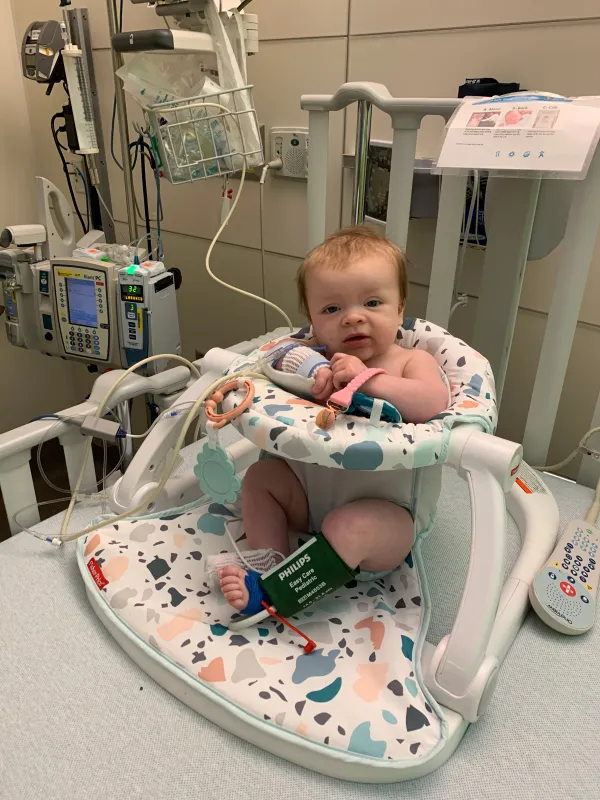
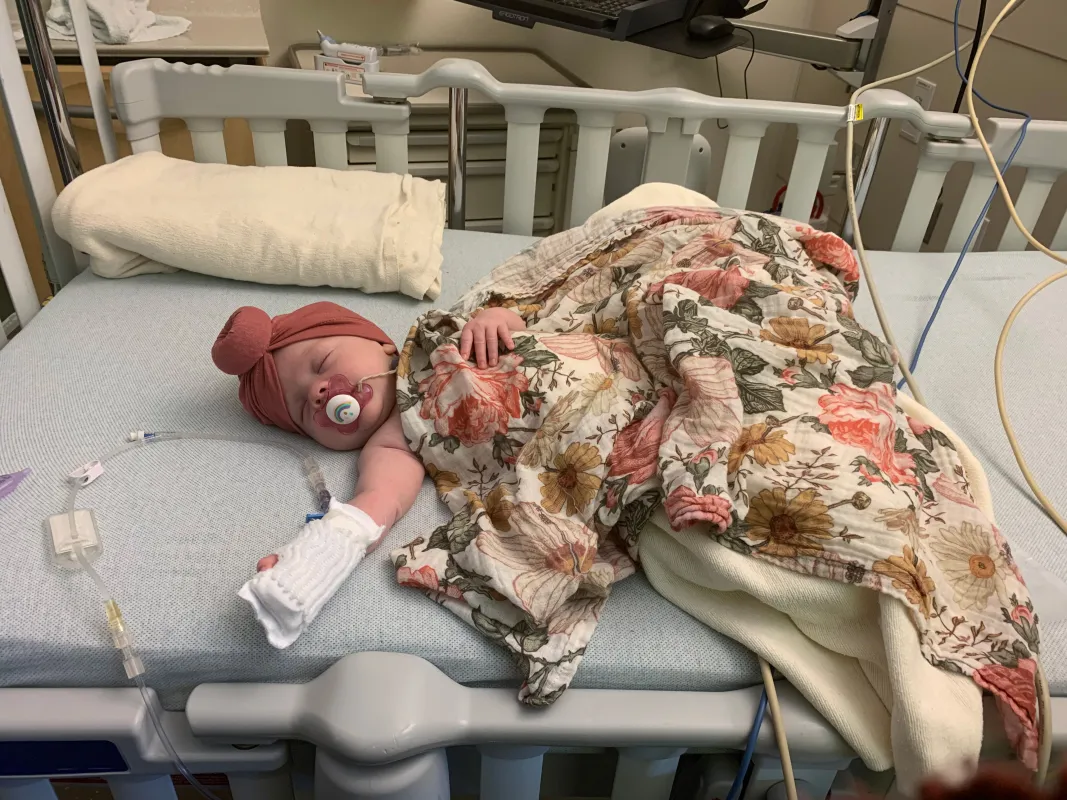
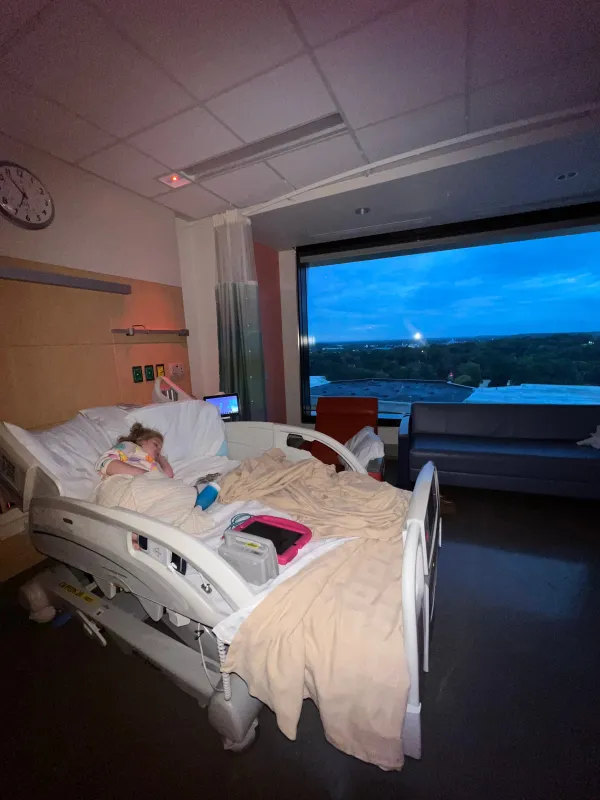
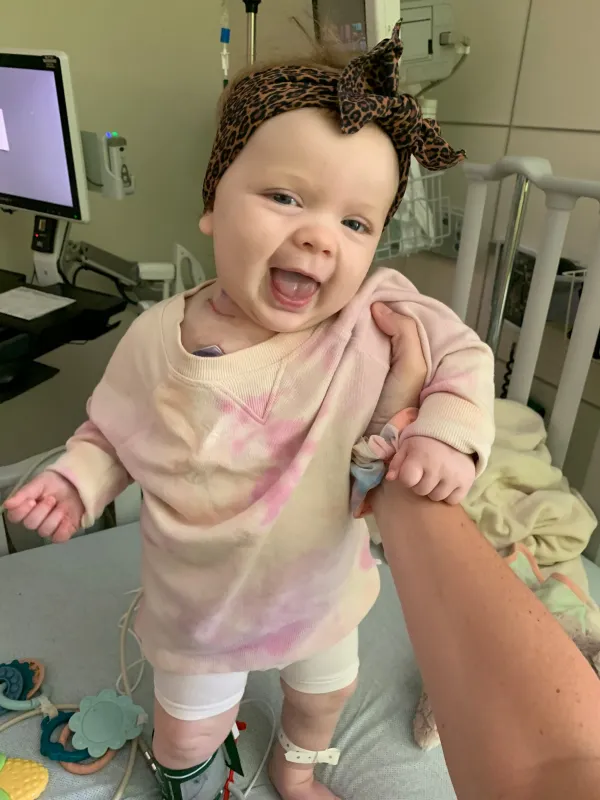
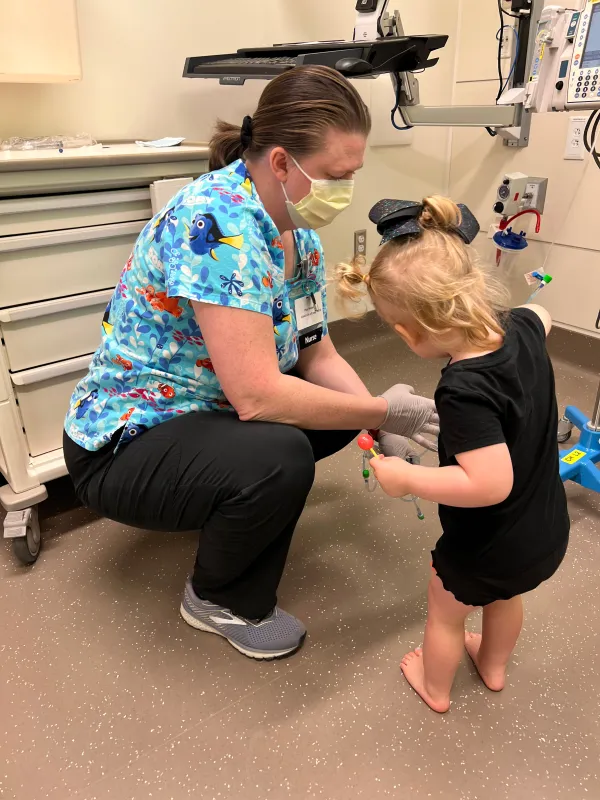
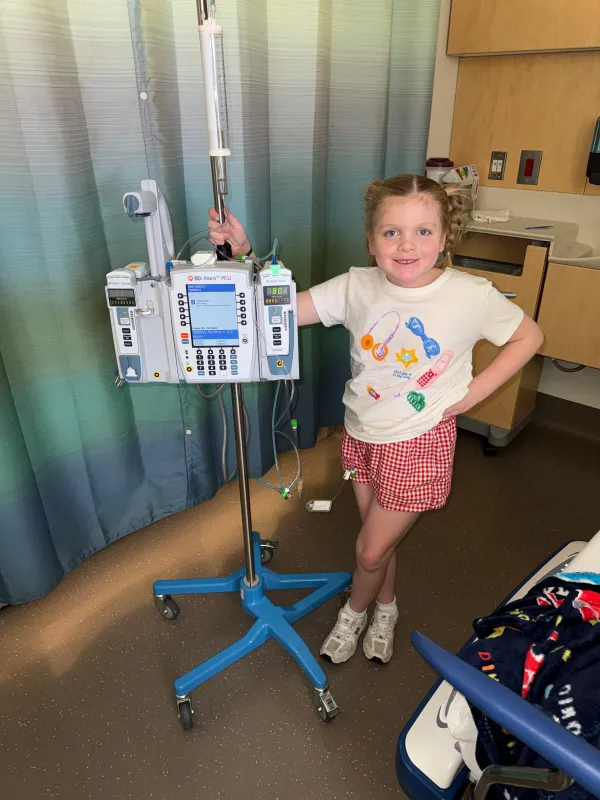
Nurses and other staff “checked in with me as much as they checked on Harlow,” Marley says. “They distracted her when she was scared, celebrated her bravery, and became our steady support during a very isolating time. They became and still are our family.”
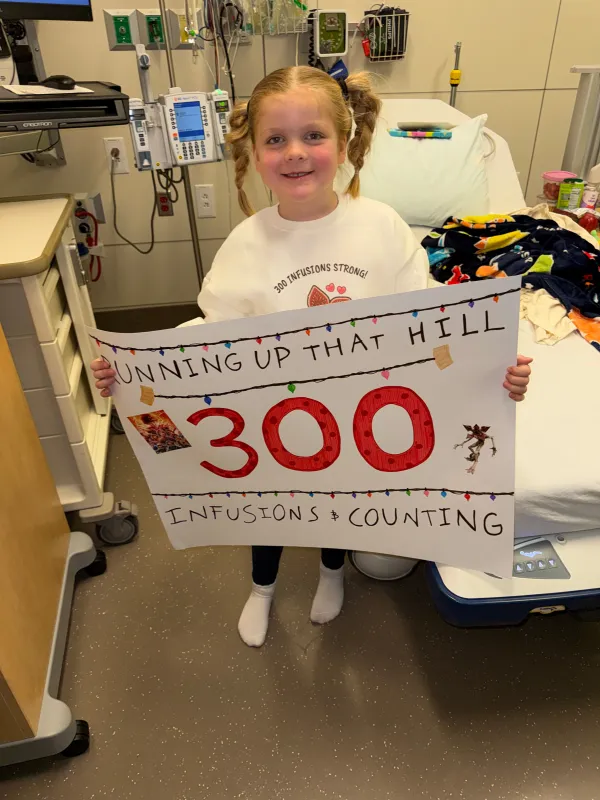
In recent years, Stead Family Children’s Hospital’s facility dog, Nacho, has helped keep Harlow company during the enzyme replacement therapy. Earlier this year, Harlow met a milestone of 300 infusions.
“There is no cure,” Marley says, adding that she feels fortunate the screening was available when Harlow was born. “The treatment is lifelong, and there is so little research that we don’t know what the future holds for her.”
Every week, the Taube family makes the hour-and-a-half drive from their home in Orion, Illinois, to Iowa City for Harlow’s life-saving treatment. Through snowstorms, birthdays, and the everyday challenges of family life, they continue to make the journey, knowing each visit is an important step in protecting Harlow’s future.
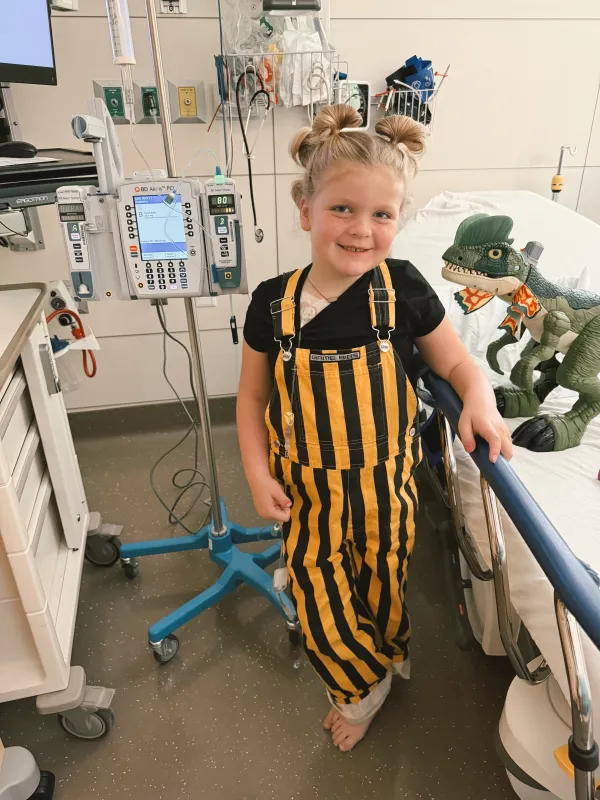
Now 6, Harlow is in first grade and loves dinosaurs, Michael Jackson videos, and reading about natural disasters, such as tornadoes. Harlow hopes to someday be a paleontologist.
“You look at her and she doesn’t look sick,” Marley says, with Harlow showing no symptoms so far. “If she wouldn’t have been tested, who knows where we’d be."
Harlow's parents appreciate the support and expertise available at Stead Family Children’s Hospital and Harlow has come to enjoy her weekly visits, where she is “treated like a princess,” Marley says.
“The nurses are the greatest people I have ever met,” she adds. “They let her know every step of the way what’s going on. It’s just the best place to be. We can’t imagine doing any of this without them.”

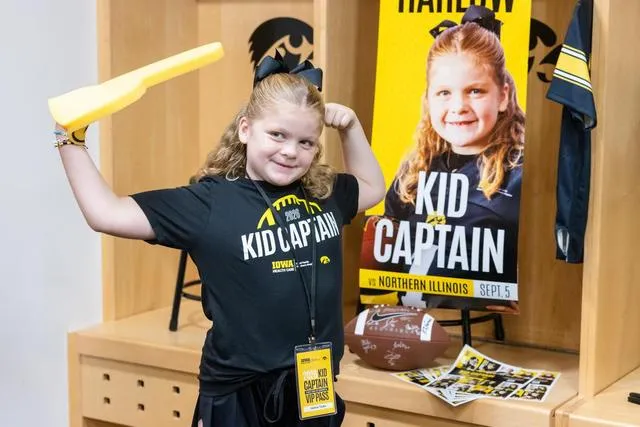

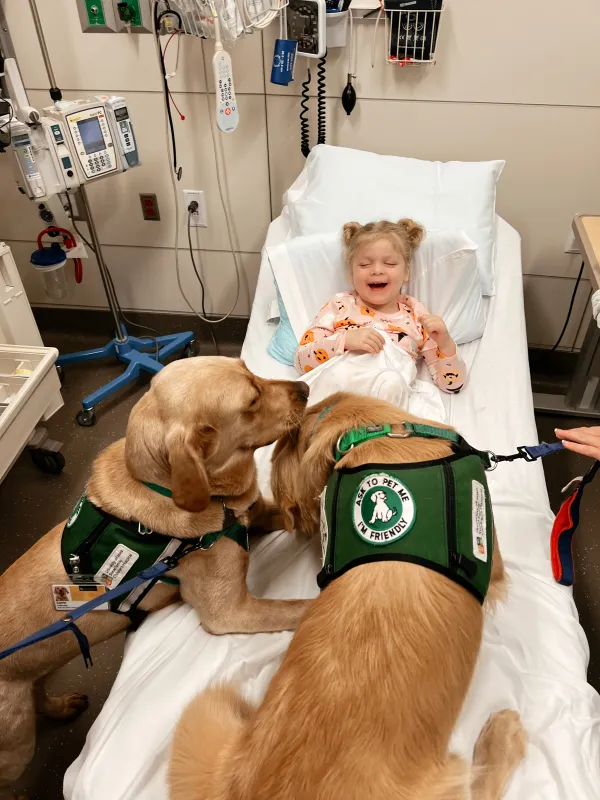
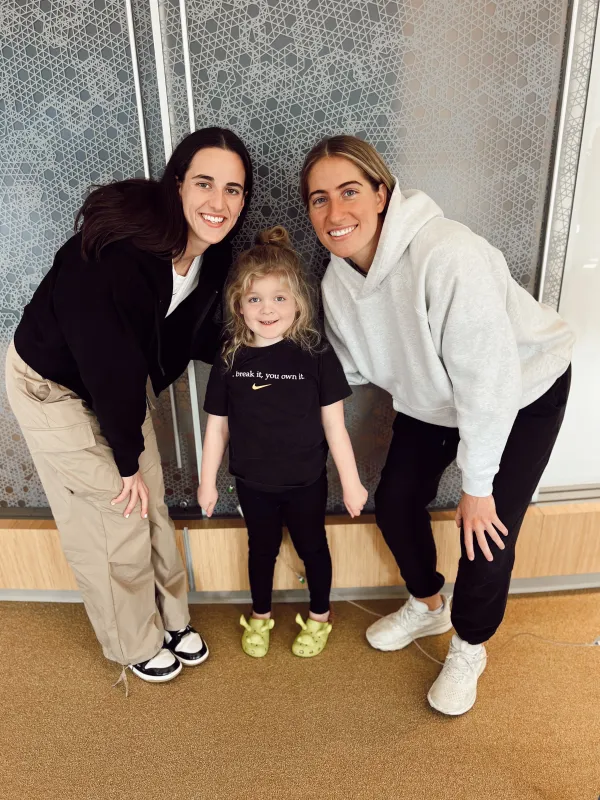
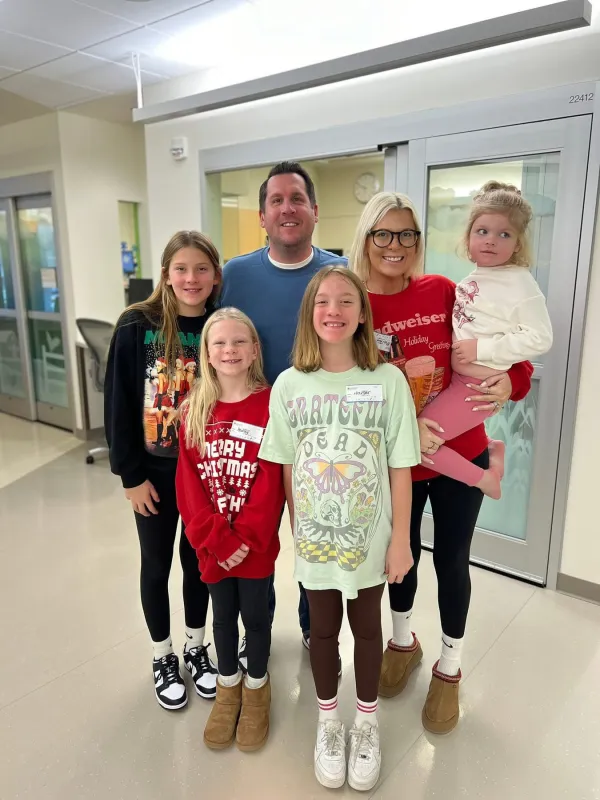
Each football season, we welcome 12 unforgettable patients into our Kid Captain Hall of Fame. Explore our four most recent stories.

Millie was transferred to Stead Family Children’s Hospital shortly after birth due to breathing issues, eventually undergoing open heart surgery at just 4 months old. She was diagnosed with a rare syndrome, Bannayan–Riley–Ruvalcaba.

After multiple misdiagnoses, Ray Walker’s parents saw a "night and day” difference in their son’s care after arriving at University of Iowa Health Care Stead Family Children’s Hospital.

After a sudden headache at his birthday party led to the discovery of a brain tumor, Blake underwent major surgery, radiation, and chemotherapy at Stead Family Children’s Hospital.

A high-five once broke her arm. Now, Kid Captain Harper Atkinson finds strength and support at Stead Family Children’s Hospital.