Kid Captain Henry Jaeger receives life-saving heart transplant at Stead Family Children's Hospital
After a rare heart condition changed his life, Henry Jaeger received a second chance thanks to the expert care of his team
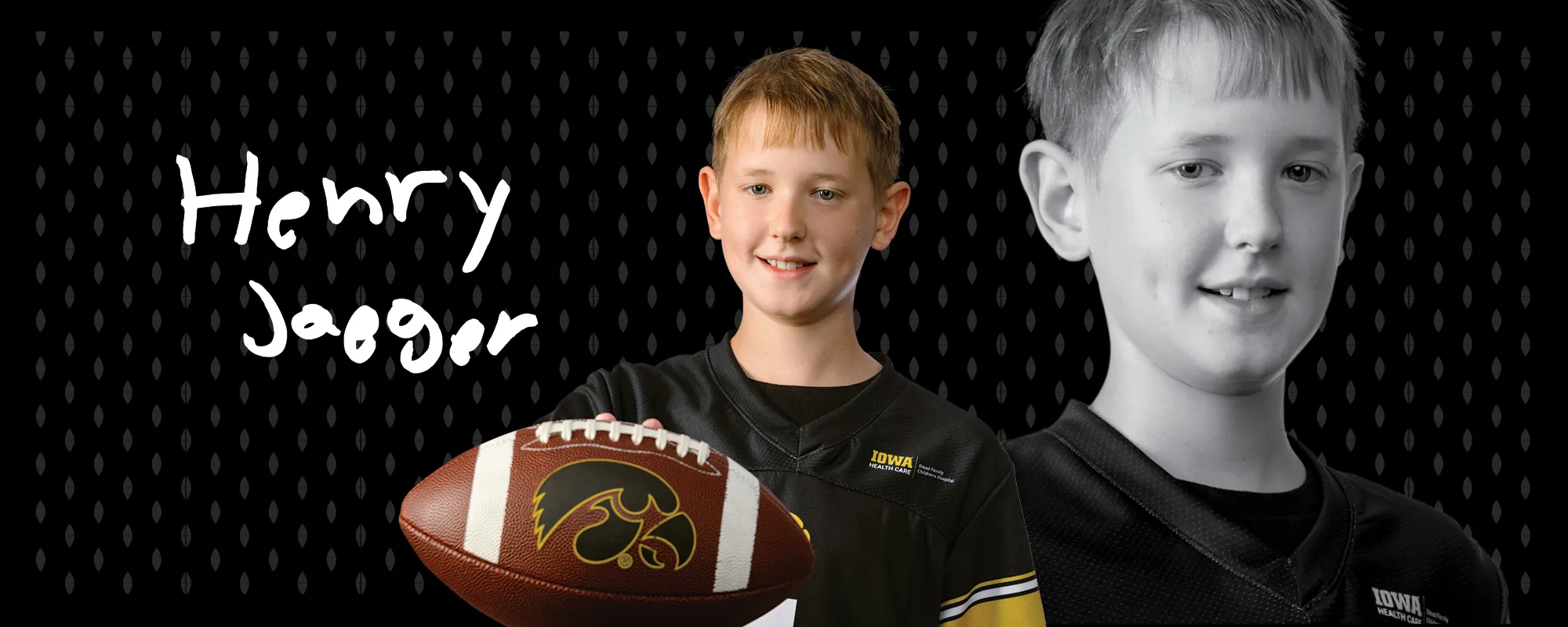
New Year's Day in Keota, Iowa, typically isn't great for outdoor basketball, but in 2023, it was unusually warm, so 8-year-old Henry Jaeger and his brother went outside to shoot some hoops.
“Everything was perfectly fine for Henry until all of a sudden it wasn’t,” says his mother, Heather.
Henry collapsed while playing. His father, Luke, quickly picked him up. “Just instantly, we knew he was not OK,” Heather says.
Henry had gone into cardiac arrest. Heather immediately began CPR, likely saving Henry’s life before emergency crews arrived 16 minutes later.
Emergency flight to Stead Family Children's Hospital
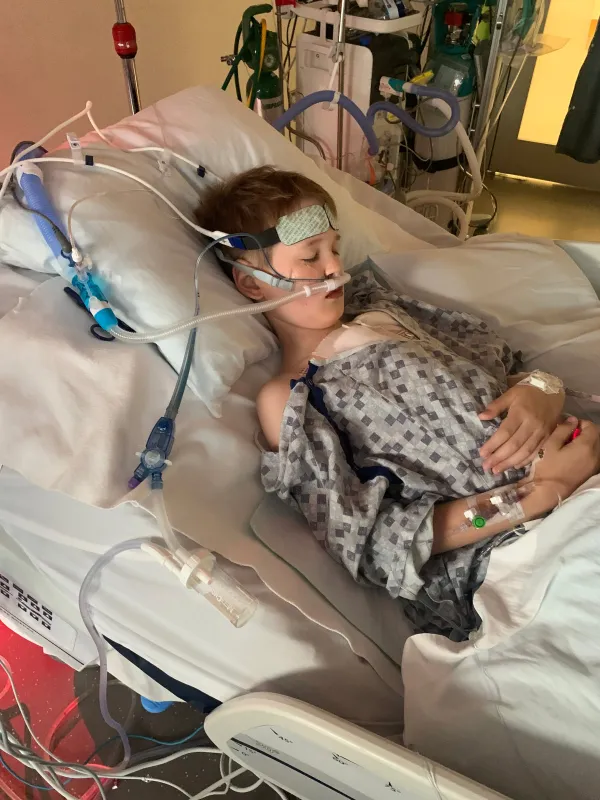
Henry was transported by AirCare helicopter to University of Iowa Health Care Stead Family Children’s Hospital, where an automated external defibrillator, or AED, was used twice to revive his heart rhythm.
Luke and Heather drove the 50-minute trip to Iowa City.
“It was just so sudden and shocking,” Heather recalls. She says by the time they arrived at the hospital, Henry had been stabilized and was placed into an induced coma.
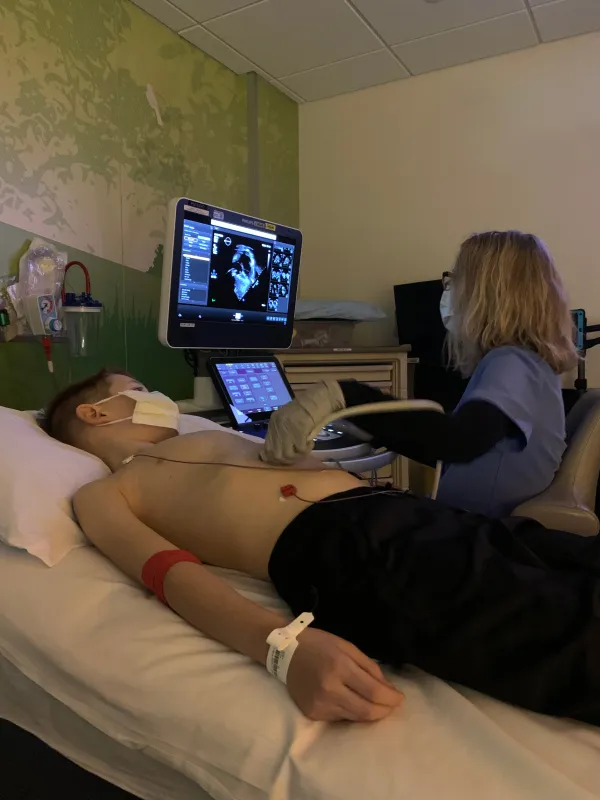
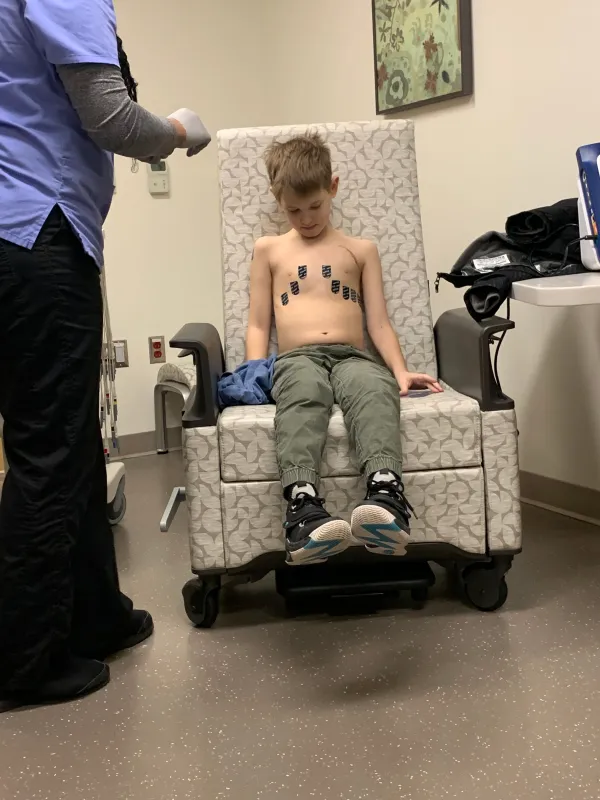
He was diagnosed with restrictive cardiomyopathy, a rare condition in which the heart's lower chambers become stiff and cannot fill with blood.
Pediatric cardiologist Rabia Khan, MD, drew a picture of a heart to help explain the condition to the family.
“They knew what it was fairly quickly. We had never heard of it,” Heather says. “There was a lot of crying. I just lost it — how is this even possible?”
Awaiting a new heart
Henry received an implantable cardioverter-defibrillator, or ICD, which can deliver electric shocks to restore a regular heartbeat, and was placed on the waiting list for a heart transplant, the only treatment available for his condition.
He was discharged from the hospital and went back to school later that month.
Heather says they never thought of seeking care elsewhere, and they were grateful that Stead Family Children’s Hospital – which offers the only cardiac transplant program in Iowa – was nearby. They say the hospital’s transplant coordinator at the time was their “lifeline.”
“If I had a question, I could call her and she would instantly answer,” she says.
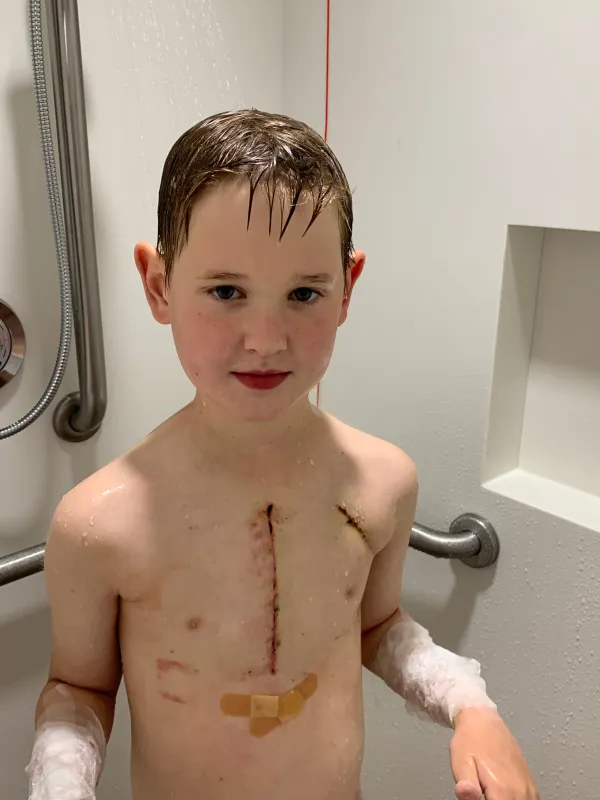
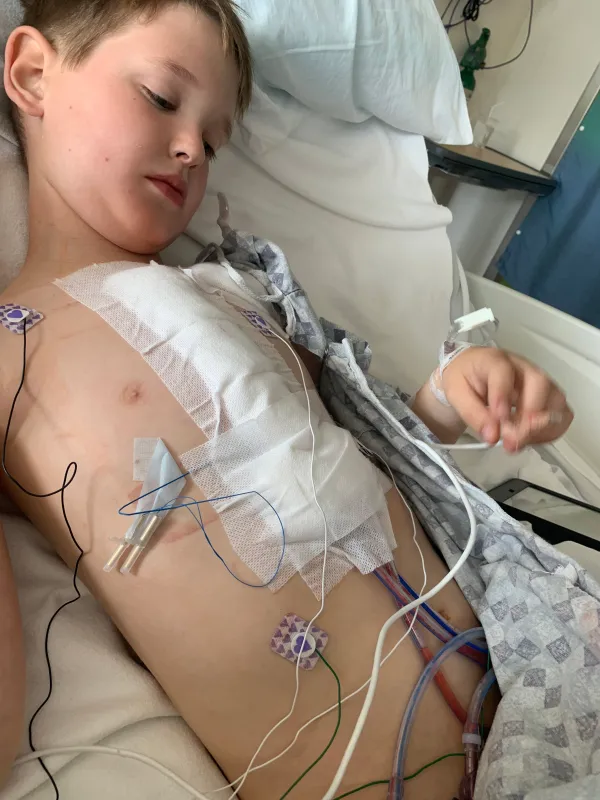
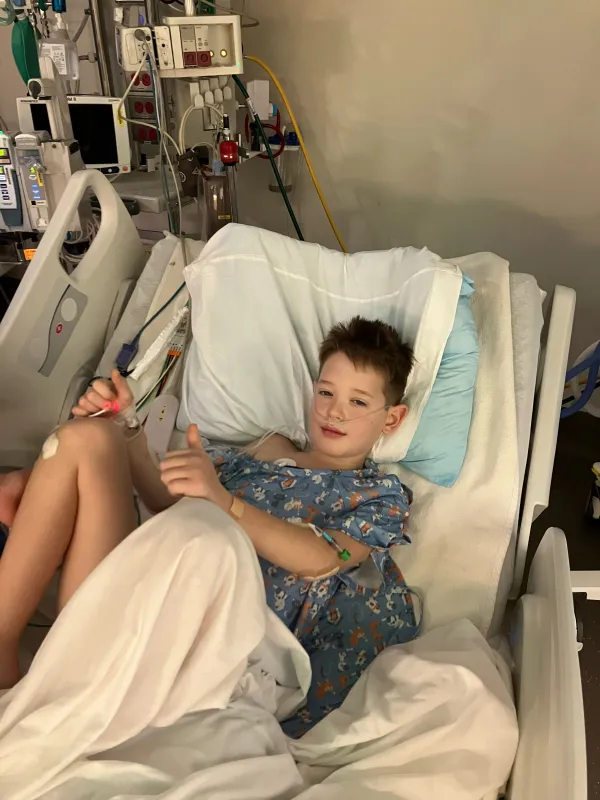
Less than six months later, on May 31, 2023 — shortly after his ninth birthday — Henry received a heart transplant.
The daylong surgery was a success. Heather says Henry was up eating chips and watching TV within two days.
“We were out of the hospital in eight days, which at that point was a record for anyone leaving after a transplant,” Heather says.
A rare complication
The surgery was successful, but months later Henry experienced a rare complication called post-transplant lymphoproliferative disorder, in which white blood cells multiply uncontrollably. It is often linked to the immunosuppressant drugs taken to prevent organ rejection and to the Epstein-Barr virus, a common virus that a weakened immune system fails to control, allowing infected cells to multiply.
“He started getting severe stomachaches,” Heather recalls.
They took him to his pediatrician and had lab tests done, eventually returning to Stead Family Children's Hospital, where more tests were performed. “He had all these inflamed lymph nodes throughout his stomach and everywhere.”
While his heart was functioning well, Henry was diagnosed with stage III Hodgkin lymphoma, a cancer that starts in the lymphatic system that can spread to both sides of the diaphragm.
He underwent two rounds of antibody infusions to treat the cancer, with a port placed to facilitate treatment. The therapy successfully resolved the cancer.
However, this past winter, Henry's stomach pains returned, and scans found his lymph nodes were again enlarged. Test results showed a fungal infection, which was separate from his other conditions, and Henry began medication that he continues to take to treat the infection.
Throughout his hospital stays, Henry also needed regular blood draws, which were initially difficult for Henry.
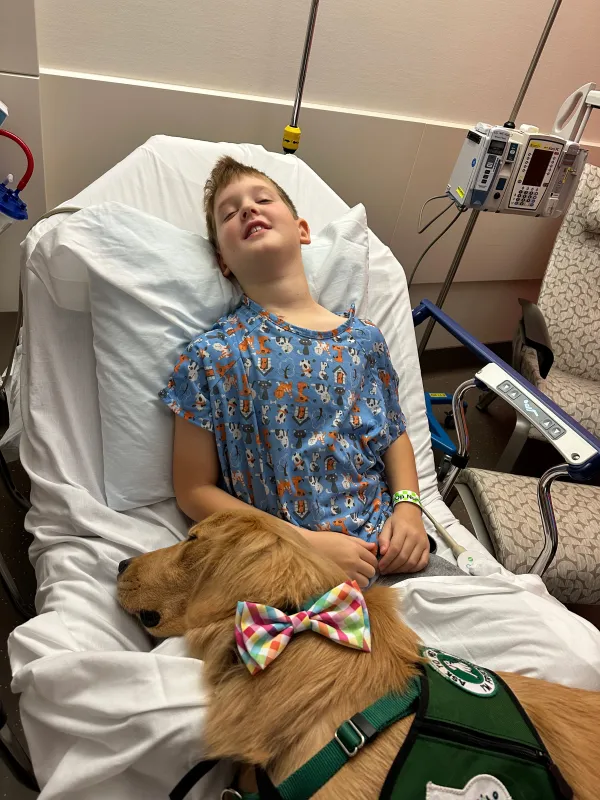
“With three people holding him down screaming, it was not a fun experience for anyone,” Heather recalls, but with help from Child Life and other staff members, along with Nacho, one of Stead Family Children's Hospital’s facility dogs, his fears have dissipated.
“There’s not one person we’ve encountered here who doesn’t go above and beyond,” Heather says. “Every person we see at the hospital, from the lady who checks you out in the cafeteria all the way up to his heart surgeon, they’re just incredible people.”
The gift of a heart
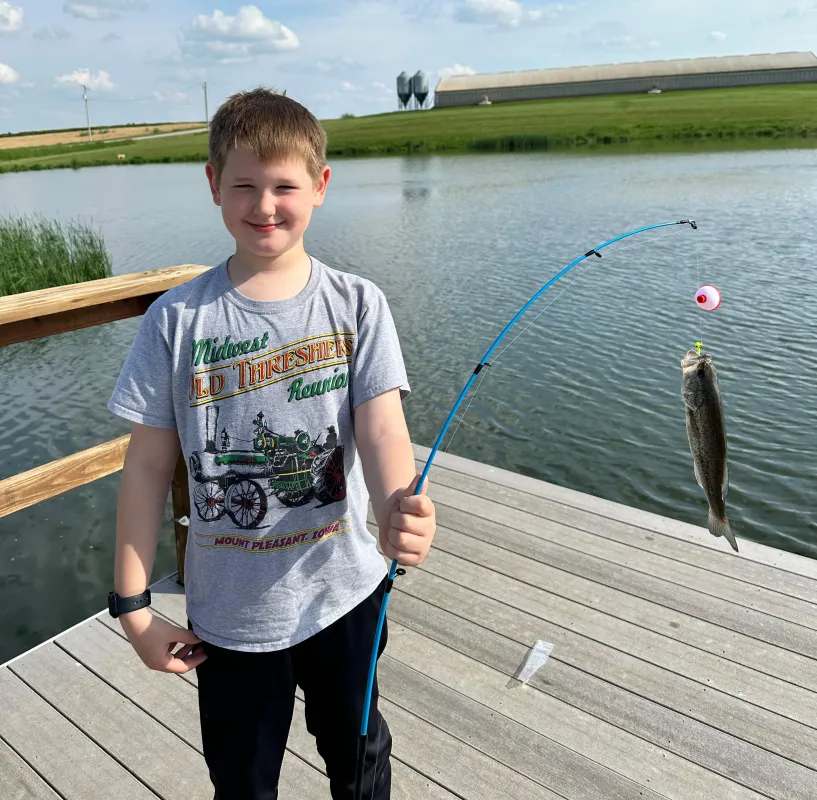
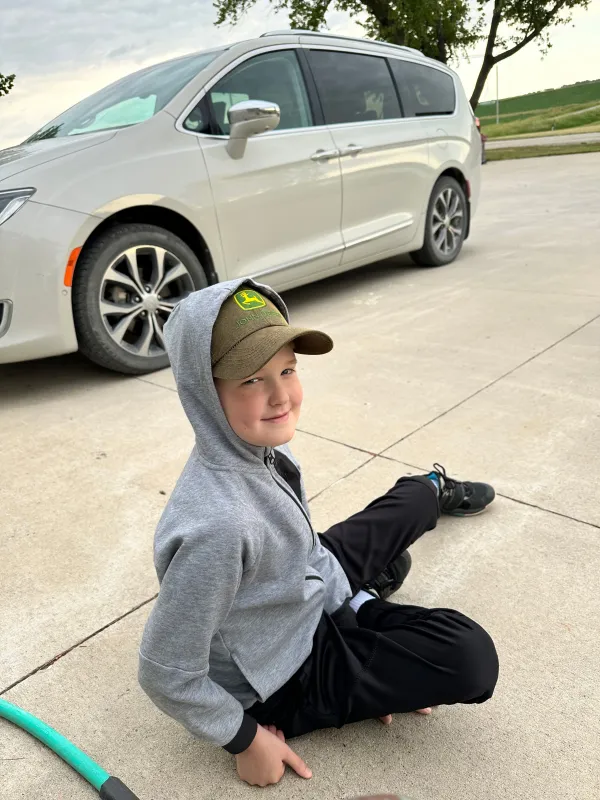
Now 12, Henry is in seventh grade, enjoys fishing on the family’s pond and working on old tractors and learning about history.
The family recently welcomed a new puppy to their family, Pete, a golden retriever in honor of Nacho.
“We try to keep Henry doing what everyone else is doing,” Heather says, noting he went out for football last year. “We’ve always had the frame of mind that he received this gift of a heart from somebody else, so he’s going to use it.”
They have written to the donor's family to thank them, and Henry hopes to meet them someday.
While he still faces health challenges, Henry’s heart checkups have gone well, and he regularly returns to see his care team.
“There is no better place to take your child,” Heather says of Stead Family Children’s Hospital. “If there is an issue, you know there will be a whole team behind you to get it figured out.”
Kid Captain Hall of Fame
Each football season, we welcome 12 unforgettable patients into our Kid Captain Hall of Fame. Explore our four most recent stories.
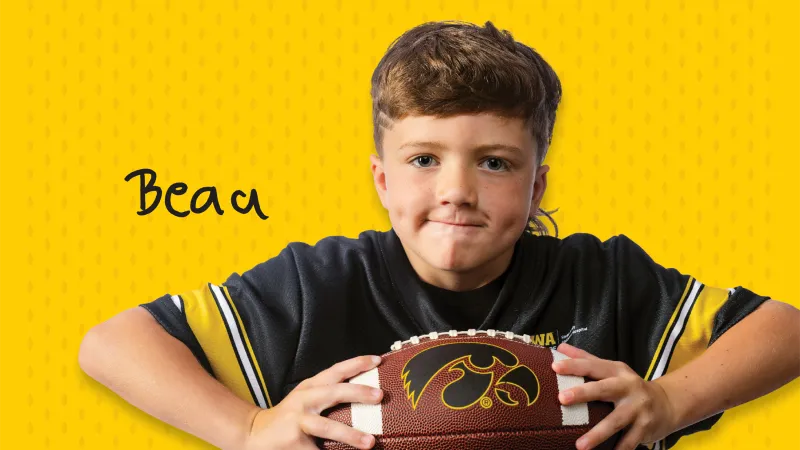
At age 3, Beau Byers was diagnosed with stage III, group III embryonal rhabdomyosarcoma after experiencing severe stomach pain. The next morning, surgeons removed most of a softball-sized tumor, and scans showed the cancer had spread only to two lymph nodes near his bladder. After months of chemotherapy and radiation, Beau is now in remission.
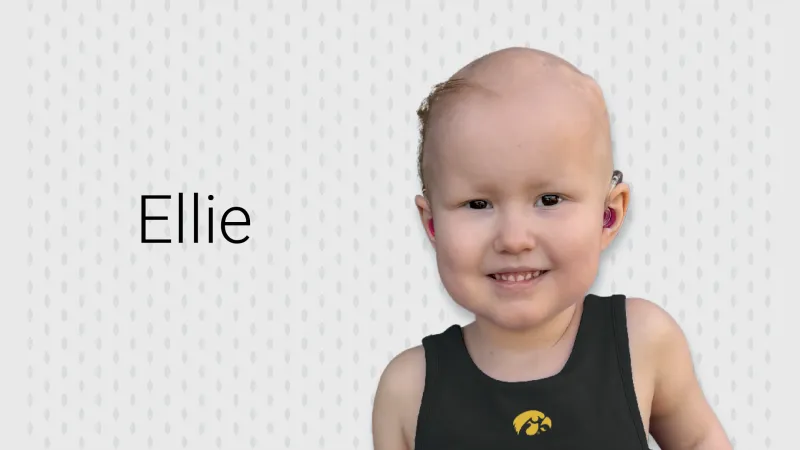
Ellie Walker was 3 years old when she was diagnosed with an extremely rare and aggressive form of pediatric brain cancer at University of Iowa Health Care Stead Family Children’s Hospital. She experienced more than a year of radiation and chemotherapy as well as countless hospital stays, blood and platelet transfusions, surgeries, scans, lumbar punctures, and other difficult treatments and side effects.
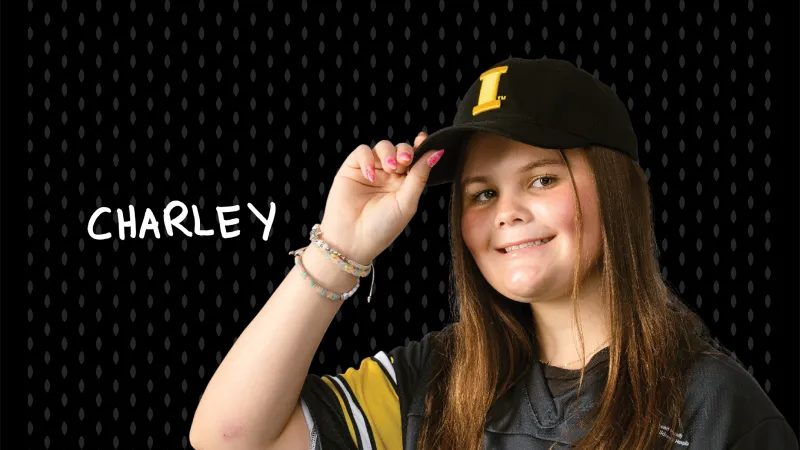
Kindergarten was hard for Charley Rasmussen. She often felt sick, lost 20 pounds in a single month, and experienced severe pain that sometimes woke her at night. As her health declined, her family searched for answers. In January 2018, Charley was diagnosed with Addison’s disease, a rare condition in which the body does not produce enough essential hormones.
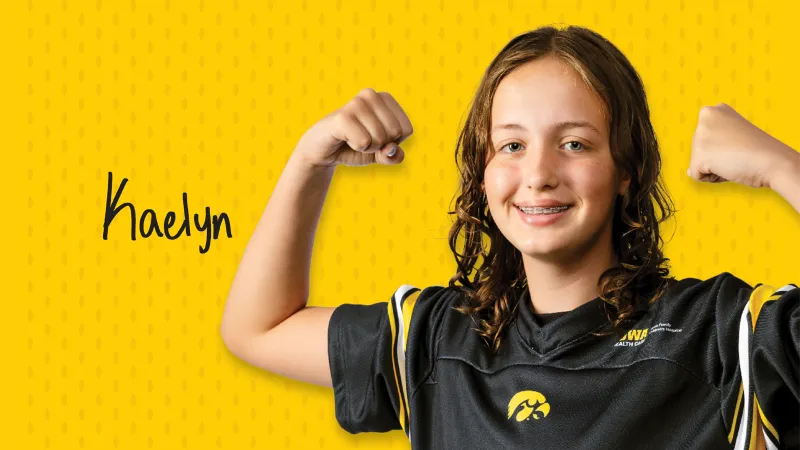
When Kaelyn O’Brien couldn’t walk down the hallway and her speech became slurred one morning, her parents thought their 11-year-old daughter was having a stroke.
Patient Stories