Helping young athletes avoid overuse injuries
Young athletes can train and compete at a high level without sacrificing their long-term health. A balanced approach that includes varied movement, appropriate rest, and attention to pain can help reduce overuse injuries and keep young athletes active.
Youth sports specialization and injury risk: What parents should know
- Research has linked high levels of youth sports specialization with a greater risk of overuse injury than athletes with low or moderate specialization.
- Middle school and early high school can be particularly important years for varied athletic development. Playing multiple sports can expose growing bodies to different movement patterns and skills.
- Pain that changes how an athlete moves, performs, or participates deserves attention. Limping, declining performance, or missing practices because of persistent soreness can signal greater-than-normal discomfort following physical activity.
- Rest does not always mean doing nothing. Cross-training, rehabilitation, stretching, and lower-intensity activity can provide a break from repetitive sport-specific stress.
- High-level performance and healthy development can coexist. Parents, coaches, athletic trainers, and sports medicine specialists can work together to balance training goals with long-term musculoskeletal health.
What is early sports specialization?
For young athletes chasing a roster spot, scholarship, or simply the chance to get better, more training may feel like the obvious answer. But year-round focus on a single sport can place repetitive stress on a growing body and increase the risk of overuse injuries.
Early specialization happens when a child focuses primarily on one sport, often training and competing in it throughout much of the year. The concern is not that a child wants to become highly competitive. It is the repeated exposure to the same movements and physical stresses during a period of physical growth.
Robert Westermann, MD, an orthopedic surgeon at University of Iowa Health Care, says specialization becomes even more concerning when it happens during middle school, while the body is still developing.
“I’m very opposed to kids in elementary and middle school becoming fully specialized in one sport,” Westermann says. He notes that specialization becomes more common and appropriate as athletes get older, particularly in the later years of high school.
Why can year-round training increase injury risk?
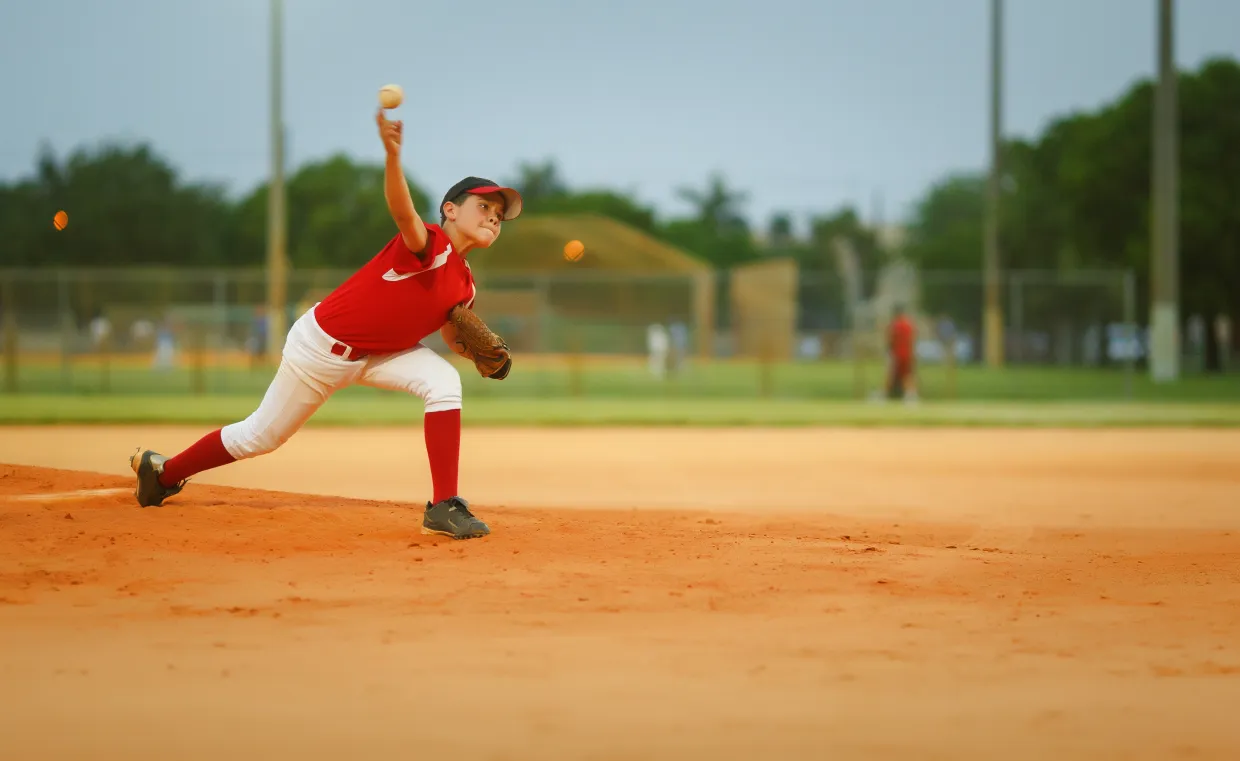
Research and clinical experience have long raised concerns about repetitive year-round activity. Baseball pitching is one familiar example, where repeated throwing has been associated with growth plate, shoulder, and elbow injuries in young athletes.
Similar patterns can affect the hips in sports that repeatedly place athletes in deep hip flexion, including hockey, soccer, dance, cheerleading, gymnastics, and some basketball positions.
Michael Willey, MD and Westermann performed a study about how early specialization may affect hip health. In a survey of more than 1,000 college students from five Iowa colleges, the researchers looked at participants’ history of sports participation, when they specialized, and whether they experienced hip pain or needed hip surgery as young adults.
One of the strongest patterns involved athletes who specialized during middle school in sports that repeatedly placed the hip in deep flexion.
“If you drop down to one high-risk sport, you have a very statistically higher chance of either quitting your sport due to hip injury or requiring hip surgery by the time you’re in college,” Westermann says.
Repeated loading during growth may also contribute to structural changes in the hip. Westermann says high levels of participation in certain sports can influence how the hip develops, potentially contributing to femoroacetabular impingement (FAI), a hip condition where the ball and socket do not fit right. Continued repetitive movement may then damage the labrum, a ring of cartilage that cushions the hip joint, and eventually lead to pain.
For families, the takeaway is not that competitive training is inherently harmful. It is that a growing body needs to recover.
“Those pressures should be balanced with the future hip risk they’re subjecting their kids to in certain sports,” Westermann says.

Help your athlete stay in the game
UI Health Care sports medicine specialists help young athletes prevent injuries, recover safely, and return to the activities they love.
Know the warning signs of an overuse injury
Soreness after a hard practice, game, or tournament is common. More concerning is pain that begins to change how a young athlete moves, performs, or participates.
- Pain that persists instead of improving after activity
- Limping or changing the way they move
- A noticeable decline in performance
- Missing practices or games because of pain
- Difficulty recovering after tournaments or several games in a short period
- Symptoms that repeatedly return with activity
Often, parents and coaches are best positioned to notice that something has changed.
“Anything that’s out of the ordinary for the normal patterns that they see in either their child or their athlete should be at least investigated,” Westermann says.
Persistent pain also should not simply be treated as something a competitive athlete has to push through. Westermann says the first step is understanding what is causing it.
“I would only let my kid play through pain if I knew what the diagnosis was,” he says.
A sports medicine professional can help determine whether continuing to compete is safe or could make an injury worse.
Build rest and recovery into the training schedule
Rest does not have to mean giving up athletic goals.
Westermann describes both absolute rest, or taking time away from training, and relative rest, which allows an athlete to remain active while giving heavily stressed parts of the body a break.
Relative rest might include stretching, rehabilitation exercises, core work, low-intensity conditioning, or activity that uses the body differently from the athlete’s primary sport.
For developing athletes, Westermann says one to two days of relative or absolute rest each week is a reasonable general guideline.
“At minimum, one to two days per week of absolute to relative rest will allow their function to be better in the days that they’re performing the rest of the week,” he says.
Recovery becomes especially important when schedules start overlapping. Club practices, school teams, private training, tournaments, and camps can add up quickly, even when each program individually seems reasonable.
Parents and coaches should look at the athlete’s total training load, rather than viewing each team or activity in isolation. When pain, fatigue, or declining performance starts appearing, adjusting that load may help prevent a smaller problem from becoming a season-ending injury.
Cross-training can make young athletes better
Playing more than one sport does not necessarily put an athlete at a competitive disadvantage. In some cases, the skills developed in one sport can improve performance in another one.
Westermann points to football players who wrestle as an example. Wrestling builds balance, body control, and hand-fighting skills that can translate directly to offensive-line play. Volleyball can build explosiveness that benefits basketball players.
“Participation in another sport can actually lead to more advances in an athlete’s primary sports,” Westermann says.
Variety may offer benefits beyond physical development, too. Moving between sports exposes young athletes to different coaches, teammates, roles, and challenges.
Westermann says those experiences may support psychological development as well as physical development, particularly during middle school and early high school.
For families worried that taking a season away from a primary sport will mean falling behind, this is an important shift in perspective worth considering: Cross-training can be part of performance development, not time away from it.
High-level performance and long-term health can go together
For families with ambitious young athletes, delaying specialization does not mean lowering expectations.
Westermann notes that specialization becomes more common, and may be safer, as athletes get older, particularly in the later years of high school. But for younger athletes, maintaining variety gives the body and the athlete more time to develop.
The goal is not to discourage competition. It is to make training sustainable.
Young athletes can still work hard, build skills, and pursue high-level opportunities while incorporating recovery, varied movement, and medical guidance when something does not feel right.
For parents and coaches, that means looking beyond the next tournament or season. A balanced approach can help athletes perform now while protecting their ability to stay active for years to come.