Where to go when you need care this fall
Fall can bring sore throats, coughs, fevers, minor sports injuries, and other unexpected health concerns. Knowing whether to choose primary care, Quick Care, Urgent Care, or the Emergency Department can help you get the right level of care without unnecessary delays.
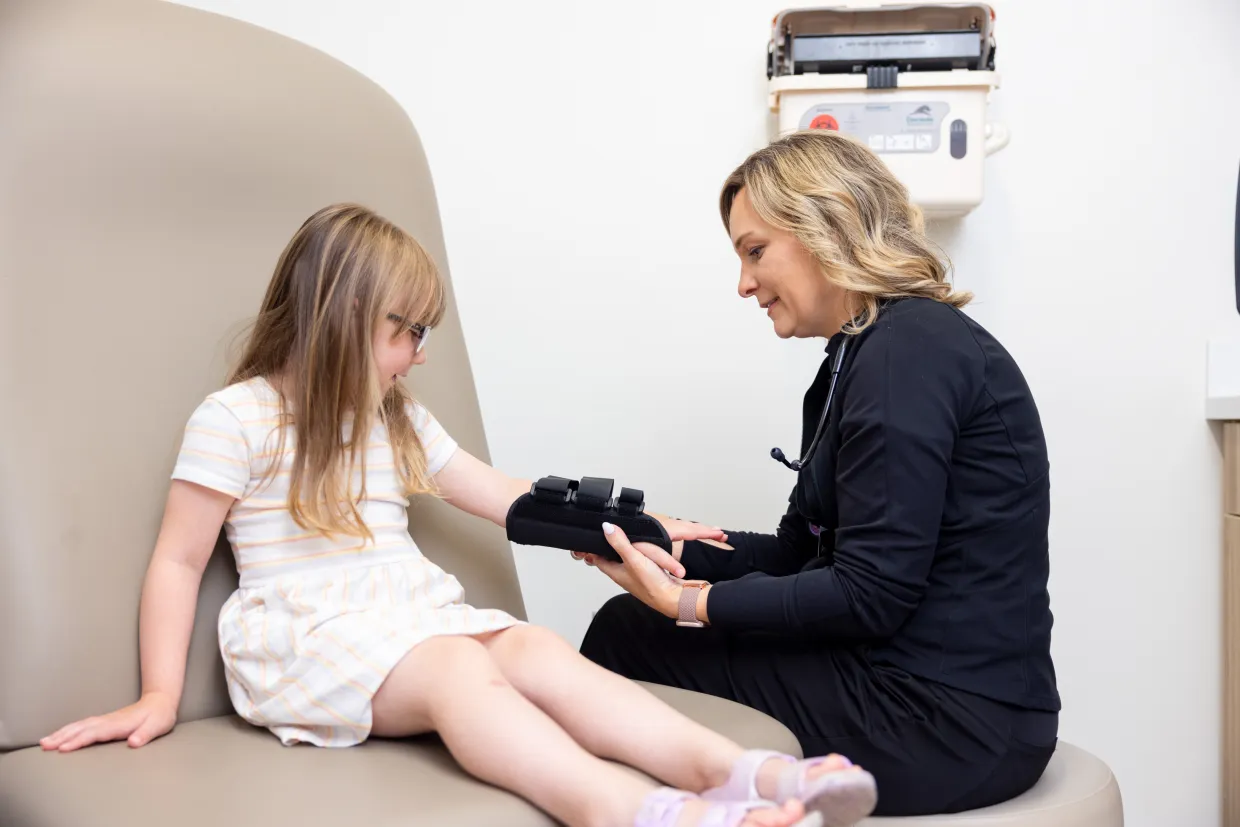
The right place for care depends on how serious the health concern is and what type of evaluation or treatment you may need. During the autumn season, this may mean choosing:
- Primary care for routine, ongoing, or follow-up needs
- Quick Care for mild illnesses and minor concerns such as sore throats, colds, ear pain, rashes, or uncomplicated urinary symptoms
- Urgent Care when you may need an X-ray, on-site laboratory testing, intravenous (IV) fluids, and temporary splinting
- The Emergency Department for severe breathing difficulty, chest pain, stroke-like symptoms, confusion, major injuries, or other potentially life-threatening concerns
UI Health Care’s On My Way tool can help you review nearby Quick Care and Urgent Care locations, compare estimated wait times, and choose a clinic that can see you sooner before leaving home.
Autumn brings a familiar mix of concerns: sore throats once school is back in session, coughs and fevers as respiratory viruses spread, sprained ankles from fall sports, and tick bites that continue until freezing weather arrives.
When something happens, the first question is often where to go. Consider how serious your symptoms are and whether you may need testing, imaging, fluids, or other treatment.
Kaitlin Carr, a physician associate at UI Health Care, says choosing where to go for care can feel difficult.
“What you’re experiencing versus what we see can feel very different,” Carr says.
You do not have to make the decision alone. UI Health Care’s online information and On My Way tool can help you find the right location with the clinic waiting times.
How to choose among primary care, Quick Care, Urgent Care, and the Emergency Department
Each care setting serves a different purpose. Thinking about how sick or injured you feel — and what services you may need — can help narrow the choice.
Primary care is usually the best starting point for routine needs, ongoing symptoms, chronic condition management, medication questions, preventive care, and follow-up after an illness or injury. When your medical concern is not urgent and can safely wait for an appointment, a primary care provider who knows your medical history is the right person to talk to.
Quick Care is intended for mild illnesses and minor concerns when you feel unwell but are not in significant distress. During the fall, this may include:
- A sore throat
- Cold symptoms
- Mild cough
- Ear pain
- Sinus symptoms
- A minor rash
- An uncomplicated urinary concern
- A tick bite
Carr describes Quick Care as a place for patients who would like an examination, simple testing such as a swab, and guidance about what to do next.
Urgent Care provides the same treatments as Quick Care, and it is a better fit when your symptoms are worsening or lasting longer than expected, or when you may need more testing or treatment. UI Health Care Urgent Care locations can provide on-site laboratory evaluation, X-rays, intravenous (IV) fluids, and temporary splinting for some injuries.
This makes Urgent Care a good choice for a possible sprain or fracture, mild dehydration, a respiratory illness that may require a chest X-ray, or heart palpitations that do not cause fainting or severe distress.
“If you think you broke something, or you’ve been dealing with it for multiple days and you feel like you’re getting worse, that would be a good time to go to the Urgent Care,” says Christina Kopp, ARNP, the lead advanced nurse practitioner for Urgent Care.
The Orthopedic Injury Walk-In Clinic is another option for unexpected, acute musculoskeletal injuries. Located at UI Health Care Medical Center North Liberty, the clinic provides immediate care, diagnostic imaging, and access to an orthopedic specialist for injuries to muscles, tendons, ligaments, or joints within the last seven days.
The Emergency Department is the right place for severe or potentially life-threatening conditions. This includes:
- Significant shortness of breath
- Allergic reactions
- Coughing or vomiting blood
- Sudden or severe pain
- Active labor
- Poisoning
- Chest pain
- Stroke-like symptoms
- Disorientation
- Major trauma
- Serious head injury
- Uncontrolled bleeding
- Extremely high fever (especially with an infant)
- Any other condition that appears dangerous and requires immediate attention from a health care provider
Always remember: Call 911 during an emergency.
If you go to a Quick Care or Urgent Care location first, follow any instructions you receive and go to the Emergency Department if symptoms worsen.
Use On My Way before leaving home
Choosing the right type of care is only part of the decision. The location you choose can make a major difference in how long you wait.
The On My Way tool shows you UI Health Care Quick Care and Urgent Care locations and estimated wait times. You can reserve a place in line and receive updates while you wait. You may even be able to wait at home and arrive closer to the time you are expected to be seen.
“On My Way can give you an idea of the best place for you to go to get the most convenient and earliest care,” Carr says.
Kopp says she saw the benefit firsthand when she used the tool for a family member.
“We got the notifications as she moved up in the queue, and we arrived shortly before she was seen,” Kopp says.
Carr says patients often choose the clinic they know, even when closer location may have a much shorter wait. While On My Way does not create a scheduled appointment, and actual wait times can change as clinics care for patients with more urgent needs, it can help you make a more informed choice before leaving home.
If On My Way is unavailable at a location, it means the clinic is experiencing a high number of patients or you might not be seen before the clinic closes for the day. If this occurs, check whether another nearby Quick Care or Urgent Care location is available.
Common fall illnesses and injuries—and where they may fit
Back-to-school routines and more time spent indoors often bring colds, sore throats, coughs, fever, flu-like symptoms, and mild stomach illnesses. When symptoms are mild and you or a loved one needs an examination, a swab, or guidance, Quick Care may be appropriate. If the illness feels more severe, has lasted longer than expected, or may require imaging, laboratory testing for viruses like COVID-19 or respiratory synctial virus (RSV), or fluids, Urgent Care may be a better choice.
Fall sports and outdoor activities also bring ankle and wrist sprains, falls from bikes, and possible fractures. Quick Care does not have on-site imaging or equipment such as braces, slings, or boots. Kopp says Urgent Care can evaluate these injuries with X-rays and provide temporary splinting when needed. You may also consider the Orthopedic Injury Walk-In Clinic at UI Health Care’s North Liberty campus.
Tick exposure can also continue well into autumn when the weather stays mild. Kopp says either Quick Care or Urgent Care can evaluate an attached tick or an unexplained bull’s-eye rash and determine whether treatment is appropriate.
For some minor illnesses, a Quick Care telehealth video visit may offer another option It can be useful when a hands-on examination is unlikely to be needed, such as discussing a known household exposure or mild symptoms. An in-person visit may still be recommended when a provider needs to examine an ear, perform testing, obtain imaging, or assess symptoms more closely.
“It’s a great option, especially when we get really busy during cold and flu season,” Kopp says.
What parents should know when a child is sick
Children can be seen at both Quick Care and Urgent Care locations, and the decision usually depends on your child’s age, how ill they appear, and what evaluation may be needed.
A mild cough, cold, sore throat, or similar illness in an older infant or child may be appropriate for Quick Care.
Urgent Care may be a better choice when a child seems more ill, has been sick longer than expected, may be dehydrated, or may need imaging, laboratory testing, or fluids.
Babies 3 months old or younger need special consideration. Carr says a baby in that age range with a fever should generally be evaluated more urgently, often after calling your child’s pediatrician or going to the Emergency Department.
A child who is not eating or drinking, is not having wet diapers, or appears very ill may also need emergency evaluation.
If you are not sure which level of care is appropriate for your child, go to a Quick Care or Urgent Care location. These care teams will help you get to the right place for the best care.
You do not have to choose perfectly
It can be hard to judge the right level of care when you or a family member feels sick or has been injured. Consider how severe the symptoms are, whether the problem is getting worse, and whether testing, imaging, fluids, or other treatment may be needed. For non-life-threatening concerns, the On My Way tool can help you choose a clinic with the right services and shortest wait time.
If you arrive at a location that cannot provide everything you need, the care team will help guide you to the appropriate next step.