The future of heart rhythm care in Iowa
Heart rhythm care is entering a new era. At UI Health Care, electrophysiology experts are using advanced, minimally invasive technology to help patients restore rhythm, improve quality of life, and plan confidently for the future.
A new era of heart rhythm care is here
For Iowans living with atrial fibrillation (Afib) or other heart rhythm conditions, heart care is evolving in meaningful ways.
Advances in cardiac electrophysiology are making it possible for UI Health Care to treat abnormal heart rhythms with greater precision, less invasiveness, and better long-term outcomes. Rather than focusing only on managing symptoms, today’s care is increasingly designed to address the source of the rhythm problem earlier and more effectively.
- Minimally invasive procedures designed to restore rhythm, not just control your heart rate
- Technology that supports safer, more targeted treatment
- Care plans built around long-term heart health and quality of life
This shift is helping patients feel better today while proactively planning for what comes next.
How technology is improving precision today
Cardiac ablation technology
Ablation technology is evolving quickly, with newer approaches designed to make treatment more precise and safer.
“Pulsed field ablation has been a big addition to the toolkit for treating Afib,” says cardiac electrophysiologist Paari Dominic, MBBS, MPH.
4-D intracardiac echocardiograms
Advances in imaging and data analysis are helping electrophysiologists perform more precise procedures.
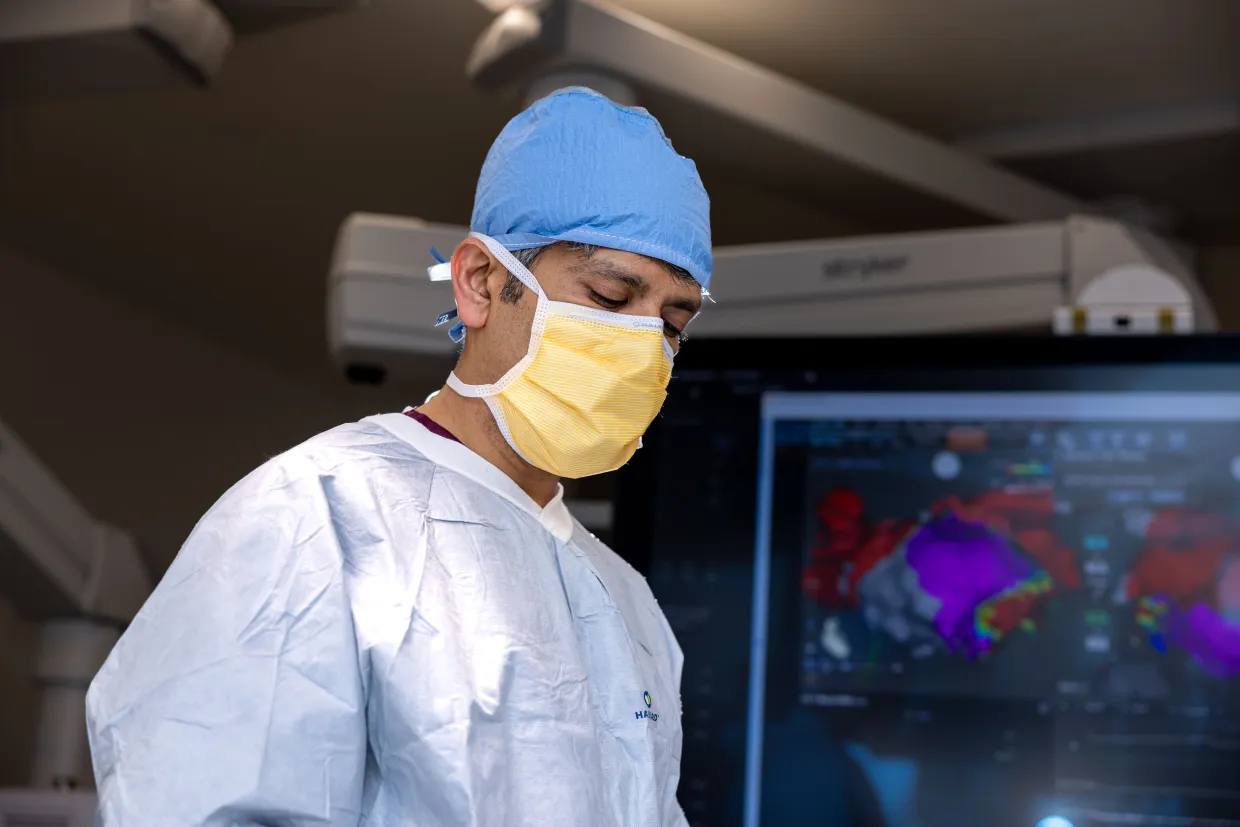
“We are using four-dimensional intracardiac echo catheters and software that can actually build a three-dimensional construct of the area of the heart we are treating,” Dominic says.
He notes that some cardiac structures, like the papillary muscles that anchor the heart valve, can be complex. Previously, while trying to treat arrhythmias that arise from one of these structures, he was only able to see a two-dimensional structure on the map.
“Now we are able to image the full three-dimensional structure to pinpoint the exact location of our tools,” he says.
In addition, this technology has made patient experience much better for some procedures where the team heavily relied in the past on ultrasound probes that were inserted into the esophagus (food pipe) which could cause discomfort.
Artificial intelligence
Artificial intelligence is also beginning to inform how procedures are planned.
“When I say artificial intelligence, I mean the ability to learn from the patients that we treat,” Dominic says.
Tools like advanced mapping software can learn from prior heart and vascular patient data and help guide where treatment should be applied.
“AI learns from patient maps for Afib and tells physicians where to ablate,” he says.
- Improve precision when treating abnormal heart rhythms
- Reduce unintended impact on surrounding heart tissue
- Support more individualized treatment planning
- Make minimally invasive procedures safer and more effective
And these advancements are only the beginning.
What the future of heart rhythm care holds
“There are several advances that are coming up,” Dominic says.
One area of progress is expanding pulsed field ablation into more complex rhythm problems.
“Currently, we are not able to use pulsed field ablation for ventricular procedures,” he says. “That’s slowly coming into clinical trials now.”
Another potential shift is toward noninvasive treatment for certain arrhythmias.
“We can probably use radiation therapy to ablate areas inside the heart,” Dominic says, describing emerging approaches for refractory ventricular arrhythmias.
Device technology is also advancing.
“There are newer leadless pacemakers that can directly go into the left ventricle,” he says, describing future pacing options that may reduce complications. “Additionally, UI Health Care leads the world in Bachman bundle pacing, a specialized pacemaker implantation technique that activates the top chambers of the heart more naturally compared to the traditional pacemakers.”
Importantly, these advances are being tested, refined, and validated before becoming routine care right here.
“That’s where the next generation treatments are born,” Dominic says.

Exploring advanced options for heart rhythm care?
If you’re living with atrial fibrillation or another heart rhythm disorder, today’s advanced treatments offer more options than ever before.
When treatment plans evolve
For many patients, medication plays an important role in managing heart rhythm conditions, especially early on in treatment. Over time, however, care plans may evolve as symptoms, goals, or health needs change.
If symptoms persist or maintaining rhythm control becomes more challenging over time, it may be time to explore additional options.
“That’s when we start talking about the next level of therapy,” Dominic says.
Because ablation tools and imaging have improved, the question isn’t only if a procedure is an option. It’s when it may offer the most benefit. For some patients, discussing ablation earlier in their Afib journey can support better symptom control and long-term outcomes, even if medication is still part of the plan.
The key is timing and expert guidance to understand when new options may lead to better results.
Why the UI Health Care advantage matters for the future
If you are a patient at UI Health Care, you have access to leading-edge rhythm care right here in Iowa. Your care team isn’t only participating in innovation. It’s contributing to it.
“Many of the very advanced technological things that we have in EP were born here at the University of Iowa,” Dominic says. “The pulsed field ablation system was invented here.”
That involvement helps ensure you can benefit from newer approaches as they become available.
“We are not just doctors who test inventions in clinical trials for other people,” Dominic says. “We are doctors who invent those new tools.”
What this means for patients and referring providers
If you are living with Afib or other arrhythmias, you may have more options and clearer guidance on when to consider treatment at UI Health Care.
For referring providers, these advances support earlier conversations about electrophysiology care, especially when patients are experiencing breakthrough symptoms or difficulty maintaining rhythm control.
Together, these advances are helping shape a future where your heart rhythm care is more precise, proactive, and personalized.