UI Health Care is now offering robotic living donor nephrectomies
Minimally invasive robotic nephrectomy procedure offers patients quicker recovery and less pain, and increases the number of patients who can receive a living kidney donation.
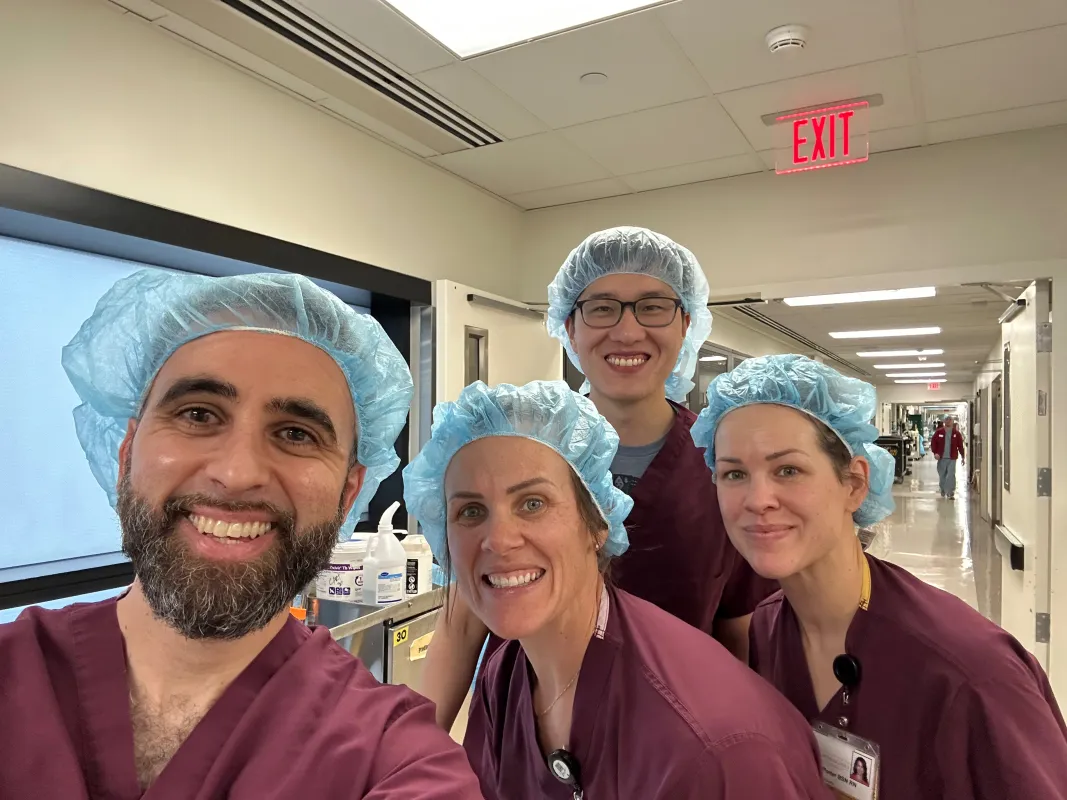
University of Iowa Health Care transplant surgeon Ramy El-Diwany, MD, PhD, recently performed the first robotic living donor nephrectomy at UI Health Care, paving the way for more living kidney donations in the state. Today, just over 20% of kidney transplants come from living donors.
Nephrectomy is the medical term for the surgical removal of a kidney. Living donors are individuals who offer one of their healthy and type-matched kidneys to a recipient, while a deceased donation occurs after someone passes away.
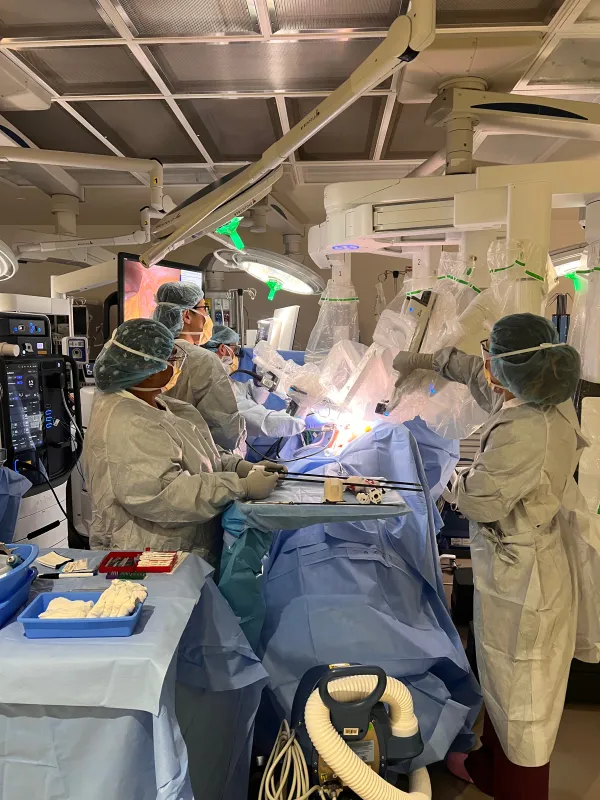
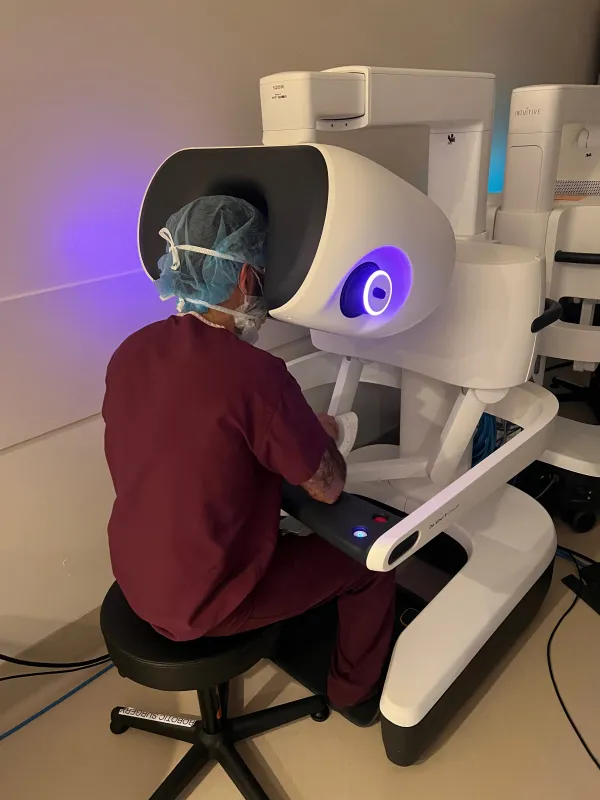
During the procedure, a surgeon uses a robotic system to remove a healthy kidney from a living donor. Three 1-inch incisions are made in the abdomen and a camera is placed in one of the incisions so the surgeon can see the work while mobile robotic “arms” controlled by the surgeon are inserted into the other incisions to precisely separate the kidney, blood vessels, and ureter. Once detached, the kidney is removed from the body through a small Pfannenstiel incision (the same kind used in most Cesarean sections). This extraction method results in a lower complication rate than other extraction methods and results in a better cosmetic outcome.
The minimally invasive procedure offers several benefits for living kidney donors, including quicker recovery, less pain, smaller scars, shorter hospital stays, and a faster return to normal activities compared with traditional kidney removal surgery.
“Not only are donors having an improved overall experience, the quality and outcomes of the robotic nephrectomy are comparable, if not better, to traditional donor surgeries,” says El-Diwany. “More importantly, living donor kidney transplants last several years longer on average when compared to deceased donor transplants, so any advance in living donation is a true win for our patients. We are excited about the possibilities this procedure enables both for donors and recipients.”
Robotic nephrectomies also allow for a wider pool of donors to be considered suitable for kidney donation. Once donors are confirmed to be healthy enough to live with one kidney, those with more complex anatomies or a higher body mass index (BMI) can now be considered thanks to the precision of robotic surgery. This technology helps overcome many of the technical challenges and surgical risks that can accompany obesity.
Because of the improved donor experience and wider eligibility of donor body types, physicians are optimistic that living kidney donor rates will increase statewide, providing more access to this life-changing donation.
“Living donors have the opportunity to truly give a life-changing gift to someone in need of a kidney,” says Alan Reed, MD, MBA, transplant surgeon and director of UI Health Care Transplant Center. “It is an honor to be able to use the latest surgical technology to not only perform a procedure that will enhance the life of the recipient, but to also provide a better experience and outcome for the donor.”
The robotic donor nephrectomy procedure is the latest example of UI Health Care’s investment in robotics to treat more Iowans while offering a better overall experience, generally designed to help patients heal faster, with less pain, and smaller incisions.