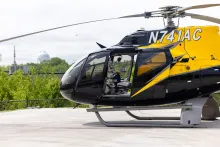
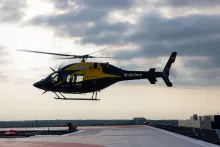
The Commission on Accreditation of Medical Transport Systems will conduct an accreditation site visit of University of Iowa Health Care AirCare on February 6-7, 2026. More information is available at this link.
The following criteria suggest use of AirCare for transport. Here are examples of when calling AirCare is appropriate:
- Motor vehicle crash with:
- Compartment intrusion greater than one foot
- Fatality in the same accident
- Ejection of the patient
- Pedestrian/cyclist crash
- Prolonged extrication
- Evidence of significant head, chest, abdomen or pelvis injury
- Motorcycle crash at speed greater than 20 mph with ejection
- Mass casualty incidents
- Partial or full amputation
- Signs of stroke / CVA
- Signs of myocardial infarction
- Chest pain in patients with previous cardiac surgery or catheterization
- Penetrating trauma (especially to the head, chest and abdomen)
- Crush injury to head, chest, abdomen or pelvis
- Fall (greater than 15 feet for adults, and two times the height of a child)
- Multi-system trauma
- Major body surface burn or burn involving the face or airway
- Any spinal cord injury or unstable vertebral column injury
- Ground transportation more than 30 minutes
- Glascow coma scale less than 13
- Drowning or near drowning
- Any adult or pediatric critical medical illness requiring rapid stabilization and transfer
AirCare’s Rapid Response Program expedites bringing our advanced capabilities to patients with time sensitive needs.

- Severe trauma
- STEMI
- Suspected or known intracranial hemorrhage
- Acute neurological deficit (<24 hours) with concern for stroke
- Critically ill children meeting one or more criteria:
- Intubated
- NIPPV requirement excluding nasal cannula based NIPPV
- Status asthmaticus requiring continuous bronchodilators
- Vasopressor requirement
- Failed airway
Locations and Offices
1 Roy J. Carver Pavilion (RCP)
Level 1, Elevator E
Emergency Room
200 Hawkins Drive, Iowa City, IA 52242