How MS research shapes treatment decisions
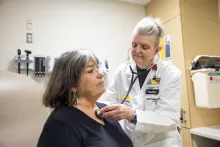
Multiple sclerosis affects every patient differently. At University of Iowa Health Care, research-informed care helps specialists consider the latest evidence alongside patients’ symptoms, disease course, goals, and lifestyle.
- More informed conversations about treatment options
- Earlier recognition of changes that may affect the care plan
- Collaboration with specialists who understand the many ways MS can affect the body
- Greater confidence that decisions reflect current MS knowledge rather than a one-size-fits-all approach
For people living with multiple sclerosis (MS), research-informed care means being treated by specialists who work closely with researchers investigating why MS develops, what may influence its progression, and how it responds to treatment. As an academic medical center, the teams at UI Health Care bring emerging knowledge into conversations with patients.
“One of the great benefits of practicing at UI Health Care is that we are surrounded by people who are pushing the limits of knowledge and helping us understand the basis of what we see in the diseases we treat,” says Tracey Cho, MD, a UI Health Care neurologist who specializes in MS.
This research-informed perspective helps UI Health Care specialists evaluate a growing range of treatment options and determine which approach may be most appropriate for each patient. Today, patients with MS have more treatment options than ever before.
UI Health Care specialists generally aim to control MS as early and effectively as possible. Cho says emerging research suggests that more aggressive treatment early in the disease may help prevent progression later.
“First and foremost, we review the patient’s goals and values,” says Cho, who is a clinical professor and director of the neuroimmunology division in the UI Department of Neurology.
The care team considers the patient’s symptoms, disease activity, MRI findings, other health conditions, family-planning needs, possible side effects, and preferred form of treatment.
For example, one patient may prefer an infusion given at scheduled intervals while another may feel more comfortable taking an oral medication or administering a self-injection treatment at home.
“We take into account what’s important to them,” Cho says.
The team provides recommendations about which medications may be most effective, explains the available options, and works with the patient to choose an approach that fits their health needs, lifestyle, and long-term priorities.
This shared decision-making process can help patients understand which treatment is recommended and why it may be the right fit for their individual circumstances. At the same time, UI Health Care’s research programs help specialists learn more about how MS differs from one patient to another.
A biorepository supports more personalized treatment and research
UI Health Care's Biorepository of Autoimmune and Inflammatory Neurologic Diseases is one way the academic medical center supports MS and other neuroimmunology research and impacts patient care. The biorepository brings together blood samples from participating patients and clinical information about their diagnoses and care — giving researchers a resource for studying how MS develops, progresses, and differs among patients.
Cho says UI Health Care’s biorepository is the only one in Iowa and that most of the patients currently represented in it have MS, in addition to other less common neuroimmunological diseases.
When a patient participates, a blood sample is collected, frozen, and stored. Clinical information is also entered into a database. Together, these resources give researchers an existing group of patients, health information, and historical samples that can support future studies.
The stored blood samples may also be valuable when a study includes laboratory research or requires specimens collected before the trial begins. Together, the stored samples and clinical information give researchers a foundation for studying MS over time and pursuing new questions as research evolves.
“It also has the potential to quickly identify patients for clinical trial recruitment,” Cho says.
For patients with MS, the biorepository may make it easier for the care team to identify clinical trials that fit their specific diagnosis, disease activity, treatment history, and other health information. Instead of starting from scratch when a new study opens, researchers may be able to more quickly recognize patients who could be eligible and discuss the opportunity with them. That can give patients earlier access to information about emerging treatment options and help them decide, with their care team, whether a clinical trial may be appropriate for their individual needs.
Clinical trials may expand treatment opportunities
By making it easier to identify patients who may qualify for future studies, the biorepository also supports access to clinical trials.
“We have the most, in terms of number and types, of clinical trial options for MS treatment in Iowa,“ Cho says.
These studies may give eligible patients opportunities to consider emerging therapies that are not yet widely available.
Not every clinical trial is right for every patient. Eligibility may depend on the type of MS, current disease activity, previous treatments, age, other health conditions, and specific laboratory or imaging findings.
The team at UI Health Care can help patients understand what a study involves, what is known about its potential risks and benefits, and whether participating aligns with their treatment needs and personal goals.
Cho says emerging approaches involving stem cells and engineered immune cells may eventually offer new options for difficult-to-treat MS.UI Health Care specialists expect to participate in clinical trials as those therapies develop.
Microbiome research explores the ‘why’ behind MS
UI Health Care researchers are also studying whether differences in a patient’s microbiome may help explain how MS develops or progresses.
The microbiome refers to the communities of bacteria and other microorganisms that naturally live in and on the body.
A recent UI Health Care study led by Ashutosh Mangalam, PhD, identified differences in the oral microbiomes and saliva metabolites of people with relapsing-remitting MS compared with people without MS. Researchers are exploring whether those differences could eventually contribute to new approaches to understanding, monitoring, or treating the disease.
“The question is: Do patients with MS develop MS because there’s a pattern in their gastrointestinal bacteria that is pro-inflammatory, or does something happen with their immune system that leads to that being a pattern?” Cho says.
Current research does not yet support recommending a particular probiotic, supplement, or special diet for MS.
The longer-term goal is to understand whether researchers can safely shift a pro-inflammatory pattern of bacteria toward a healthier one. Cho says this line of research is promising and may eventually lead to studies of new therapeutic approaches, giving researchers another way to explore how MS develops and how care could become more personalized.
Advanced imaging and biomarkers provide more information
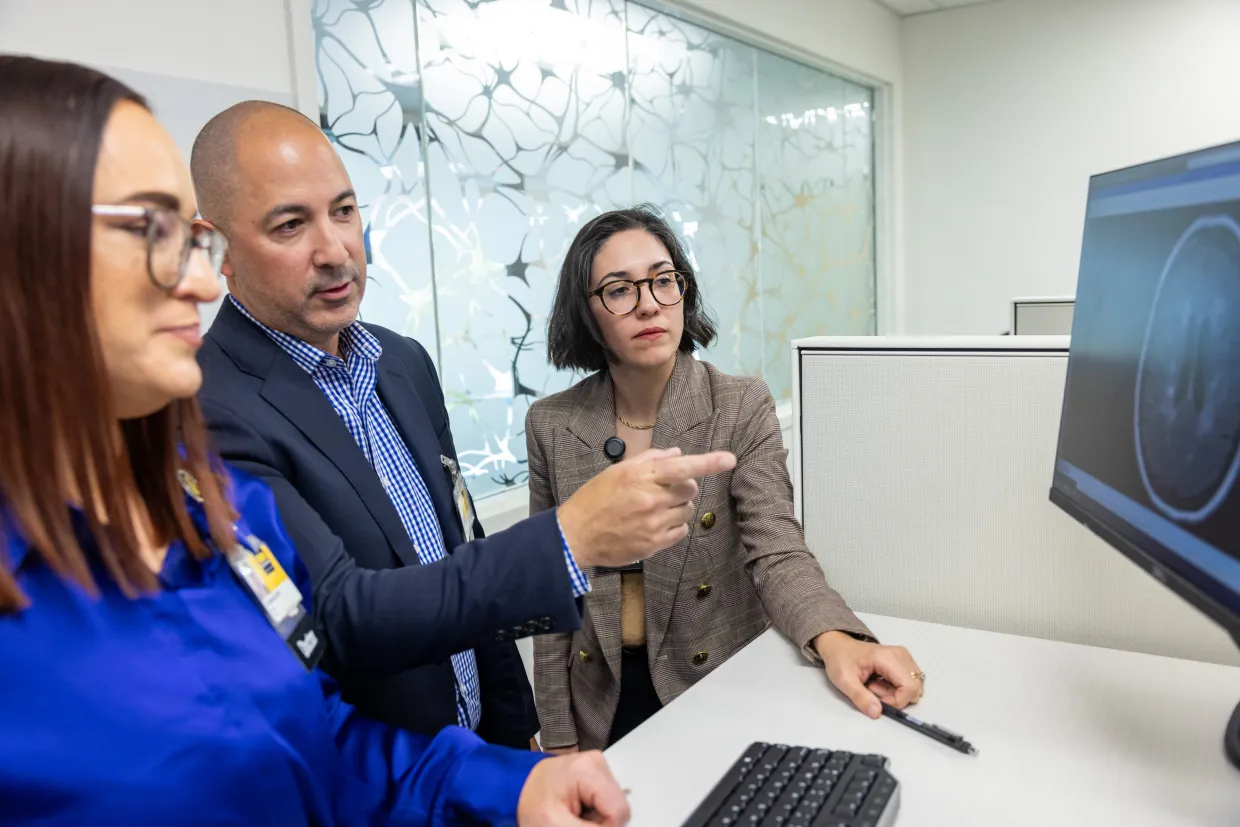
MS can change over time, even when a patient does not notice obvious new symptoms. Regular evaluations and MRI scans help the care team look for disease activity and determine whether treatment is working.
UI Health Care offers advanced MRI techniques that Cho says are not generally available at other centers. These tools can provide detailed information to support diagnosis, disease monitoring, and treatment planning.
Researchers are also studying biomarkers, which are measurable biological signs that may provide information about how a patient’s MS could behave.
“Even if there’s not an immediate intervention, we’re learning more about how to predict what’s going to happen with someone’s MS based on different biomarkers,” Cho says.
In the future, biomarkers may help specialists recognize changes in disease activity, predict disease progression, identify patients who may respond to certain treatments, and monitor whether a treatment is working.
This research is still developing. Biomarkers do not replace MRI imaging, a neurologist’s evaluation, or conversations with the patient. They may eventually provide another layer of information that helps specialists tailor care more closely to the individual.
MS can affect mobility, bladder function, digestion, energy, and other parts of daily life. UI Health Care brings together specialists across the academic medical center based on each patient’s needs.
The team at UI Health Care collaborates with experts in:
- Physical medicine and rehabilitation
Neuro-ophthalmology
Neuroradiology
- Urology
- Gastroenterology
- Rheumatology
- Hematology
- Immunology
- Pathology
This collaboration can be especially valuable for patients whose symptoms affect several parts of the body or who have another health condition that overlaps with their MS care.
Patients at UI Health Care also have access to a subspecialty pharmacist who works directly with the MS team. The pharmacist provides medication education, discusses possible side effects, and works with nursing and prior-authorization teams to help patients access prescribed treatments.
“We emphasize the importance of a multifaceted approach,” Cho says. “In addition to the pharmacologic treatments, we counsel regarding nutrition and exercise and general well-being as additional things that can help someone with their MS in the optimal way.”
For patients who need infusion therapy, UI Health Care offers three clinic locations with oversight from the MS team:
- University campus
- Iowa River Landing
- Quad Cities
Through continued research, broader outreach, and evolving models of care, the MS program aims to give more patients access to specialized expertise and new therapies as they become available.