What to do after a smartwatch Afib alert
A smartwatch or wearable device can provide an early warning about a possible irregular heart rhythm, but an alert does not confirm atrial fibrillation (Afib). Learn what to save, when to contact your provider, and when symptoms need immediate care.
- A smartwatch can detect a heart rhythm that appears irregular, but the alert alone cannot diagnose Afib.
- If you feel well, save the alert or electrocardiogram (EKG, also known as an ECG) recording and contact a health care provider for guidance.
- Call 911 or seek emergency care for severe or worsening symptoms such as chest pain, fainting or near-fainting, or significant shortness of breath.
- Bring saved recordings, alert history, symptom details, heart-rate information, and notes about what you were doing when the episode occurred.
- Symptoms and alerts that come and go still matter. An EKG or longer-term heart monitor may be needed to capture the rhythm.
- A cardiac electrophysiologist can diagnose and treat rhythm disorders using medication, ablation, and implanted devices when appropriate.
Your smartwatch buzzes with an alert: It may have detected atrial fibrillation (Afib). The message can sound definitive, but it does not necessarily mean you have Afib.
Instead, think of the alert as information that may help start a conversation with your health care provider.
Afib is an abnormal heart rhythm that begins in the heart’s upper chambers. With Afib, the heart beats irregularly rather than following a steady pattern and may also beat quickly.
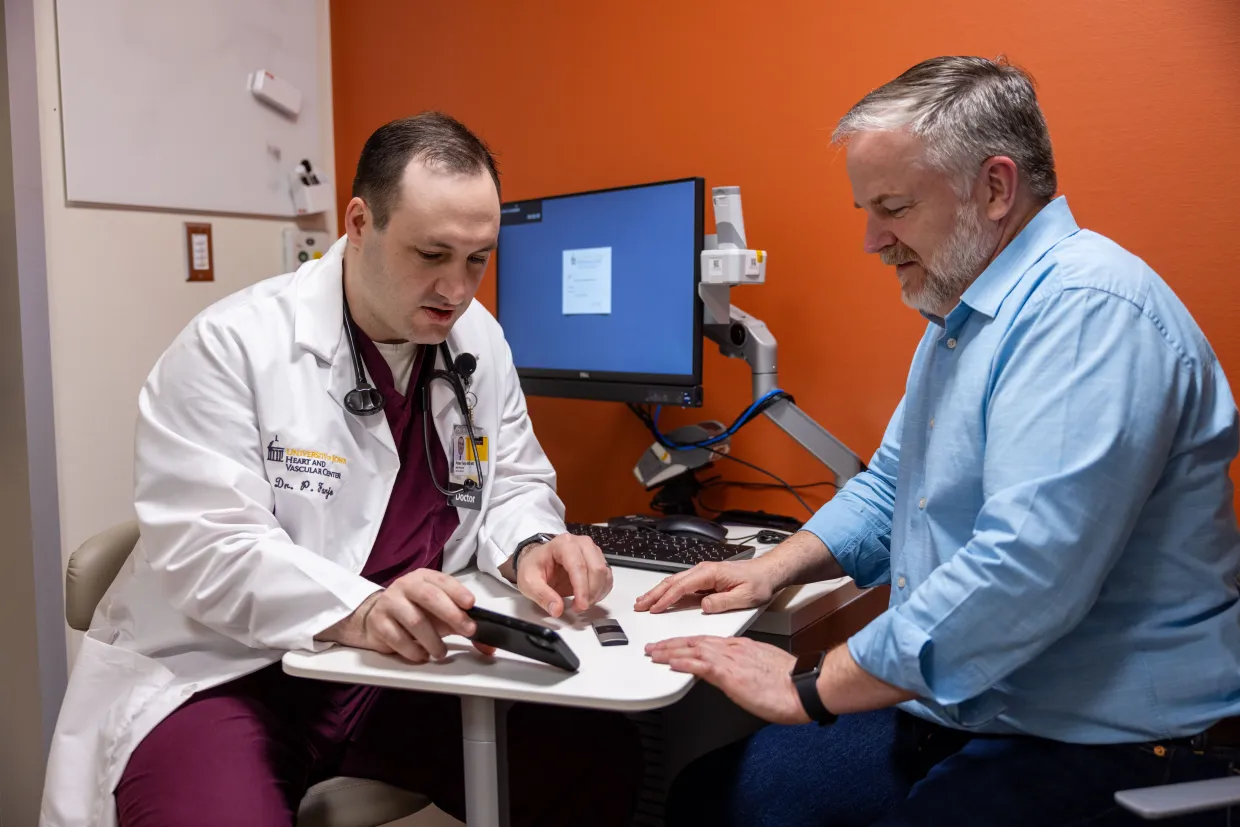
“It’s one of the most common sustained abnormal heart rhythms in the world,” says Peter D. Farjo, MD, MS, a cardiac electrophysiologist with UI Health Care.
Afib becomes more common with age and can increase the risk of stroke and heart failure. That makes it important to follow up on a possible alert without assuming that the watch has provided a diagnosis.
Farjo’s first piece of advice is simple: “Don’t panic.”
If you feel well, save the alert and contact your provider. If you have significant symptoms, your next step may be more urgent.
How smartwatches detect possible irregular rhythms
Many smartwatches use a light-based technology called photoplethysmography to detect changes in blood flow at the wrist. An algorithm reviews the timing of those pulse signals and looks for patterns that appear unusually fast, slow, or irregular.
A normal resting heart rhythm typically follows a steady pattern. Afib creates an irregular pattern that may trigger an alert.
“These devices don’t continuously monitor, but they take snapshots of a patient’s heart electricity,” Farjo says.
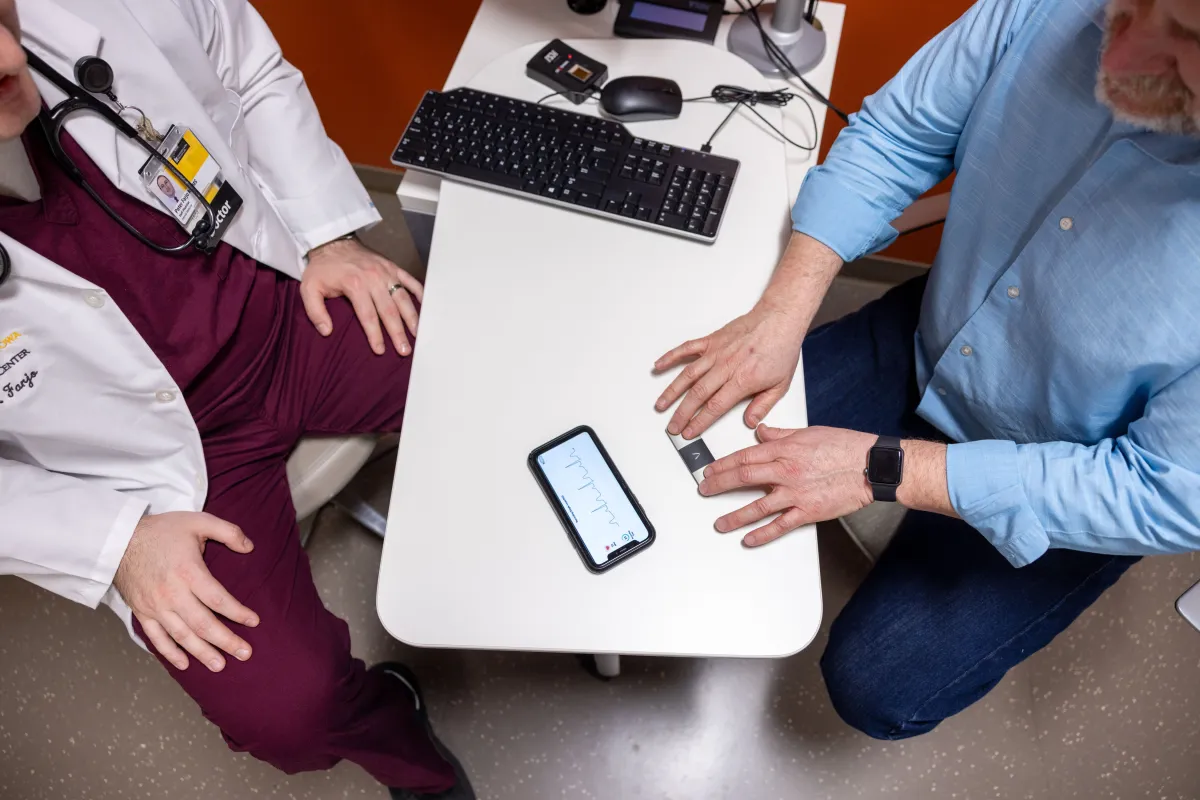
Some watches can also record a single-lead electrocardiogram, or EKG. This can provide more information about the rhythm at a particular moment, especially when a patient records it while experiencing symptoms.
A smartwatch may also help connect a change in heart rate with an activity, symptom, stressor, or medication. However, the information it collects is more limited than the 12-lead EKG used in a medical setting.
How wearables can help patients and their care teams
Afib becomes more common with age, but smartwatches are often used by middle-aged adults at relatively low risk. Farjo encourages older patients to consider them when monitoring could provide useful medical information.
- Capture an episode that occurs outside a medical appointment
- Connect symptoms with changes in heart rate or rhythm
- Show how long an episode may have lasted
- Save a single-lead EKG that can be shared through MyChart
- Estimate how often someone with diagnosed Afib experiences the abnormal rhythm
- Give the care team more information when deciding whether additional testing is needed
Wearables can be particularly helpful because Afib may come and go. A brief EKG performed in a clinic only shows what the heart is doing at that moment, while smartwatch data may provide information collected over a longer period.
For patients who already know they have Afib, some devices can estimate their Afib burden, or the percentage of time they may be experiencing the abnormal rhythm.
UI Health Care specialists can review saved alerts, heart-rate trends, and EKG strips alongside a patient’s symptoms and medical history. This information may help them decide whether a patient needs a 12-lead EKG, a Holter monitor, or another form of heart rhythm testing.
A wearable does not replace medical evaluation, but it can give patients and their care teams useful information to guide the next step.
How accurate are smartwatch Afib alerts?
Wearable devices can identify patterns that resemble Afib, but an appointment is still needed to confirm any condition.
“Smartwatches work pretty well,” Farjo says. “They’re not perfect by any means, and they tend to err on the side of caution.”
For example, premature atrial contractions and premature ventricular contractions can create extra beats that make the rhythm appear irregular. A device may flag those beats even when the person is not experiencing Afib.
Movement can also create interference, although many devices are designed to recognize excessive movement and avoid taking a reading at that time.
False alerts can be especially concerning for younger people who have a low risk of Afib. For these smartwatch wearers, repeated notifications may create more anxiety than useful medical information.
The purpose of the alert is not to provide a final answer.
“It’s not so much an indication that you have atrial fibrillation,” Farjo says. “It’s just an indication that you should contact your provider.”
Save the details that can help identify the rhythm
Afib episodes can last for minutes, hours, or even days. By the time you see a provider, your heart rhythm may have returned to normal. That does not make the episode unimportant. It makes the information you collect especially useful.
- When the episode began and how long it lasted
- Your heart rate
- Any symptoms you experienced
- What you were doing before the episode began
- Whether you were resting or exercising
- Your blood pressure, if available
- Recent illness, dehydration, poor sleep, or stress
- Alcohol use
- Your medications and relevant medical conditions
“When did the episode start? What were you doing? What were you doing beforehand?” Farjo says. “How long did the episode last?”
Bring screenshots, your alert history and any EKG strips recorded by the device to your appointment. You can also send this information directly to your care team through MyChart.
Let your symptoms guide your next step
Afib and other rhythm disorders can cause:
- A racing, pounding, or fluttering heartbeat
- A fast or irregular pulse
- Shortness of breath, especially during activity
- Dizziness or lightheadedness
- Fatigue
- Chest discomfort
- Fainting or feeling as though you may pass out
Call 911 or seek emergency care for chest pain, fainting or near-fainting, significant shortness of breath, or other severe or worsening symptoms.
“If symptoms are significant, and they’re not getting any better, emergency services are the best way to go,” Farjo says.
Do not wait for your smartwatch to generate another alert if you feel very unwell. Your symptoms matter even when the device does not detect a problem.

Get clarity about your heart rhythm
A smartwatch alert or recurring symptoms may need a closer look. Schedule an appointment with your provider to share what you experienced and find out whether testing is needed.