When to get a second opinion on heart rhythm care
If you have a heart rhythm disorder and questions about your treatment, a second opinion can help you understand your options. UI Health Care electrophysiologists review your diagnosis, previous care, and recommended procedures to help you decide what comes next.

- A second opinion can help clarify your diagnosis, explain whether a recommended procedure is appropriate, and identify other treatment options. It can also give you greater confidence in your existing care plan.
- Consider a second opinion when you have unanswered questions. You may want to understand why a procedure is recommended, compare treatment options, or explore what comes next when medication or a previous procedure has not helped.
- An electrophysiologist brings specialized expertise. These cardiologists focus on the heart’s electrical system and the medications, procedures, and implanted devices used to treat heart rhythm disorders.
- The review starts with your health history and goals. The specialist examines available records, diagnostic testing, previous treatments, and the recommendation you received, then discusses what you hope to learn.
- Additional options may be available. A center experienced in complex arrhythmias may offer approaches that were not available during your first evaluation. Another review can help determine whether those options fit your needs.
- Agreement can be valuable, too. A second opinion may confirm the original recommendation or suggest a change to the plan. You can discuss the findings with your current doctor.
- Contact UI Health Care to get started. Tell the scheduling team you are seeking a second opinion for a heart rhythm disorder. Ask what records are needed and whether your insurance requires a referral.
If your doctor has diagnosed you with a heart rhythm disorder, or arrhythmia, and recommended an ablation, a pacemaker, or another procedure, you may have questions: Why is this treatment right for you? Could medication help? Are there other options?
For a second opinion, you meet with another heart rhythm specialist who reviews your diagnosis and treatment recommendation. Together, you can discuss your options and what each could mean for your symptoms, health, and daily life.
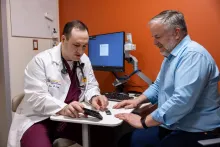
Paari Dominic, MBBS, MPH, a UI Health Care cardiac electrophysiologist, says people seek another opinion for several reasons.
For some patients, the first question is whether to proceed with treatment at all.
“They want to know if a medication or procedure is needed in the first place,” Dominic says.
Others know they need help but want to understand which procedure or care team is the best fit.
- You are unsure why a medication or procedure is recommended.
- You have received multiple treatment recommendations.
- Your symptoms continue despite treatment.
- Your arrhythmia has returned after a procedure.
- You experienced a complication and need guidance about next steps.
- You were told you are not a candidate for a procedure and want to understand why.
You do not need to disagree with your doctor to ask for another opinion. The goal is to feel informed about a decision that affects your health.
Why see a heart rhythm specialist for a second opinion?
An electrophysiologist is a cardiologist with additional training in diagnosing and treating problems with the heart’s electrical system.
Their expertise includes understanding how different arrhythmias develop, how medications work, and which procedures may help. Electrophysiologists also perform treatments such as cardiac ablation and procedures involving pacemakers or other implanted devices.
For someone considering a procedure, an electrophysiologist’s experience can help answer questions beyond whether treatment is needed. The specialist can explain how the procedure would address the rhythm problem, what might make it more complex, and which risks deserve particular attention.
“We can tell you if a procedure is needed, how easy or how difficult it is to do, and what kind of complications you may experience from the procedure,” Dominic says.
If you have already seen an electrophysiologist, another specialist may have experience with different techniques or with cases similar to yours.
The value of the review depends on your diagnosis, previous care, and the questions you need answered.
What to expect at your second-opinion appointment
At UI Health Care, the review begins with gathering information about your previous care.
The team looks at available records from your doctor’s office or hospital to understand:
- Your diagnosis and symptoms
- Which tests have been completed
- Which medications and other treatments you have tried
- What your current doctor has recommended
- What was done during any previous procedures
Records may be available through shared electronic health records, or the team may need to request them from your doctor or hospital.
During the appointment, our specialist will ask what you hope to learn. You may want reassurance about a recommended procedure, another treatment option, or help understanding why previous care did not resolve the problem.
The discussion focuses on the benefits and risks of the proposed plan, possible alternatives, and how those choices relate to your concerns.
If you have already had a procedure, the specialist will also review what was done before and consider what another approach could offer.

Understand your heart rhythm treatment options
If you have questions about a recommended procedure or what comes next after treatment, our electrophysiology team can review your care and discuss your options.
Exploring treatment options for complex heart rhythm disorders
second opinion can be particularly helpful when a heart rhythm disorder persists after treatment or requires a more complex procedure.
UI Health Care’s electrophysiology team specializes in treating patients with challenging arrhythmias. Dominic says the team’s experience, collaboration, and involvement in teaching and developing treatment approaches help specialists consider different ways to address a problem.
For patients with a complex arrhythmia, that collaboration brings additional perspectives to treatment decisions.
“We always like to have a second or third pair of eyes looking at a case,” Dominic says.
For selected patients with atrial fibrillation, or Afib, additional approaches may include:
- The convergent procedure: An approach that combines the expertise of a heart surgeon and an electrophysiologist to treat heart tissue from outside and inside the heart.
- Vein of Marshall alcohol ablation: A specialized technique that uses ethanol in a small vein associated with Afib to help address the rhythm problem.
These approaches are among the treatments UI Health Care offers for appropriate patients.
If you have been told a procedure is not an option, another evaluation can help clarify whether that recommendation reflects your medical risks, the techniques available, or other factors.
A fresh review does not guarantee that you will qualify for a procedure. It can help you understand what is possible and why a particular approach may or may not be appropriate.
How to prepare for your second-opinion appointment
Before your appointment, write down what you want to understand most. Start with the decision you are facing, whether that is beginning a medication, scheduling a procedure, or choosing what to do after previous treatment.
Questions to ask include:
- What does the available testing show about my heart rhythm disorder?
- Why is this treatment recommended for me?
- What benefits should I realistically expect?
- What are the risks based on my medical history?
- Are there other options, including continuing or adjusting medication?
- How soon do I need to make a decision?
- If I have another procedure, what will be different from the previous one?
- How would your team coordinate with my current doctor?
Ask the scheduling team which records should be sent before the visit. Helpful information may include heart rhythm testing, imaging reports, previous procedure reports, and notes explaining the recommended treatment.
Also prepare a current medication list, a description of your symptoms, and the names of the clinicians involved in your care.
You do not have to gather everything independently. The team can explain what is needed and how records should be shared.
How a second opinion can impact your treatment plan
A second opinion may lead to a different recommendation. It may also confirm that the plan you already have is appropriate or identify an adjustment worth discussing with your current doctor.
Dominic explains that even when specialists agree on the procedure, another review may contribute useful information.
“It might be the same procedure, but getting an opinion from a specialist who can add a little bit of value to that is always helpful,” he says.
The review can also support coordination between your care teams. Dominic may discuss his findings directly with your physician or encourage you to return to that doctor to review the recommendation.
“I can do a procedure, but you still have to go back and follow up with your physician,” he says. “So, I want them to be in agreement with us.”
Depending on your needs and preferences, you may continue your care locally, receive treatment at UI Health Care, or have care coordinated between teams.
Request a second opinion at UI Health Care
To get started, contact UI Health Care and explain that you are seeking a second opinion for a heart rhythm disorder.
According to Dominic, patients can contact electrophysiology directly without a physician referral, although insurance requirements may affect the process. Ask about coverage and any referral requirements when scheduling.
For arrhythmia-care appointments, call 1-319-356-7102.