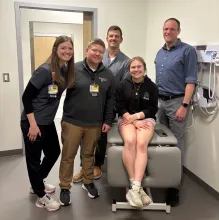
A decade after a devastating knee injury, a former Iowa student is running again
Bailey Conklin faced years of surgeries, setbacks, and rehabilitation. Today, she’s running miles, taking workout classes, and living a life she once thought might not be possible.
Just before her 21st birthday, University of Iowa student Bailey Conklin was riding a moped near the campus dormitories when a driver ran a stop sign.
The 2015 crash left her with catastrophic injuries.
“I saw that my right leg was broken into my body,” she says. “Knee joint: out. Femur: compound fracture. Tibia: compound fractures. It was all very brutal.”
Adding to the intensity of the moment, a crowd of her classmates gathered around the crash scene.
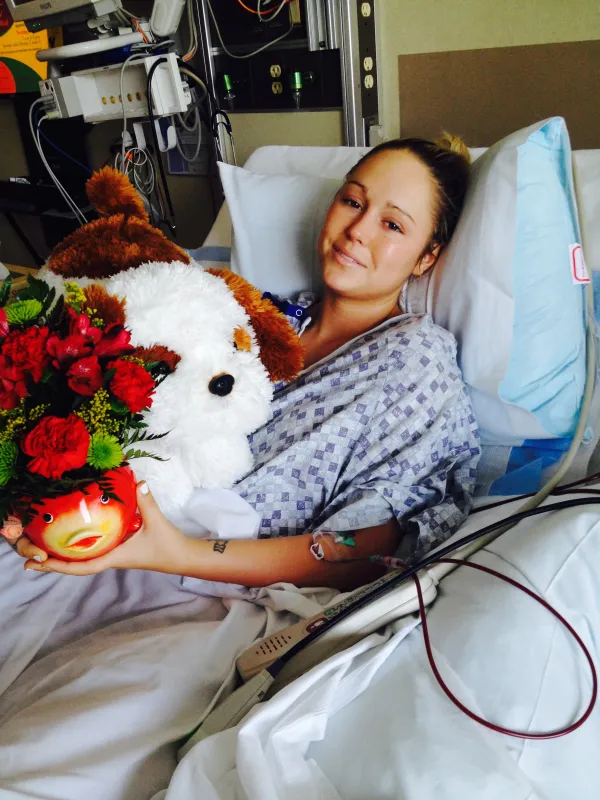
Conklin was rushed to University of Iowa Health Care Medical Center on the university campus, where she was surrounded by a multidisciplinary team of specialists.
Orthopedic surgeon Matthew Karam, MD, remembers the gravity of the moment.
“You have a young, healthy, energetic student at the University of Iowa who has their entire future ahead of them,” Karam says. “And she has this really devastating injury to her knee.”
Conklin’s injuries involved both sides of the knee joint.
“It’s not uncommon to see one side or the other broken,” Karam says. “In her situation, it was both.”
Because the fracture was open, the risk of infection was higher. Conklin’s skin was ripped open, and the bone was exposed to the outside elements. Her injuries required immediate stabilization and careful planning.
From the beginning, Karam and his colleagues in orthopedics and rehabilitation prepared Conklin for a long road to recovery.
“I counsel patients so that their expectations of their injury and recovery are in the same zip code of the reality,” he says.
Setbacks, surgeries, and a turning point
Conklin’s recovery required multiple stages of treatment, including surgical debridement, or surgical removal, of unhealthy tissue, temporary fixation, and ultimately, definitive internal fixation of the badly injured bone.
About a year into recovery — after months of pushing herself throughout physical therapy and working hard to regain strength — Conklin experienced one of her lowest moments.
She also was in constant, excruciating pain.
“It got to a point where I was in so much pain, I ended up in the ER,” she says. “And that’s when Dr. Karam said there was a mass infection in my leg. He said I was rehabbing so hard that the bones were disintegrating.”
Karam told Conklin there was a possibility she could lose her leg. Exhausted and overwhelmed, she remembers telling Karam to amputate it.
“Do it,” she said at the time. “I don’t care, I’m so sick of this, I’m so miserable, I’m in pain every day.”
But Karam wasn’t ready to give up and insisted that his team try other options, which included aggressive infection treatment and eventually a total knee replacement in mid-2016.
Karam’s colleague, orthopedic surgeon Nicolas Noiseux, MD, performed the total knee replacement procedure. Jerrod N. Keith, MD, a plastic and reconstruction surgeon, was also heavily involved in rebuilding her leg.
It was at this point that Conklin finally started to feel hope returning.
“When I got the total knee, that’s when the game changed for me,” Conklin says. “I didn’t have any pain after that. That’s when the tide started to turn.”


Rebuild your strength after injury
Rehabilitation as a long game
In total, Conklin underwent 16 surgeries, but surgery was only part of the recovery.
In the months that followed, rehabilitation became the focus, this time without the constant setbacks that had defined her first year.
For Conklin, rebuilding meant starting small. She focused on walking instead of running. Her early recovery was about function over performance. From 2016 through the next several years, she committed to steady strength-building — focusing on bodyweight exercises, bands, and controlled movement before ever attempting to run again.
She took it one day at a time.
“I really just tried to focus on the thing in front of me, tackle that task, and then move on to the next thing as they came up,” she says.
Karam says such steady commitment is essential. He emphasizes that orthopedic recovery rarely happens overnight.
“It is going to be a grind,” he says. “Sometimes, you’re not going to recognize improvements day to day or even week to week. It's more month to month or even year to year when improvements are made.”
Conklin detailed the journey in a 2025 letter to her care team.
“Over five years, I slowly rebuilt my strength,” she wrote.
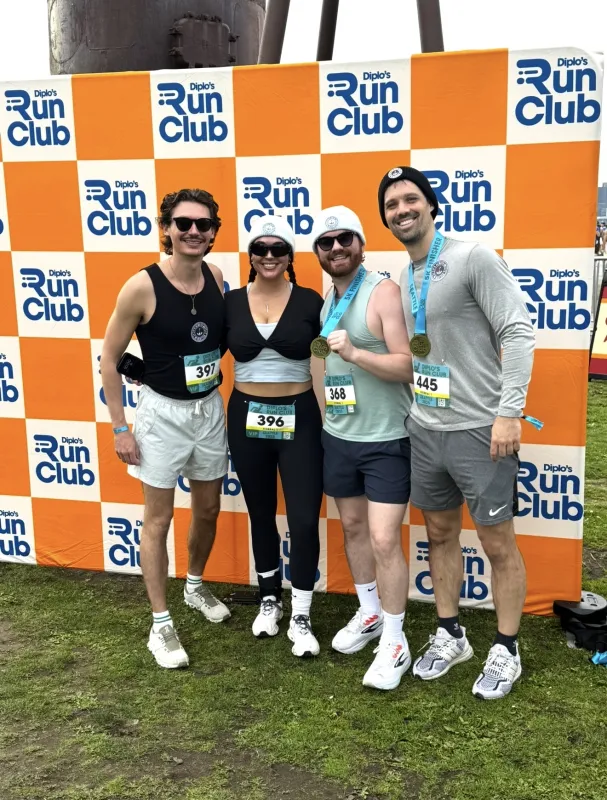
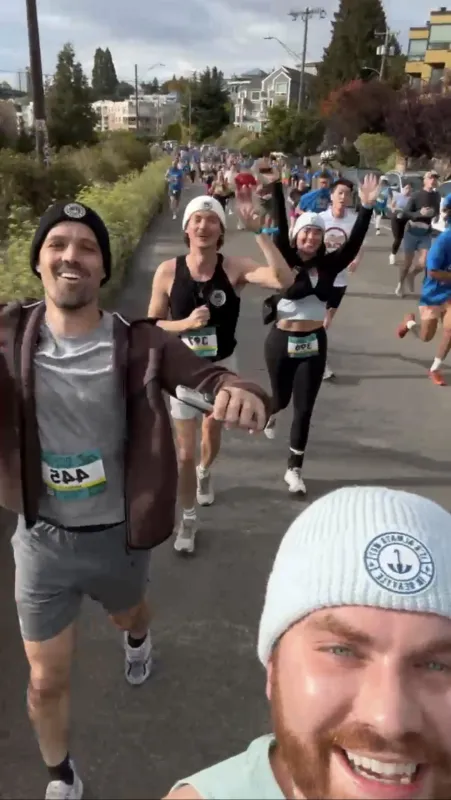
That consistency added up. By last year, she completed 179 HIIT (high-intensity interval training) classes, 93 Pilates classes, and ran over 390 miles. She has completed multiple 5K races.
She credited her surgeons directly in her letter.
“None of this would have been possible without your attention to detail and unwavering dedication,” she wrote. “Thank you for giving me the gift of movement and the opportunity to reconnect with my body.”
More than recovery — reclaiming confidence
Conklin says the impact of her care extended beyond physical healing.
“Many still don't know about my past,” she wrote. “And when they occasionally notice my scars, they're shocked when I share my story.”
In her email, she thanked Keith, her plastic surgeon, for restoring more than function.
“Thank you for giving me the freedom to live without being defined by my trauma and the confidence to wear skirts and heels without hesitation or the fear of judgment,” she wrote.
Karam says stories like Conklin’s are deeply meaningful.
“One of the most gratifying experiences I am privileged to see is to witness the human spirit rise above,” he says. “She’s a great example of that.”
Today, Conklin lives in Seattle and says the injury no longer casts a shadow over her life or her identity.
“I thought that this was something that was going to define me for the rest of my life,” she says. “I’m happy to say a little over a decade after, that it’s something I barely think about.”
Her advice to others early in recovery?
“I would say just keep going.”

Patient Stories