Choosing The Right Size ATV and UTV for Safe Riding
If the vehicle doesn’t fit the rider, it’s not safe to ride. Choosing the right size ATV or UTV is one of the most important steps you can take to prevent serious injury.
ATV sizing guidelines
One of the leading causes of serious all-terrain vehicles (ATVs) injuries in children is riding a vehicle that is too large for their age and size. ATVs are powerful machines that require strength, coordination, and judgment to operate safely.
Youth should always ride an ATV designed specifically for their age group. Children often do not have the physical strength or body control needed to handle larger ATVs. When a vehicle is too big, they may struggle to steer, brake, or keep their balance.
95% of youth ATV fatalities (under age 16) occur when children are riding adult-sized ATVs.
A correctly sized ATV allows the rider to:
- Control speed safely
- Brake effectively
- Maintain balance and stability
There are no ATVs designed for children under age 6 — despite what some online ads may claim.
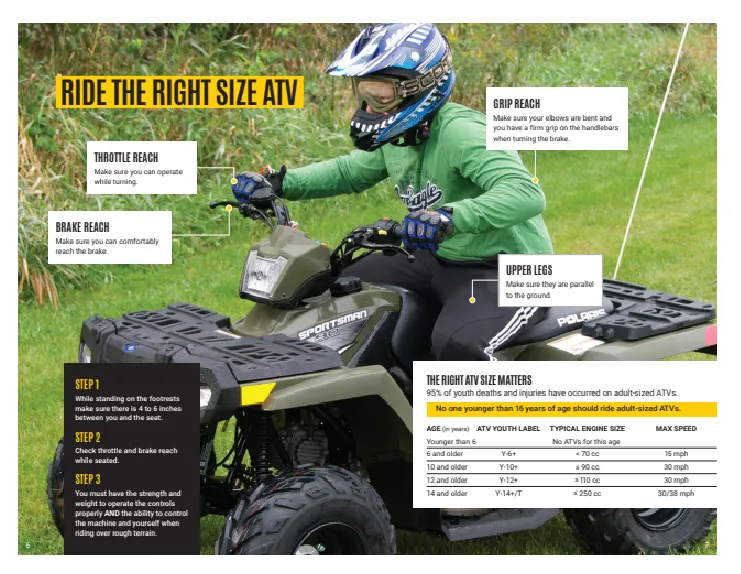
Riding an ATV that is too large greatly increases the risk of injury.
- Loss of control. Riders cannot steer or shift their weight effectively.
- Higher risk of ejection. Larger ATVs generate forces that are harder to manage.
- More severe crashes. Heavier vehicles and higher speeds increase injury risk.
- Too much complexity. Youth may not have the judgment needed to react quickly to hazards.
- Stand-over test
- The rider should stand over the ATV with feet on the footrests.
- There should be 4–6 inches of clearance between the rider and the seat.
- Grip and brake reach
- The rider should comfortably reach the handlebars and brakes.
- Elbows should be slightly bent — not fully extended.
- If they have to stretch, the ATV is too large.
- Throttle control
- The rider should be able to smoothly control acceleration.
- Jerky or inconsistent throttle control is a warning sign.
- Seated stability
- Knees should be bent at about a 90-degree angle.
- Feet should rest flat on the footrests.
- If the rider struggles to balance or reach properly, the ATV is too large.
UTV sizing guidelines
Most utility task vehicles (UTVs) are designed for adult drivers aged 16 or older. Some youth models exist for ages 10 and older, with lower speeds and smaller frames.
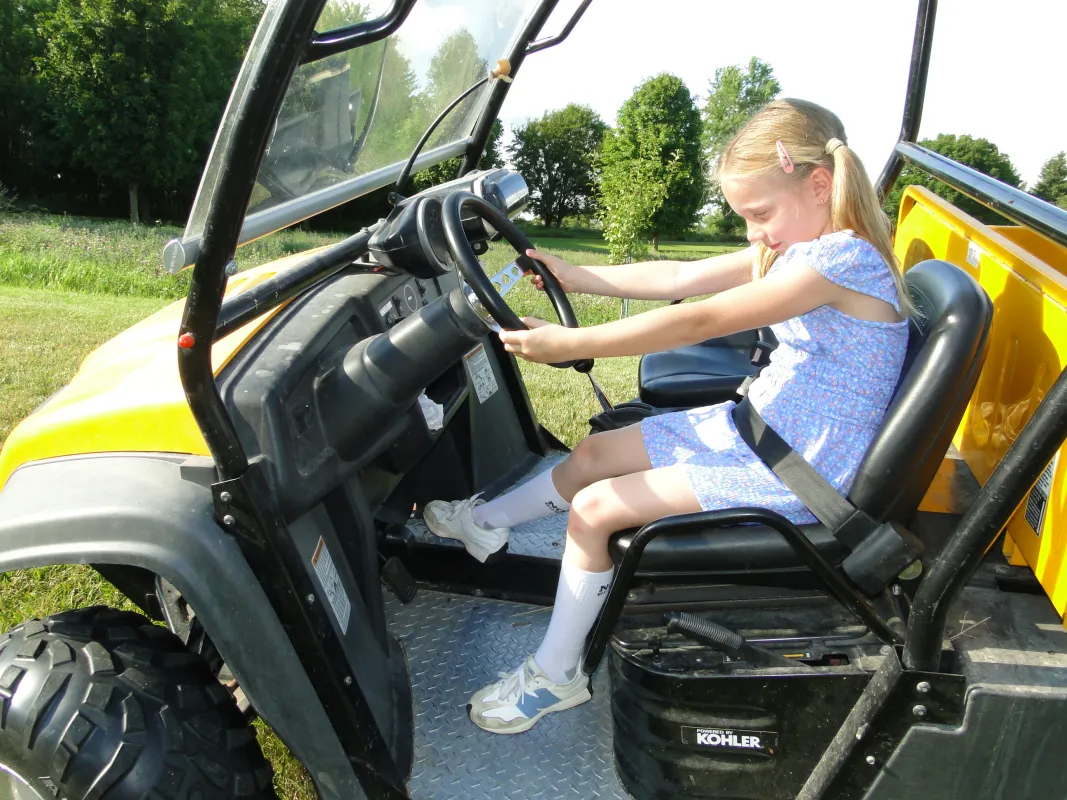
Passenger requirements
- Manufacturers recommend that passengers should:
- Sit with their back fully against the seat
- Keep feet flat on the floor
- Be properly secured with a seatbelt or harness
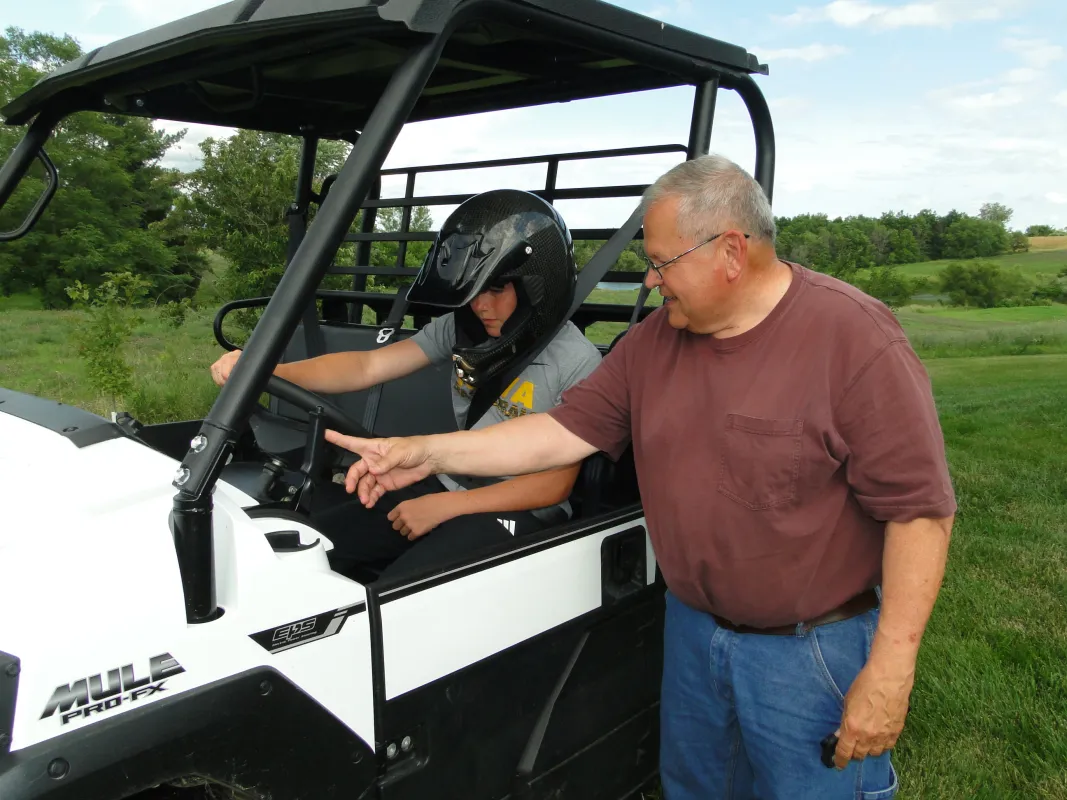
How to know if your child is ready for a UTV
Your child should NOT drive if they cannot:
- Reach and operate pedals comfortably
- Keep their back against the seat
- Stay securely restrained while driving
Your child should NOT ride as a passenger if they cannot:
- Sit upright with their back against the seat
- Keep both feet flat on the floor
- Remain properly secured in the seatbelt or harness
STARs Program
UI Health Care Stead Family Children's Hospital STARs Program is an educational initiative promoting 10 key safety principles to help all-terrain vehicles (ATVs) and utility task vehicles (UTVs) riders prevent injuries.