Safety Tips for ATV/UTV Riders (STARs) Program
The STARs Program helps riders and families reduce serious injury risk through education on responsible riding, correct protective gear, equipment standards, and hazard prevention.
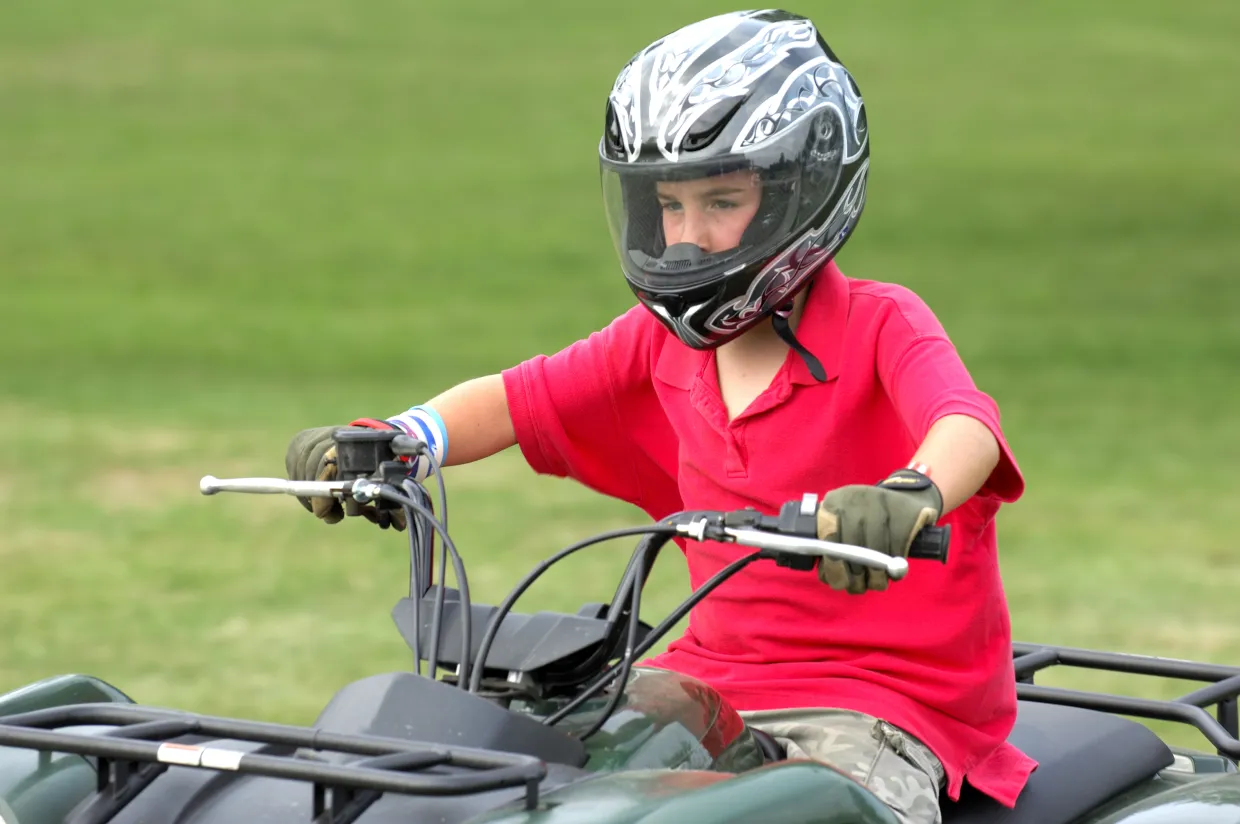
University of Iowa Health Care Stead Family Children’s Hospital’s STARs Program is an educational initiative promoting 10 key safety principles to help all-terrain vehicles (ATVs) and utility task vehicles (UTVs) riders prevent injuries. These principles include:
- Always wear your helmet and protective gear
- Never ride on the road
- One person at a time on ATVs
- Ride the right size machine
- Always wear seatbelts on UTVs
- No passengers under 12 years old on UTVs
- Take a safety training course
- Tell someone where you’re going
- Never use alcohol or drugs
- Always obey the rules
About the STARs Program
Our research shows that many children — whether they live in rural, suburban, or urban areas — are exposed to ATVs and UTVs. Unfortunately, these children often take part in multiple unsafe riding practices. Parents whose children have been seriously injured or killed frequently say they didn’t realize how dangerous these vehicles can be for kids and teens. This widespread lack of awareness among both parents and children is why our school-based program exists and why it’s important to make it widely accessible.
The Off-Road Vehicle Taskforce has developed an evidence-based ATV/UTV safety program for students, focusing on the highest-risk age group: 12- to 15-year-olds. So far, the program has reached more than 20,000 students across Iowa. In addition to measuring students’ knowledge before and after participating, we collect important data on their exposure to ATVs, riding habits, crash history, and safety behaviors. We also follow up one year later to see how well students retain what they learned and whether they continue to practice safe riding.
What the research shows
- ATV exposure in Iowa is very high. More than 3 out of 4 students report having ridden an ATV.
- Unsafe riding is common. Many students report carrying passengers, riding on public roads, and not wearing a helmet.
- Safety knowledge starts low. Before the program, most students have limited understanding of safe riding practices.
- Crashes are widespread. Among students who have ridden, most have experienced a crash (such as a rollover, collision, or being thrown from the vehicle).
- The program makes a difference. Students show a significant increase in safety knowledge after participating.
- Culture change is possible. This program may be one of the most effective ways to improve ATV/UTV safety culture among youth.
What we see after the program
- Knowledge sticks. Many students still remember what they learned one year later.
- Safer behavior increases. One year after the program, students are more likely to consistently wear a helmet and are less likely to ride with passengers or on paved roads.