UTV Safety
UTVs are not toys — they are powerful machines that can cause serious injuries. Learn how to keep yourself and your family safe when riding or operating a UTV.
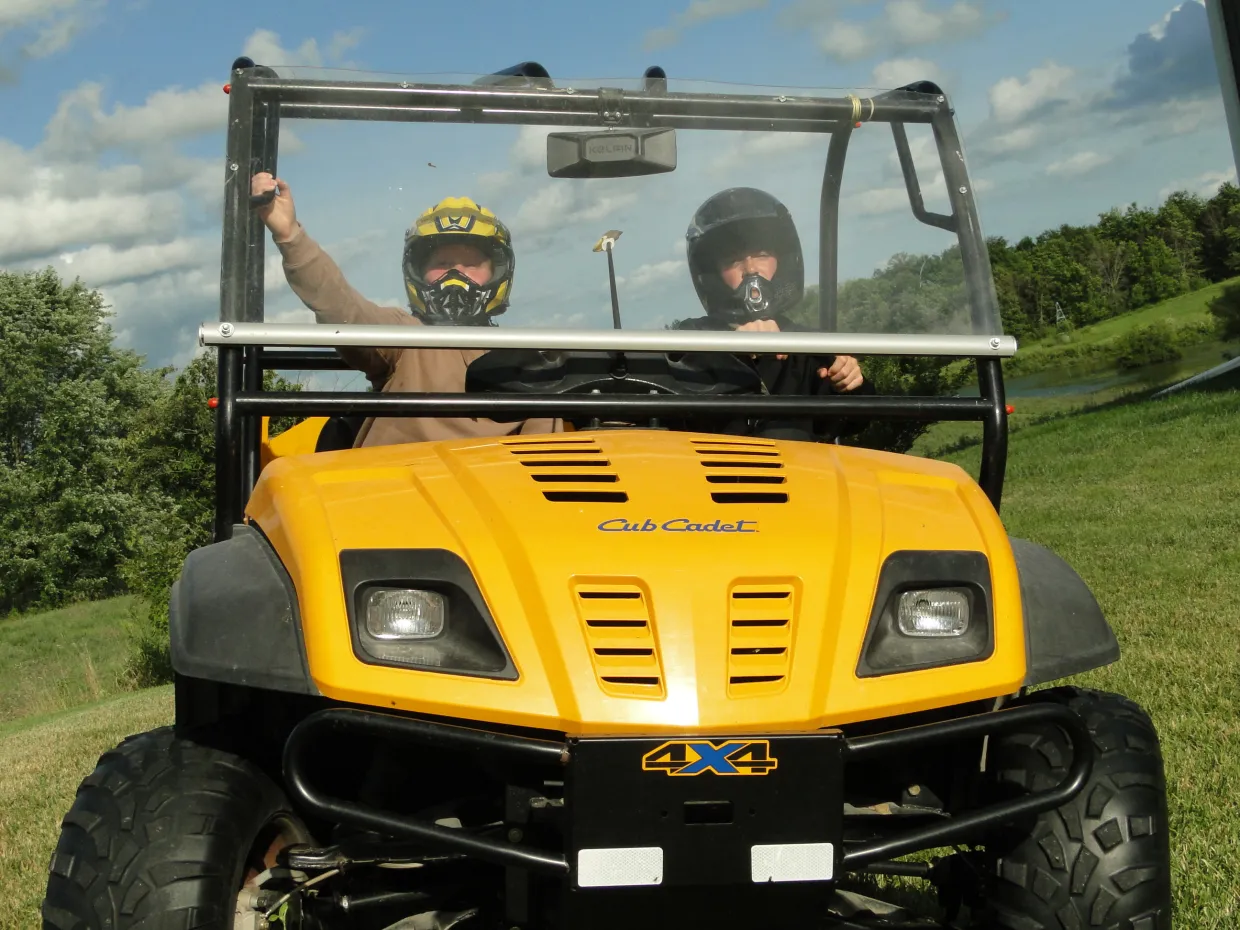
Utility task vehicles (UTVs) — also known as side-by-sides or recreational off-highway vehicles — are motorized off-road vehicles that typically:
- Seat 2-6 passengers side-by-side
- Have a rollover protective structure (ROPS) and seatbelts or harnesses to maintain riders within the zone of protection afforded by the ROPS
- Travel at least 30 mph with most able to reach highway speeds
UTVs have surpassed all-terrain vehicles (ATVs) in annual sales, becoming increasingly popular for both work and recreation. Unfortunately, crashes and injuries have increased as well, particularly when safety recommendations are not followed. Moreover, about 40% of injuries involve youth.
UTVs and roadways
UTVs are off-road vehicles. They are not designed for paved or unpaved public roads and are prone to loss of control and rollover on public roadway surfaces.
- Over half of UTV crashes occur on public roads.
- Most roadway UTV crashes (80% in one study) do not involve another vehicle — they are single-vehicle events.
- Despite the danger, youth frequently drive UTVs on public roads.
- Although they are not designed for roadway use, many states allow UTV and ATV use on public roads.
- In Iowa, you need to be at least 18 years old and have a valid license to legally operate on a public country road.
Learn why riding on public roads is especially dangerous and how to stay safe.
Rollover risk
Common misconception: “It has a roll cage, so we don’t need helmets.”
Using seat belts with ROPS provides some protection, but it does not prevent all head injuries. In a crash or rollover, riders can still hit their head or be ejected. Helmets are essential to reduce the risk of traumatic brain injury — even in UTVs.
Most UTV injuries are caused by rollovers, which can happen:
- At low speeds.
- On flat ground.
- While turning, hitting a rut, or navigating uneven terrain.
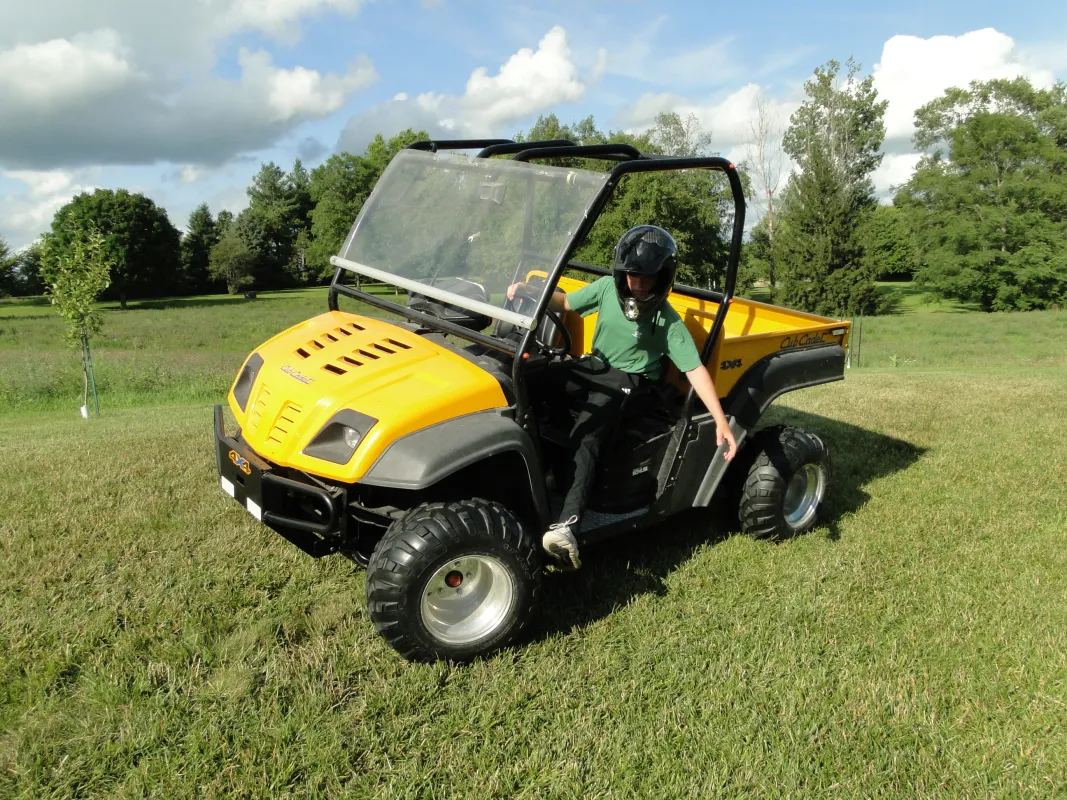
- UTVs have a high center of gravity and narrow track, and they can roll over suddenly.
- Unrestrained riders are often ejected or pinned under the vehicle.
- Grabbing the rollbar during a rollover can cause serious hand and arm injuries, including amputation.
- During a rollover, riders may instinctively put their legs out to try to stop the vehicle. Because UTVs are so heavy, this often results in severe leg fractures that may require multiple surgeries.
Always keep your hands and feet inside the vehicle and use doors and nets properly.
Are UTVs safe for kids?
- UTVs can be safe when all safety practices are followed. However:
- Adult-size UTVs are not designed for drivers younger than 16.
- Children younger than 12 should not ride as passengers.
- Many youth UTV crashes involve underage drivers or improperly restrained passengers.
A multistate newspaper study found that 44% of UTV fatalities involved children younger than 16 years old.
Passenger safety in UTVs
UTVs are designed to carry passengers — but only if those passengers meet size and age requirements. Many pediatric injuries and deaths occur when children ride before they are large enough to be properly restrained by seat belts or when they sit in unsafe locations, such as the cargo bed. Passengers must be able to:
- Sit with their back against the seat.
- Keep their feet flat on the vehicle floor.
- Remain securely restrained by the seatbelt or harness
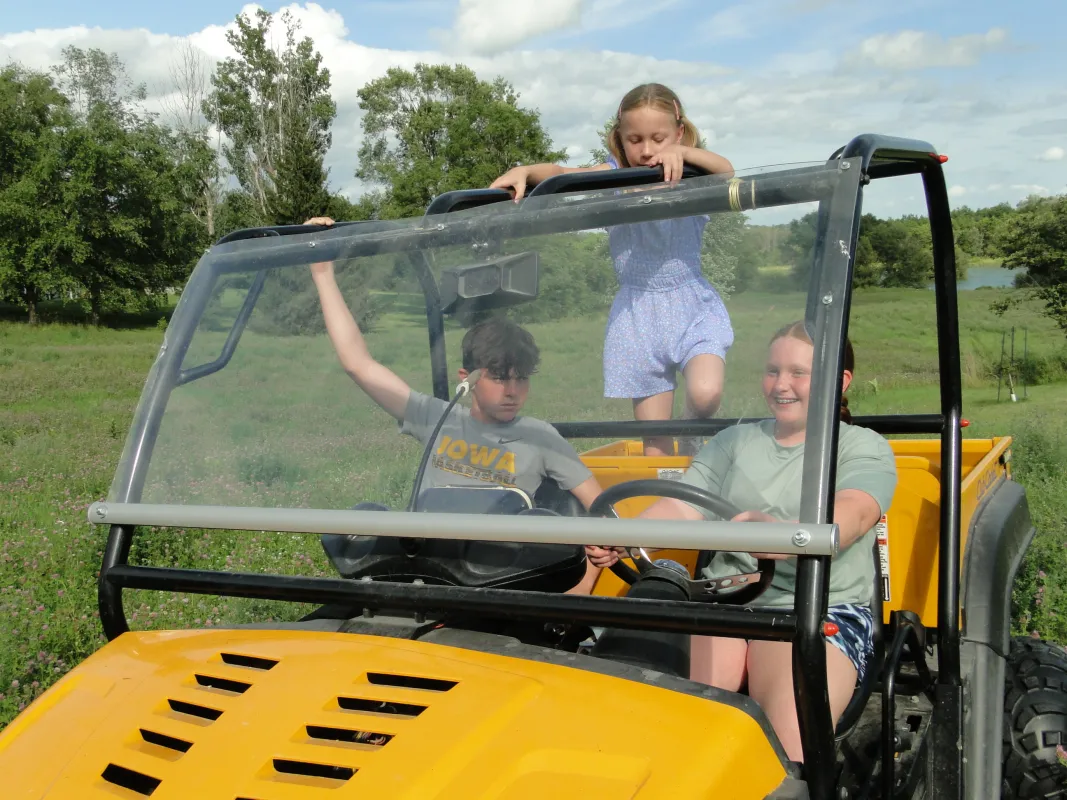
If a child can’t meet all three of these requirements, they should not ride.
Car seats and booster seats are not safe in UTVs
Common misconception: “My car seat fits in the UTV, so it’s safe.”
Car seats and booster seats are not designed or tested for UTV crashes or rollovers. Because UTV crash dynamics differ from passenger vehicles, car seats may not provide adequate protection.
- No car seat or booster seat is approved for use in UTVs.
- A child in a car seat may appear secure but can still be improperly restrained, ejected, or crushed in a crash.
If a child needs a car seat or booster seat in a motor vehicle, they are too small to ride in a UTV.
Never ride in the cargo bed
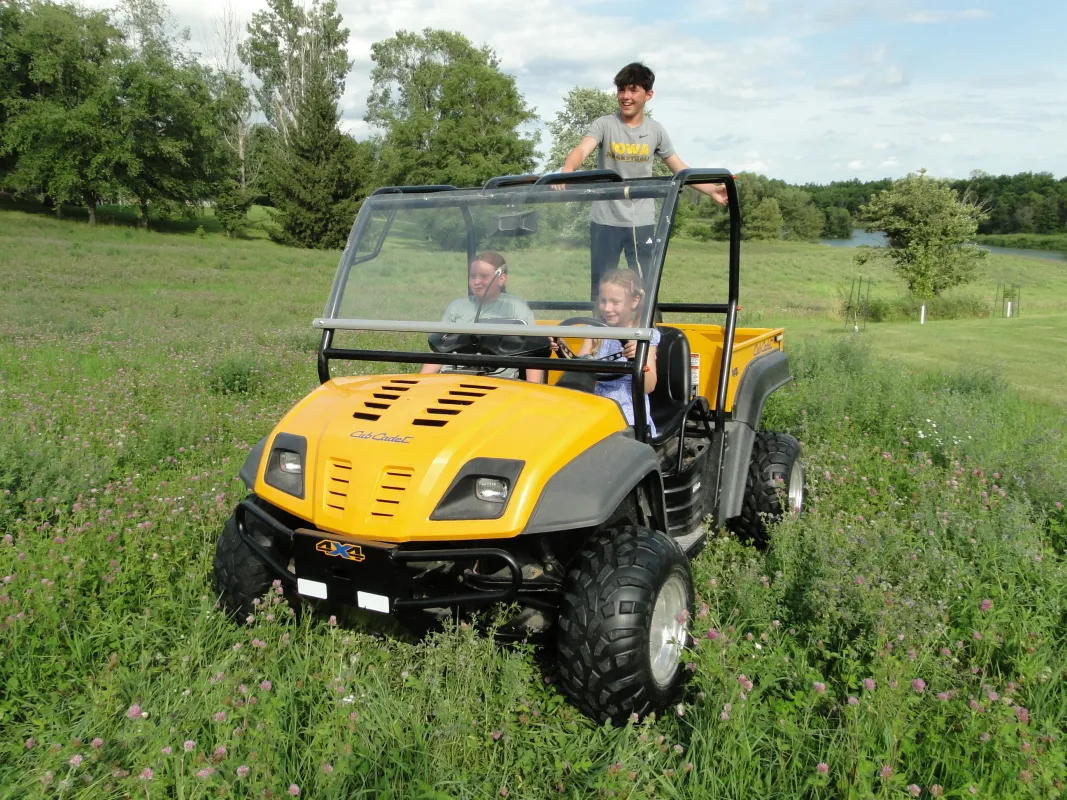
Cargo beds are not designed for passengers and provide no protection during crashes or rollovers. Riders can be ejected or crushed, even at low speeds.
Seatbelt and harness use
Seat belts and harnesses are a critical line of defense during crashes and rollovers.
- In one study of fatal UTV crashes, 91% of victims were not using restraints.
- Every rider should wear a seat belt or harness at all times.
- Properly fitted restraints keep riders within the protective zone of the ROPS.
- Some UTVs include seat belt limiters that restrict speed if belts are not fastened — never bypass this feature.
Helmet use in UTVs
- Even with a roll cage and restraints, riders are at risk of head injury.
- Helmet use in UTV crashes is very low (1–3%), yet head injuries are common.
- Manufacturers recommend DOT-approved helmets for all riders.
- Bike, skateboard, or snow helmets do not provide adequate protection.
Learn how helmets and protective gear help prevent serious injuries.