Tachycardia
- For all other requests:
- 1-800-777-8442
Tachycardia is a condition that can cause your heart to beat faster than normal—typically more than 100 beats per minute. While it can be harmless in some cases, certain types of tachycardia can lead to serious health problems if left untreated.
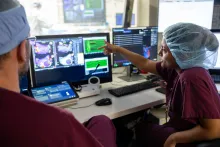
At University of Iowa Health Care Heart and Vascular Center, we offer comprehensive care for people living with tachycardia. Our center is home to Iowa’s largest and most experienced team of cardiac electrophysiologists, who specialize in diagnosing and treating tachycardia.
We provide more advanced diagnostic tools and treatment options than any other hospital in Iowa. As part of an academic medical center, we also offer access to cutting-edge clinical trials for tachycardia—many of which are not available anywhere else in the state—giving you more opportunities for effective, personalized care.
Types of tachycardia
Tachycardia can occur in different parts of the heart and is generally classified into three main types:
- Supraventricular tachycardia (SVT), a rapid heartbeat that starts in the upper chambers of your heart (atria).
- Ventricular tachycardia (VT), a faster-than-normal heart rate that begins in the lower chambers (ventricles) and is often more serious and potentially life-threatening.
- Sinus tachycardia, a faster heartbeat that still follows your heart’s normal rhythm. It can result from fever, dehydration, anxiety, or other non-cardiac causes.
Symptoms of tachycardia
Tachycardia symptoms can vary widely and range from mild to severe. The most common symptoms include:
- A racing or fluttering heartbeat
- Shortness of breath
- Dizziness or feeling lightheaded
- Chest pain or tightness
- Fainting or near-fainting spells
What causes tachycardia?
Tachycardia is often a symptom of another underlying condition. Several factors can contribute to the development of tachycardia, including:
- Heart conditions such as coronary artery disease or heart failure
- High blood pressure
- Overactive thyroid (hyperthyroidism)
- Smoking
- Excessive caffeine or alcohol
- Stress and anxiety
- Certain medications or drug use
How is tachycardia diagnosed?
Diagnosis begins with a physical exam and a detailed health history. From there, several tests can help pinpoint the cause and type:
- Electrocardiogram (ECG), a quick, painless test that measures your heart’s electrical activity.
- Holter monitor, a wearable device that tracks your heart rhythm over 24 to 48 hours.
- Stress test, which evaluates how your heart performs during physical activity.
- Electrophysiology (EP) study, a specialized procedure that maps your heart’s electrical pathways to identify where abnormal rhythms begin.
How is tachycardia treated?
Treatment for tachycardia depends on its type and severity. Options may include:
Medications
Beta blockers or calcium channel blockers can help slow your heart rate. Anti-arrhythmic drugs may also be used in some cases.
Catheter ablation
This is a minimally invasive procedure that uses heat, cold, or electrical energy to destroy the tissue causing abnormal rhythm. This is a good option if you have frequent episodes that aren’t well controlled by medication or if you don’t want to be on medication.
Pulse field ablation
Pulsed field ablation systems, approved by the U.S. Food and Drug Administration in 2024, uses electrical signals to isolate and precisely ablate heart cells that cause tachycardia. UI Health Care electrophysiologists are the first in Iowa to use this new technique.
Pacemaker or implantable cardioverter defibrillator (ICD)
These devices can regulate or correct dangerous heart rhythms.
Lifestyle changes
You can help reduce your symptoms and improve your health by:
- Limiting caffeine and alcohol
- Avoiding tobacco and recreational drugs
- Getting regular exercise, as approved by your doctor
- Practicing stress-reducing techniques such as meditation or deep breathing
- Monitoring your symptoms and following up regularly with your care team
A team-based approach to care
Many people with tachycardia also have other medical conditions that need to be addressed at the same time. Our electrophysiology specialists work closely with other members of your care team to treat each condition and address the underlying causes of your tachycardia. They collaborate with a wide range of specialists across UI Health Care to create a comprehensive treatment plan that includes medications, symptom monitoring, and lifestyle changes that consider your overall health and your treatment goals.
Our Care Team
- Heart and Vascular
Need help finding a tachycardia specialist?
Locations and Offices
Related Health Topics
Patient Stories