Advanced heart rhythm care for life-threatening ventricular tachycardia
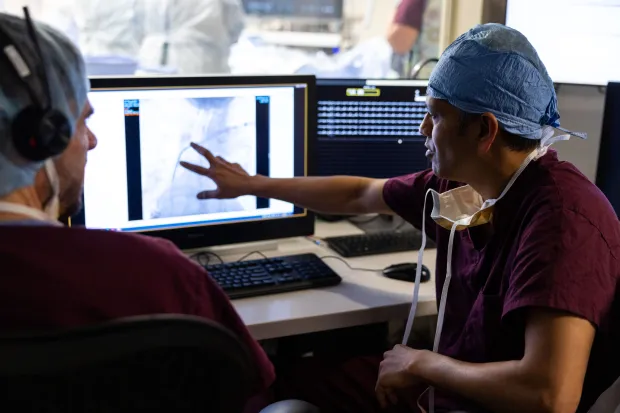
After repeated ventricular tachycardia episodes, Ed Bell underwent VT ablation with Impella support and is continuing to improve at home.
Heart failure can seem like an alarming diagnosis, but treatments are evolving and improving quickly. We offer the latest therapies, procedures, and technology—and we’re at the forefront of research to find new treatment options.
Our goal is to slow the progression of your disease and improve your quality of life. Treatments can help reduce symptoms such as fluid retention, shortness of breath, and fatigue. Our goal is to help you stay out of the hospital and allow you to get back to the activities you love.
Our heart failure program is the most comprehensive in Iowa. If your heart failure is advanced and not responding to medical management, we’re the only system in the state that offers heart transplantation.
The right care for heart failure can help you live a longer, fuller life.
No matter what’s causing your heart failure, you’ll have a team of dedicated specialists and a treatment plan customized for you.
Over and over, we hear from our heart failure patients that they’re impressed by the scope and expertise of their care team.
Your team follows you closely to make sure you’re getting the best results. They’re always available to talk about your treatment and answer questions.
We’re the only hospital in the state offering heart transplants and serve advanced heart failure patients from Iowa and western Illinois.
And as an academic medical center, we offer the newest treatments for heart failure, including treatments pioneered by our doctors.
Our researchers are working on a variety of new diagnostic tools and new therapies. You may be eligible for clinical trials that represent the next breakthrough in ways to predict, diagnose, and treat heart failure.
The earlier your heart failure is diagnosed, the better the odds of slowing down its progression.
We diagnose heart failure using tests that include:
If your heart failure is in an early stage, your treatment plan might focus on diet and exercise, medications, and monitoring. Your team will work closely with you to create your plan and help you follow it.
Some of the underlying conditions that cause heart failure or make it worse are treatable with procedures or devices, including:
There are two surgical options for treating end-stage heart failure:
Advanced heart failure is the term for when your heart failure has progressed to the most severe stage of the disease. Of the more than 6 million Americans living with heart failure, about 10% have advanced heart failure. At this stage, traditional therapies and symptom management strategies are not working well enough to effectively treat the disease.
In addition to not responding to treatment, you may experience the following symptoms, even at rest:
Fatigue
Heart palpitations, or feelings of your heart racing
Loss of appetite and nausea
Persistent coughing
Shortness of breath
Swelling and fluid buildup in your lower legs
Advanced heart failure often requires more complex treatment options to help manage the disease and improve quality of life, including:
The LVAD Support Group is open to anyone considering an LVAD or who has a LVAD implant (mechanical heart device). The group meetings last for about an hour and a half and feature a light snack. Topics vary.